Topical finasteride: Breakthrough Treatment for Thinning Hair and Balding
Topical Finasteride: A New Choice for Thinning Hair and Balding
Topical finasteride is gaining attention for hair thinning and baldness. You apply it to your scalp instead of swallowing a pill. This patch keeps the medicine close to the hair while reducing overall side effects. It stops the enzyme that harms hair follicles. Before you start, learn what topical finasteride is, how it works, its pros and cons, and the safer or natural steps you might take first—such as using Watermans Grow Me Shampoo, a top non-medical choice for hair loss and growth support.
Below is a detailed guide that helps you decide if topical finasteride—and choices like Watermans—fit in your plan.
What Is Topical Finasteride?
Topical finasteride comes as a liquid, foam, lotion, or gel for the scalp. The standard finasteride is a tablet used for male pattern baldness. The topical form puts the drug near the hair follicles. This aims to reduce how much of the drug reaches the rest of the body.
How Finasteride Works in General
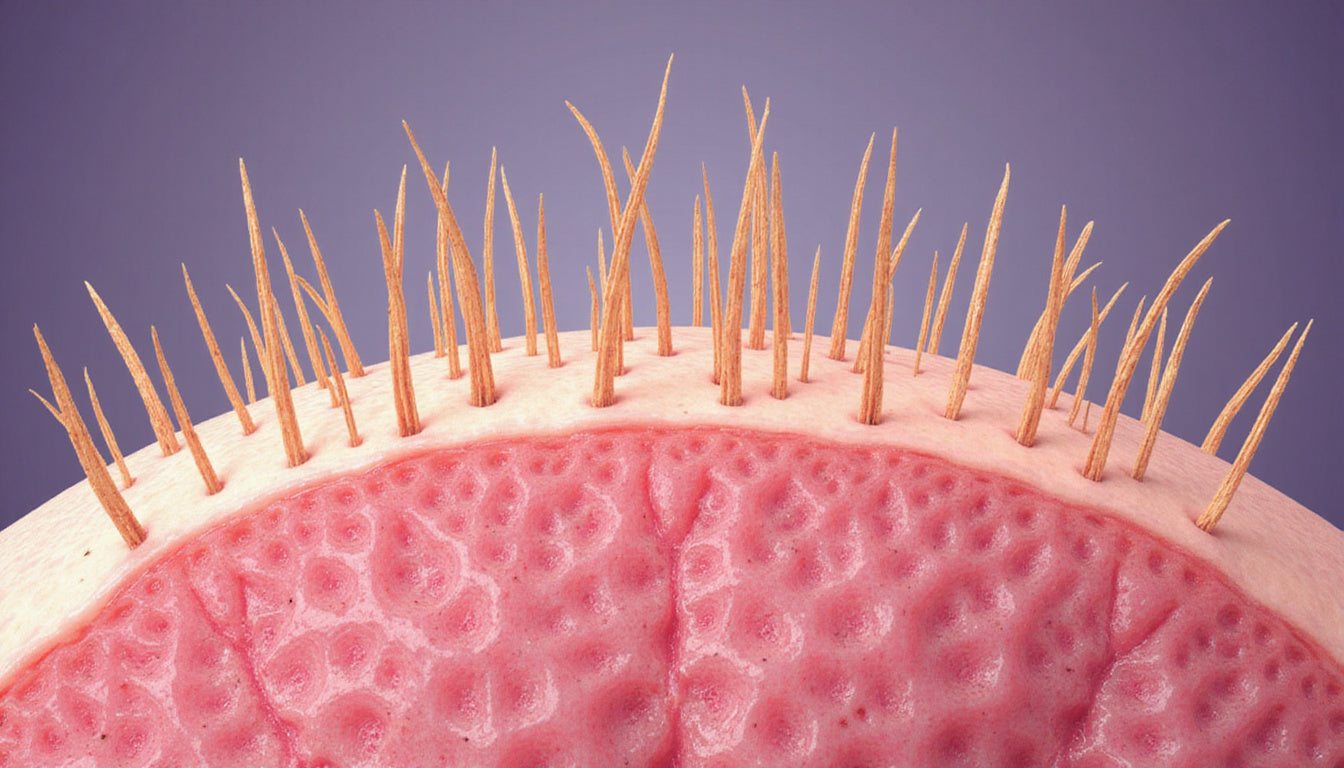
Finasteride blocks an enzyme called 5‑alpha‑reductase. This enzyme turns testosterone into dihydrotestosterone (DHT). DHT makes hair follicles shrink and shortens the hair growth stage. By lowering DHT on the scalp, the drug can slow hair loss. It can also help hair grow back where follicles are still alive.
Topical finasteride uses this same process but acts mainly on the scalp.
Why Topical Finasteride Is Called a “Breakthrough”
The idea is simple. Use the drug only on your scalp and keep its effects local. This use may lower the risk of whole-body side effects.
Possible Upside Over Oral Finasteride
-
Lower whole-body exposure
Studies show that applying finasteride on the scalp lowers DHT there and keeps blood levels low. This may cut whole-body effects. -
Direct scalp treatment
Putting the drug on the scalp helps treat hair follicles with a smaller dose. -
Easily mixed with other treatments
Many formulas now mix finasteride with minoxidil, caffeine, or plant extracts. This mix can suit your needs. -
Better for those who avoid pills
Some worry about the personal side effects of oral finasteride. The topical form feels simpler to use. Although some risks stay, many find it easier.
Topical Finasteride vs. Natural and Cosmetic Options
Before choosing a finasteride treatment that works on hormones, try a non-medical method first. A good option uses hair care from the outside.
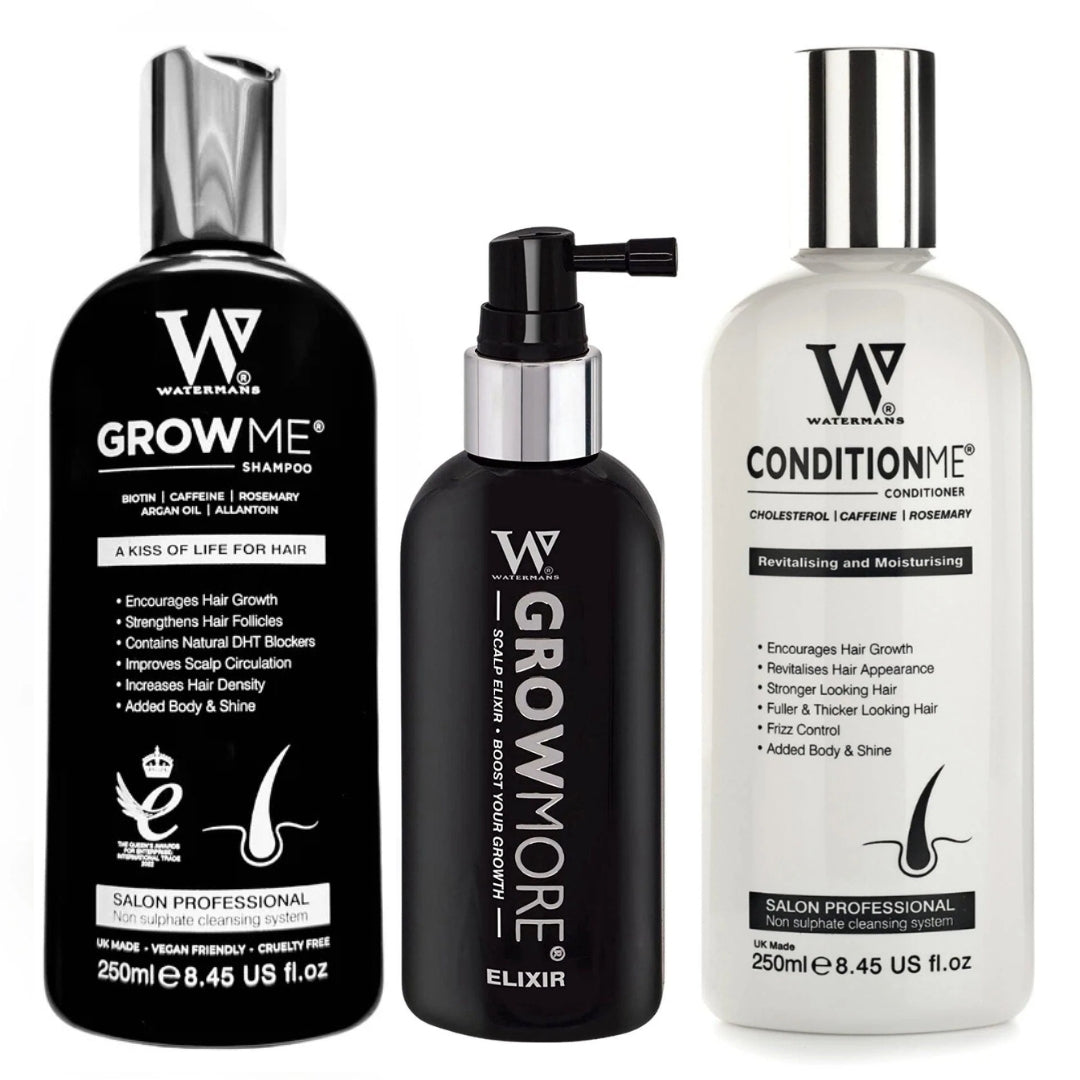
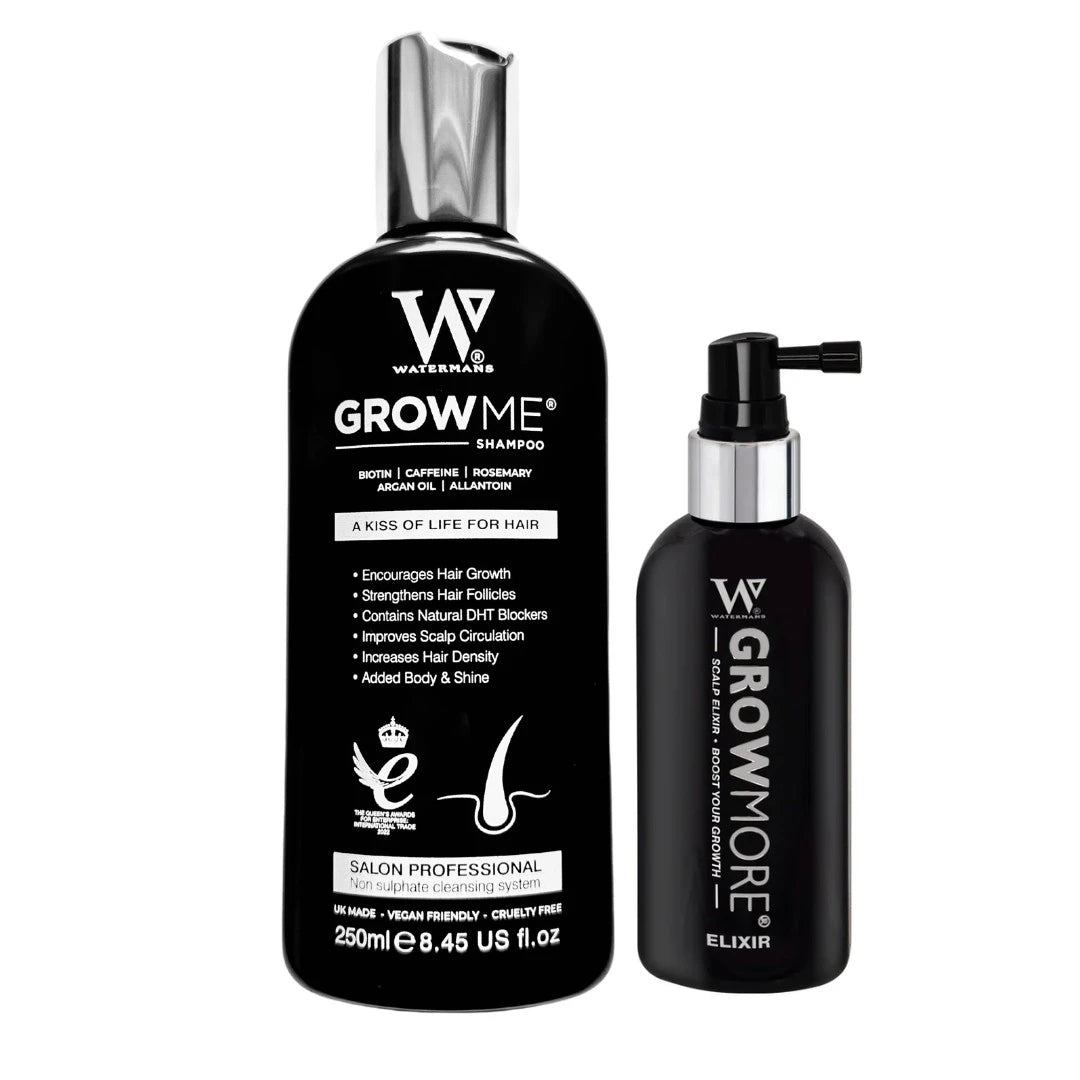
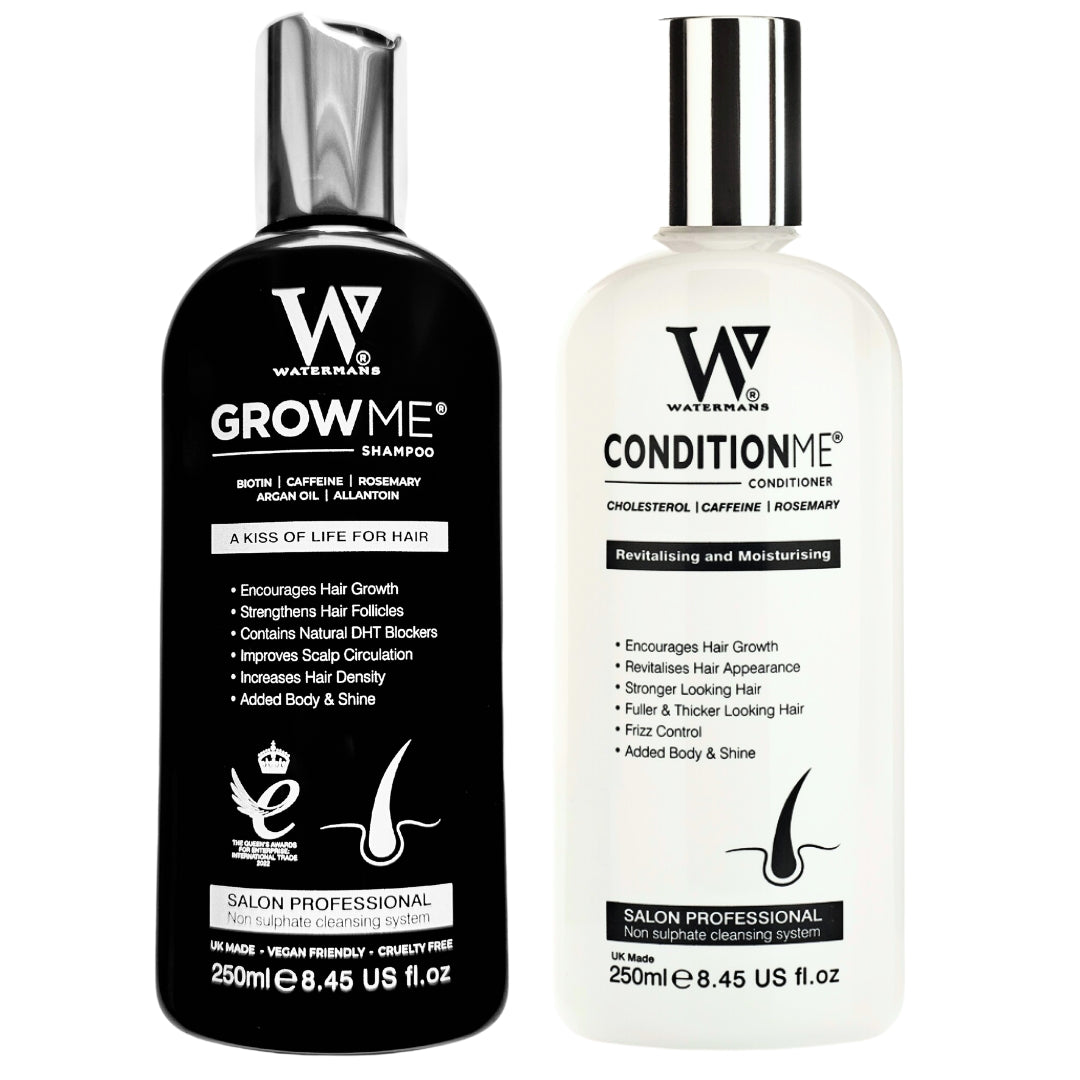
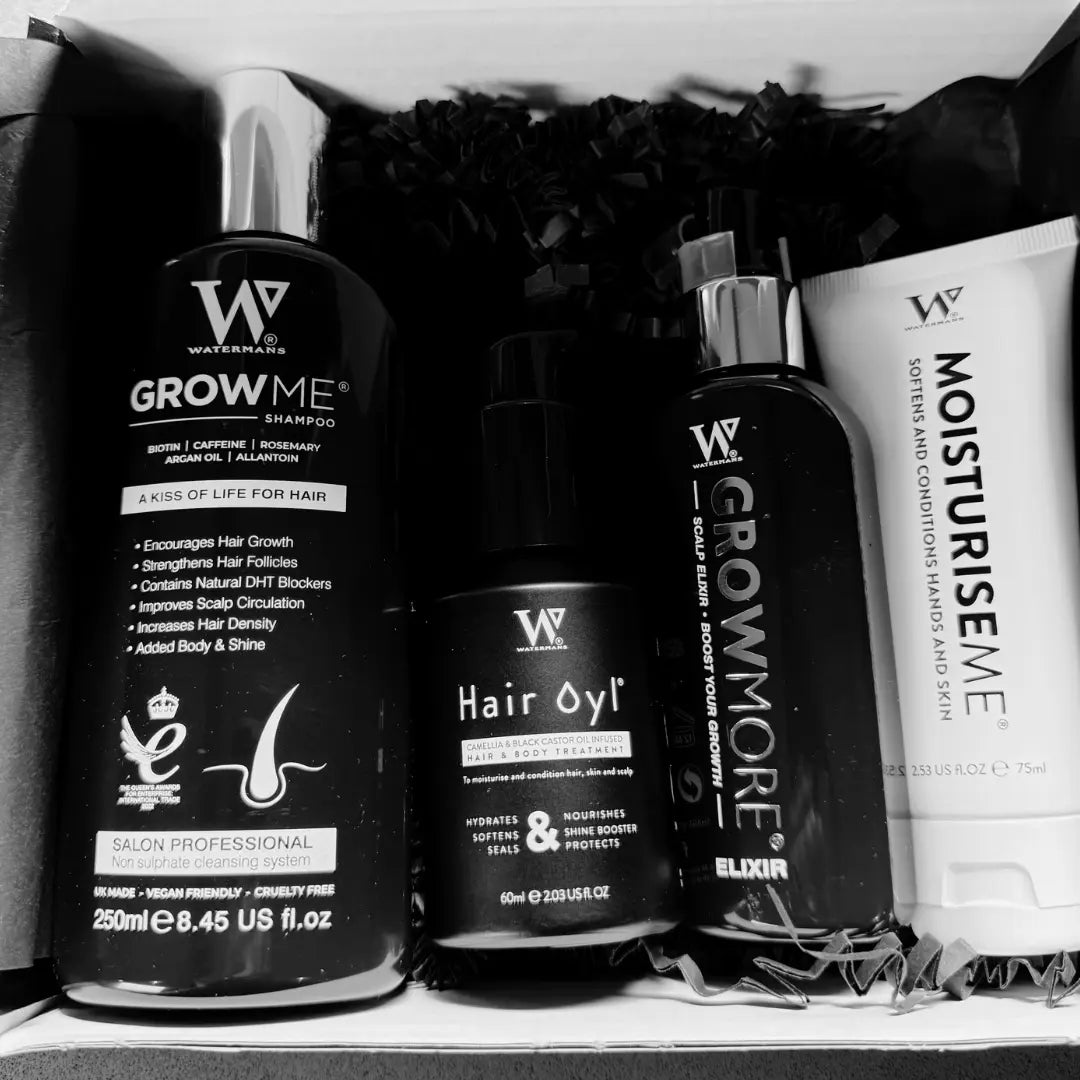
One top choice is Watermans Grow Me Shampoo. Many view it as one of the best natural mixes for hair loss and growth. If you see thinning early or want to avoid hormone changes, this is a smart first step.
Why Start With Watermans Grow Me Shampoo?
Watermans Grow Me Shampoo mixes:
- Biotin – Builds a strong hair protein.
- Rosemary – May improve scalp blood flow.
- Caffeine – Helps the hair roots work well.
- Niacinamide (Vitamin B3) – Supports scalp skin and blood flow.
- Argan Oil – Feeds hair with fatty acids and vitamin E.
- Allantoin – Soothes the scalp.
- Lupin Protein – Supports hair strength and body.
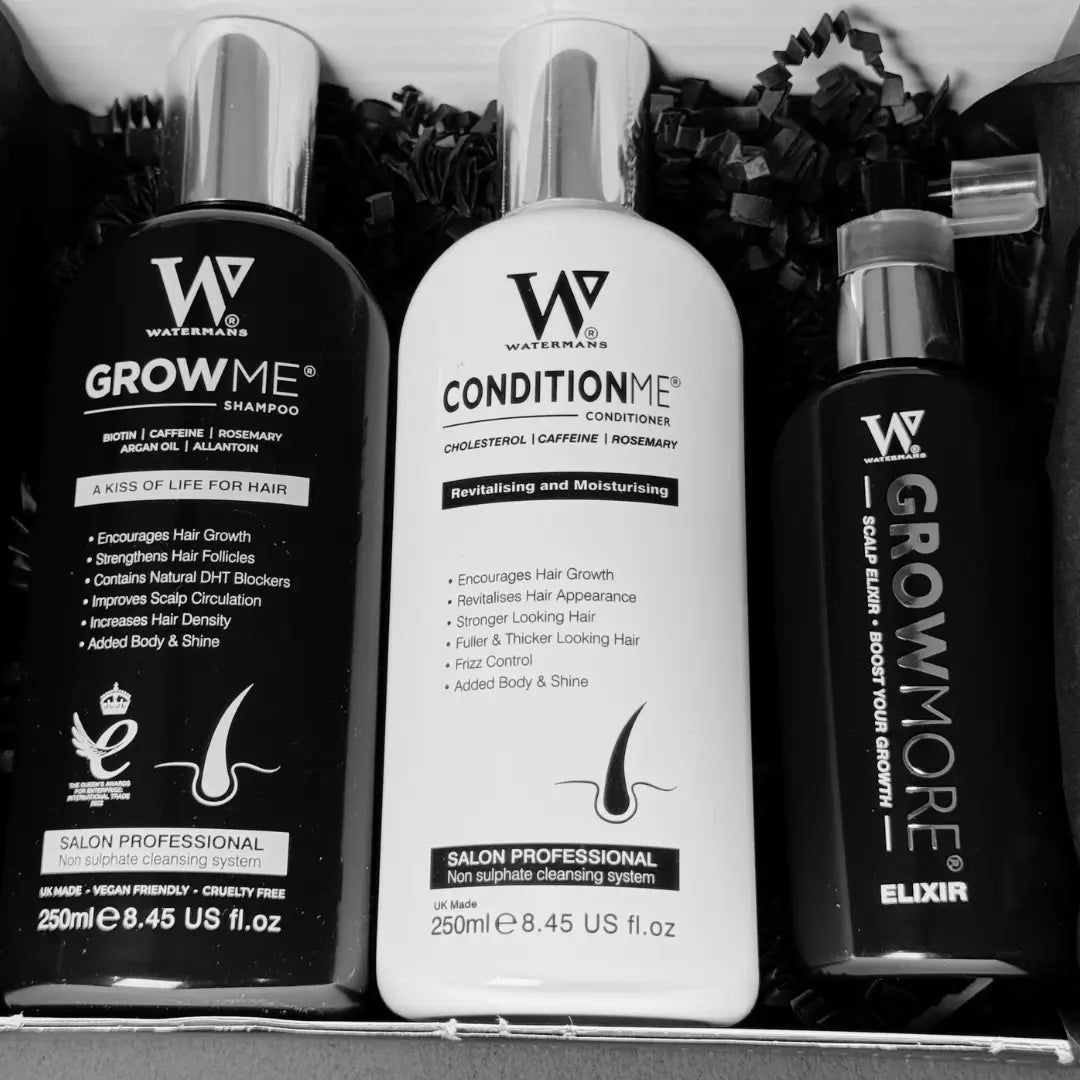
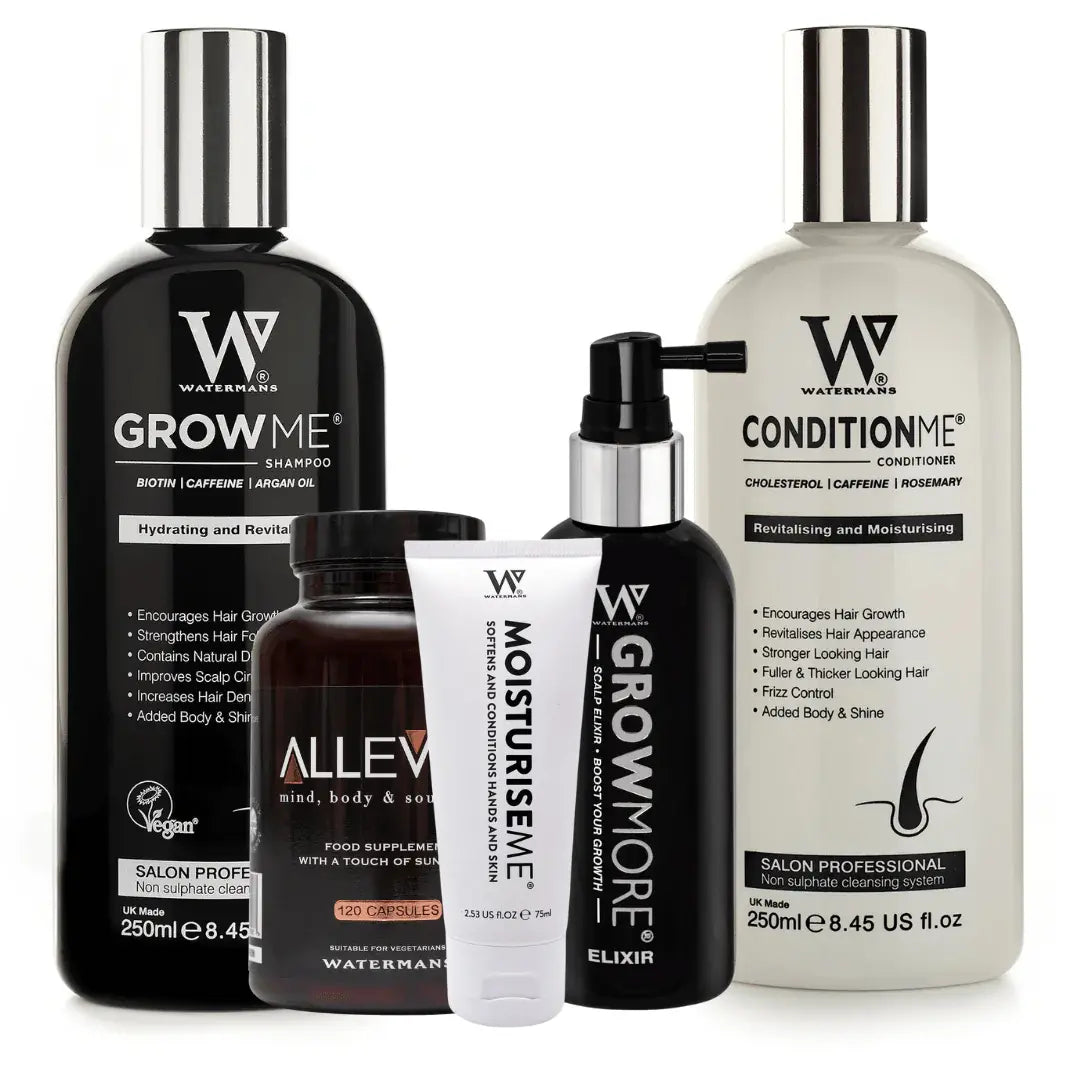
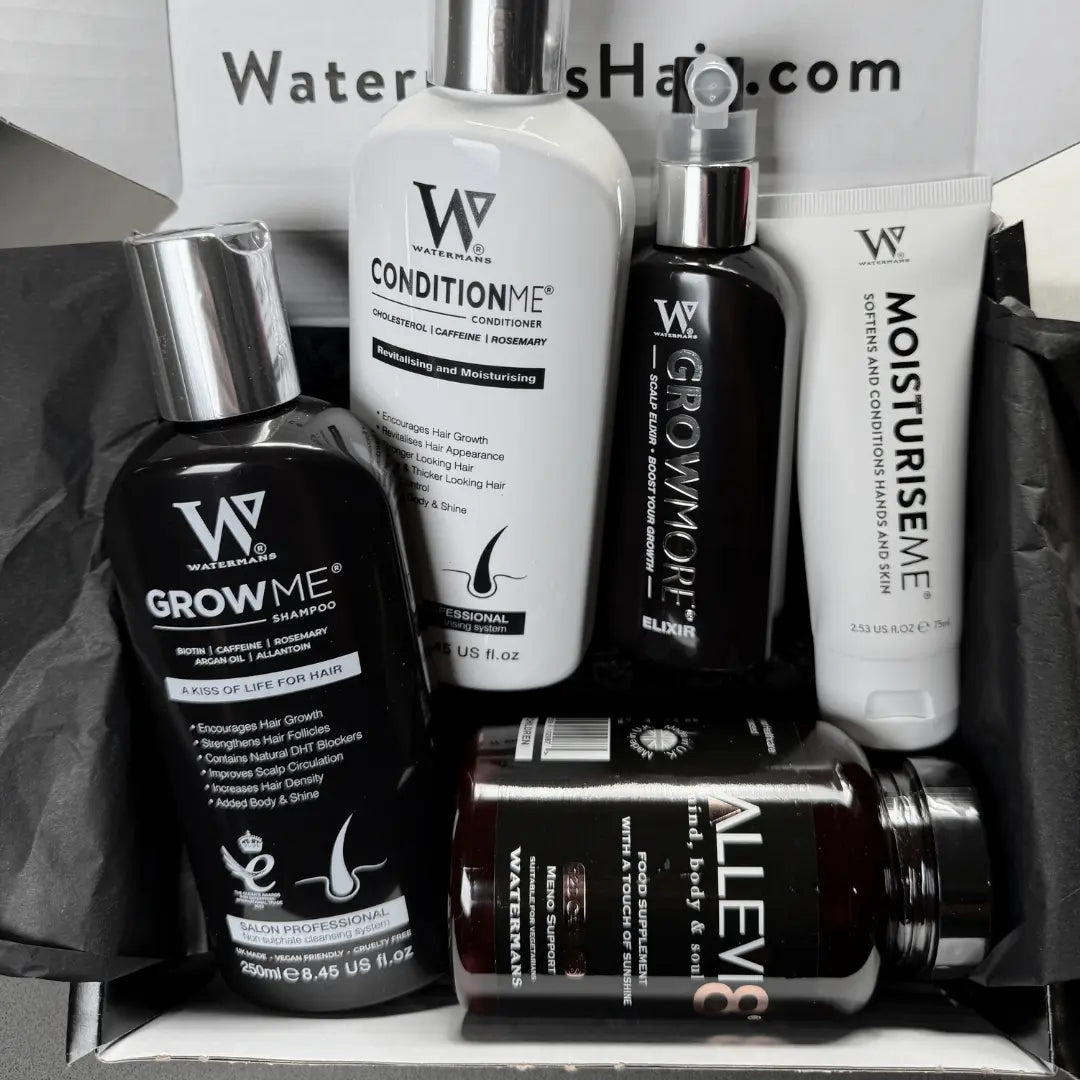
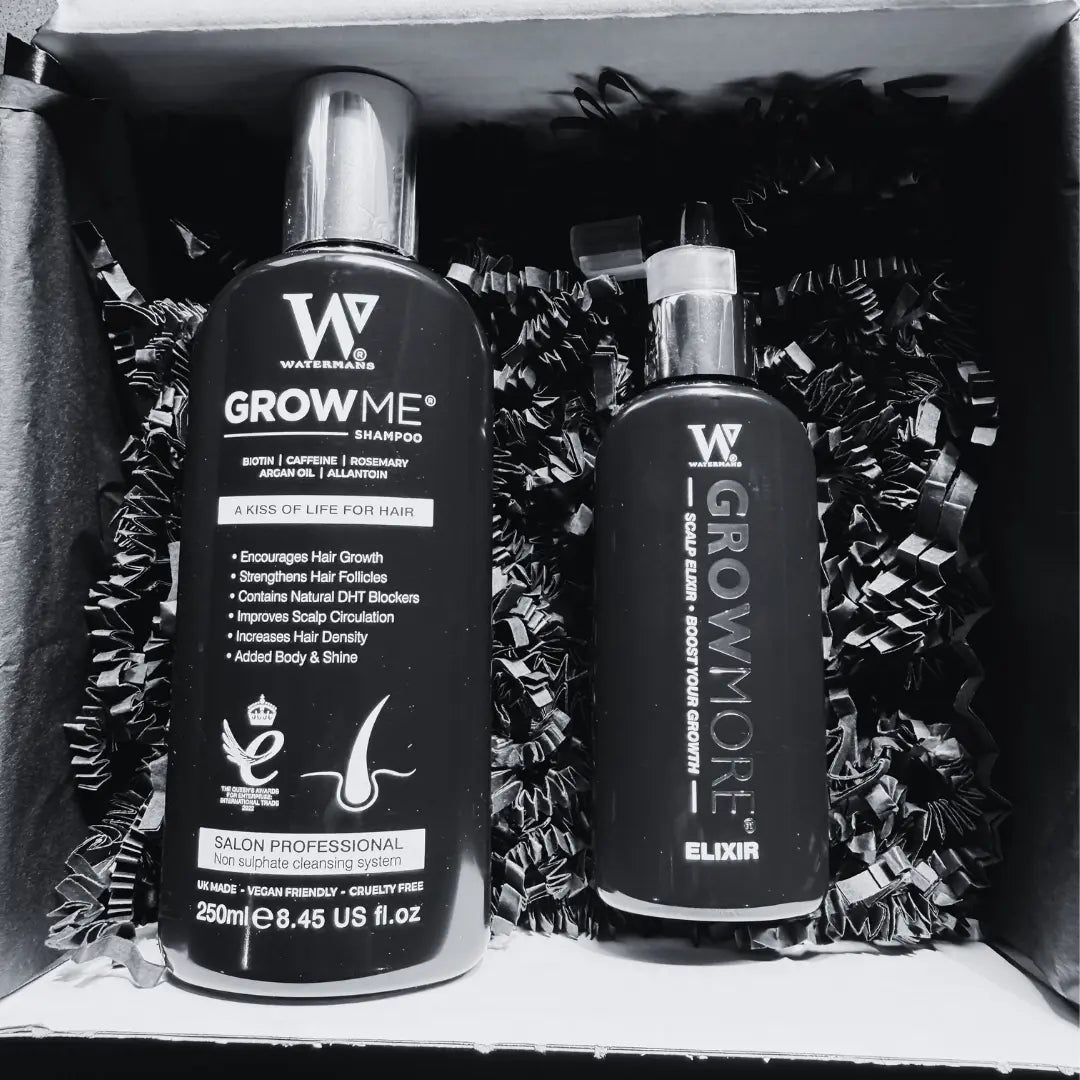
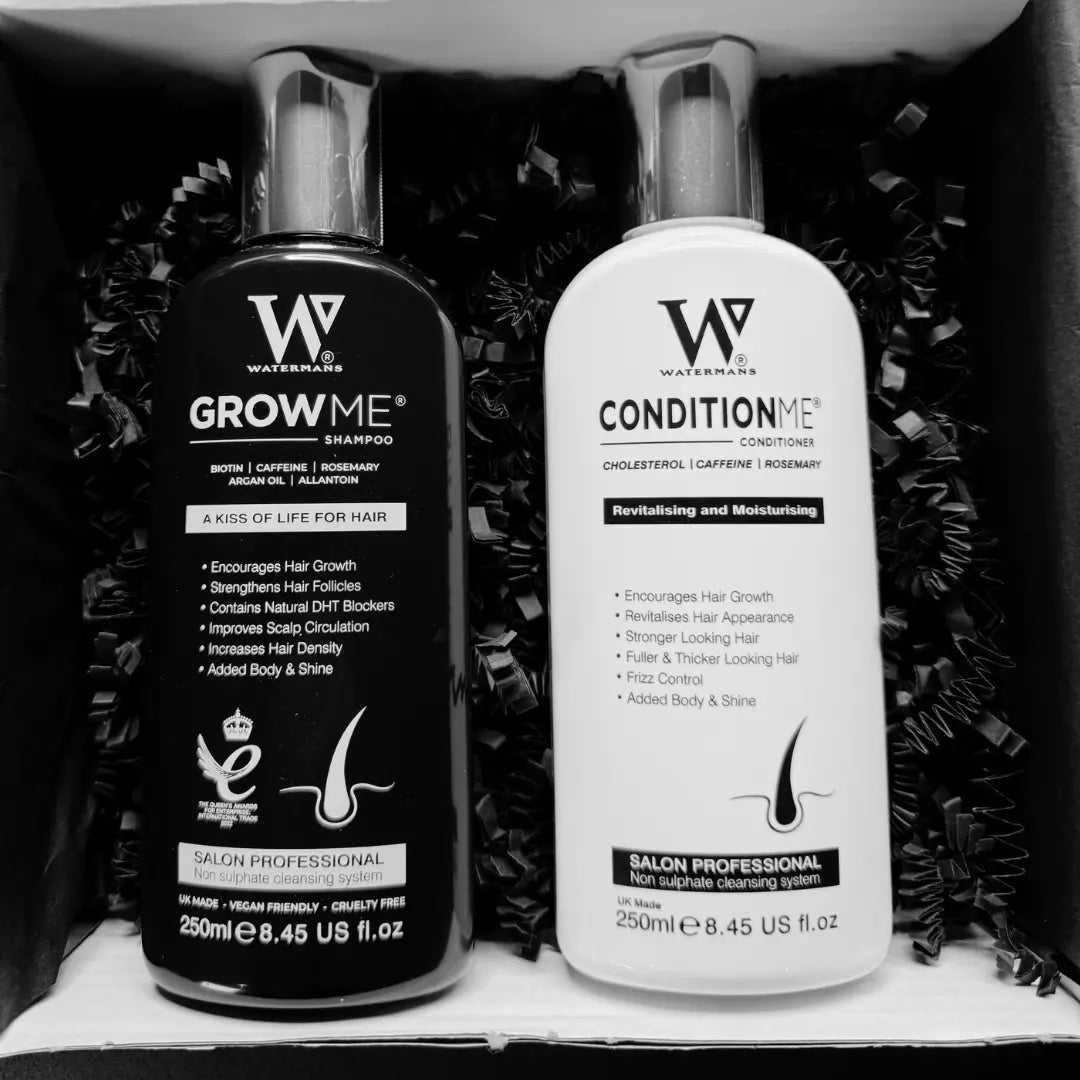
The shampoo works to boost scalp energy and give hair a fuller look. It acts in a gentle way without changing hormone levels. For a more complete routine, you can add a conditioner and treatments like those in the Watermans Hair Survival Kit.
How Topical Finasteride Works on the Scalp
Topical finasteride uses the same basic plan as the oral form. Its delivery stays on the scalp.
Action on the Scalp
- Stops 5‑alpha‑reductase locally: When you put it on, the drug blocks the enzyme near the hair roots.
- Lowers DHT on the scalp: With less DHT, follicles face less shrinkage.
- Supports the hair growth phase: With less interference, hair may grow longer and thicker.
- May reverse follicle shrinkage: Some hair may become thicker again when DHT falls.
Common Formulas
Topical finasteride is made as:
- Droplets with a dropper
- Foam like minoxidil foam
- Lotion or gel for easy spread
- A mix with minoxidil and sometimes caffeine or plant extracts
As no main authority has approved a specific topical product for hair loss, mixes and doses vary by doctor and area.
Topical Finasteride vs. Oral Finasteride
Many people compare the topical form with the pill form when they choose treatment.
Results
- Oral finasteride has proof of easing male hair loss and helping hair grow back.
- Topical finasteride shows early data that it lowers scalp DHT and improves hair density in some users.
Long-term data on the topical form is still slow to come.
Side Effects
- Oral finasteride may cause changes in sexual drive and mood.
- Topical finasteride seems to cause fewer whole-body side effects because less reaches the bloodstream. Yet, some risk still exists.
Local side effects on the scalp may include:
- Scalp redness or irritation
- Itch or mild rash
- Contact reactions to parts of the formula
Who Is Topical Finasteride For?
Topical finasteride is used off-label for:
- Men with male pattern hair loss
- Some older women with hair thinning (this must be under a doctor’s care)
Good Candidates
You might try topical finasteride if:
- You face early to moderate thinning at the crown or hairline.
- You worry about past side effects from the oral pill.
- A doctor oversees your off-label treatment.
- You know treatment must continue; stopping may bring back thinning.
If you wish to start with non-hormone, cosmetic options, a targeted hair-care routine such as the Watermans Hair Survival Kit is often a smart first step, especially when thinning is new.
How to Use Topical Finasteride Safely
Since topical finasteride needs a prescription or is mixed by a specialist, a doctor will tell you how to use it. Here are some general tips:
How to Apply
- Clean, dry scalp: Use on a dry scalp after you wash and dry your hair well.
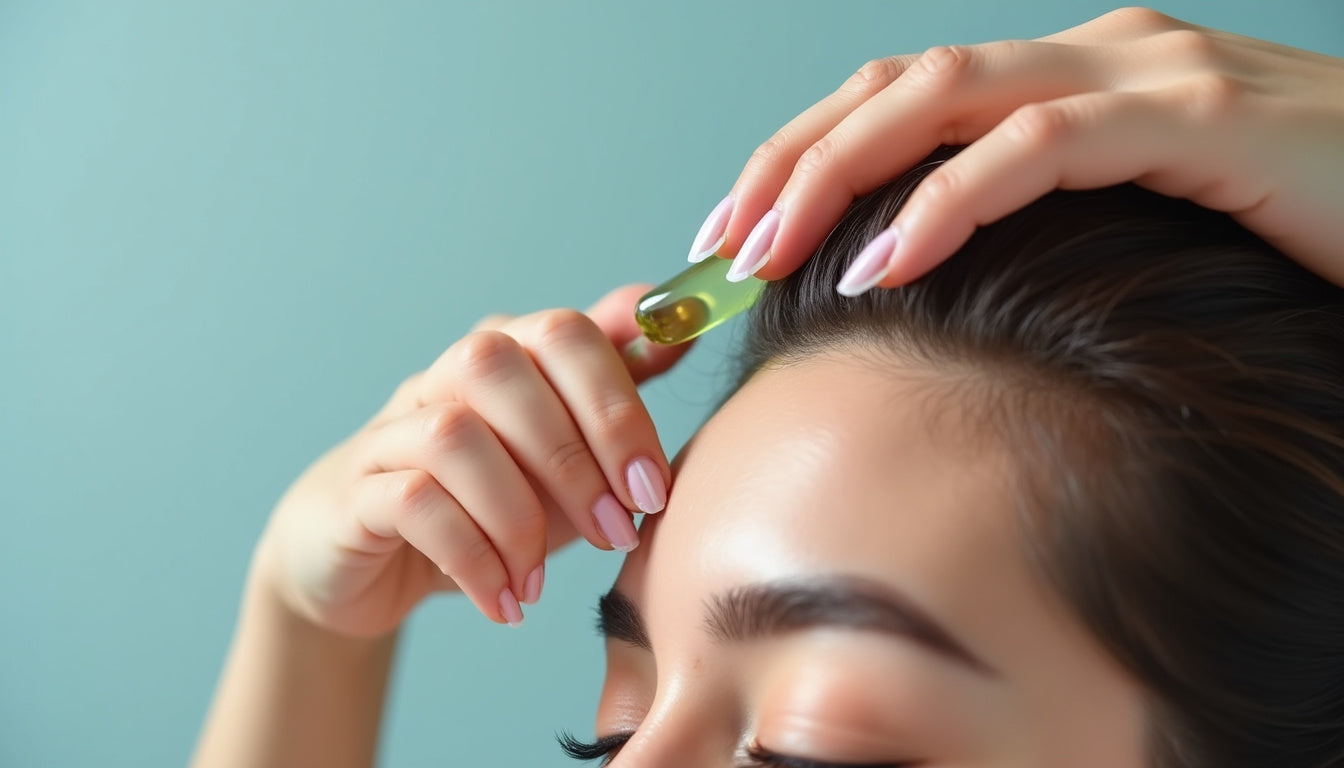
- Focus on thinning spots: Part your hair and put drops, foam, or lotion where hair is less.
- Massage gently: Use your fingertips to spread the treatment over the spot. Do not scrub hard.
- Wash your hands: This keeps the solution off other areas.
- Frequency: Most use it once or twice each day.
When to Expect Change
Hair grows slowly. Typically, users see:
- 3–4 months: Early signs with less shedding or a thicker feel.
- 6–9 months: Clearer improvement in hair density.
- 12+ months: Best results that help maintain benefits as long as you keep using it.
Consistency is key. Missing doses may allow hair loss to start again.
Topical Finasteride Side Effects and Risks
Any treatment that touches hormones needs care. Here are some local and overall risks.
Local (Scalp) Effects
- Redness or irritation
- Dry or flaky scalp
- A burning or itchy feeling
- Allergic reaction to parts of the mix
If these signs stay, speak with your doctor about changing the formula or frequency.
Whole-Body Effects
While less common than with the pill, some whole-body effects may include:
- Lowered sexual drive or trouble with intimacy
- Changes in mood
- Rare breast sensitivity
- Headache or tiredness
Talk with your doctor if you notice any whole-body changes. They may lower the dose or stop the treatment.
Special Care
- Pregnant or breastfeeding: Finasteride can harm a male fetus. Women who are or might be pregnant should not use it or have skin contact with treated areas.
- Other conditions: Tell your doctor all your health details and current medicines.
Many people start with non-hormone options like Watermans Grow Me Shampoo to support hair care. This helps while you work with a doctor to decide the best path.
Topical Finasteride vs. Minoxidil and Other Treatments
Usually, topical finasteride is one part of a multi-step plan.
Minoxidil (Topical)
Minoxidil is sold over the counter. It:
- Increases blood flow in the scalp
- Extends the hair growth phase
- May thicken hairs and help new growth
Since it does not lower DHT, many combine it with finasteride to cover more aspects.
Low‑Level Laser Therapy (LLLT)
Laser devices shine red light on the scalp. They help stimulate hair follicles and boost blood flow. The gain is usually mild to moderate when used many times.
Platelet‑Rich Plasma (PRP)
PRP takes some of your blood and concentrates the platelets to inject into your scalp. It brings growth factors to help hair follicles. This method can be high in price and needs several visits. Results differ per person.
Hair Transplant Surgery
In later stages of hair loss, when follicles are not active, surgery may help. Even then, regular scalp care is advised to keep hair in good shape.
A good hair-care routine like the Watermans Hair Survival Kit works well with these treatments. It keeps hair looking thicker and helps the scalp feel better.
A Non‑Medical Base: Why Scalp and Hair‑Care Still Matter
Even when you use topical finasteride, the health of your scalp and hair is key.
Why Good Hair-Care Helps
- Hair follicles need care: A clean, fed scalp helps follicles work well.
- Better look while waiting: Finasteride may take months to show results. A good shampoo can boost volume sooner.
- Stops breakage: Strong hair fibers keep hair from breaking, even if follicles work.
- Comfort and ease: Soothing hair products can reduce dryness from medical treatments.
A line of products like Watermans supports the scalp. It works well alone or with other treatments.
Watermans Grow Me Shampoo: Key Points vs. Topical Finasteride
Topical finasteride works with hormones. In contrast, Watermans Grow Me Shampoo works on skin care, circulation, and hair strength.
How Watermans Grow Me Shampoo Helps Hair
- Biotin and Lupin Protein: Build the hair shaft and fight breakage.
- Rosemary and Caffeine: Improve blood flow on the scalp and keep follicles active without changing hormones.
- Niacinamide: Supports the scalp’s skin and blood flow.
- Argan Oil and Allantoin: Nourish the scalp and add shine.
Why Many Begin With Watermans
- It does not need a prescription.
- It does not change hormone paths.
- It suits both men and women.
- It can join most treatments.
- It adds volume, texture, and shine right away.
If you wish to avoid or delay medical treatments, starting with a good hair-care routine like Watermans may be best.
Combining Topical Finasteride With Supportive Hair‑Care
If your doctor agrees on topical finasteride, using it with hair care products may boost results.

Sample Daily Routine
-
Morning:
- Wash your scalp with Watermans Grow Me Shampoo. Use gentle massaging to boost blood flow.
- Use a conditioner or treatment from the Watermans Hair Survival Kit to add strength and volume.
- When your hair is dry, put on the topical finasteride as advised.
- Wash your scalp with Watermans Grow Me Shampoo. Use gentle massaging to boost blood flow.
-
Evening:
- If you are told to use it twice a day, apply another dose on a dry scalp.
- Gently brush or massage your scalp to keep up the blood flow.
- If you are told to use it twice a day, apply another dose on a dry scalp.
This routine addresses several limits of hair health. It works with the hormone treatment, blood flow, skin care, and hair strength.
What to Expect: Realistic Results With Topical Finasteride
Clear expectations help you see what to expect.
Common Results
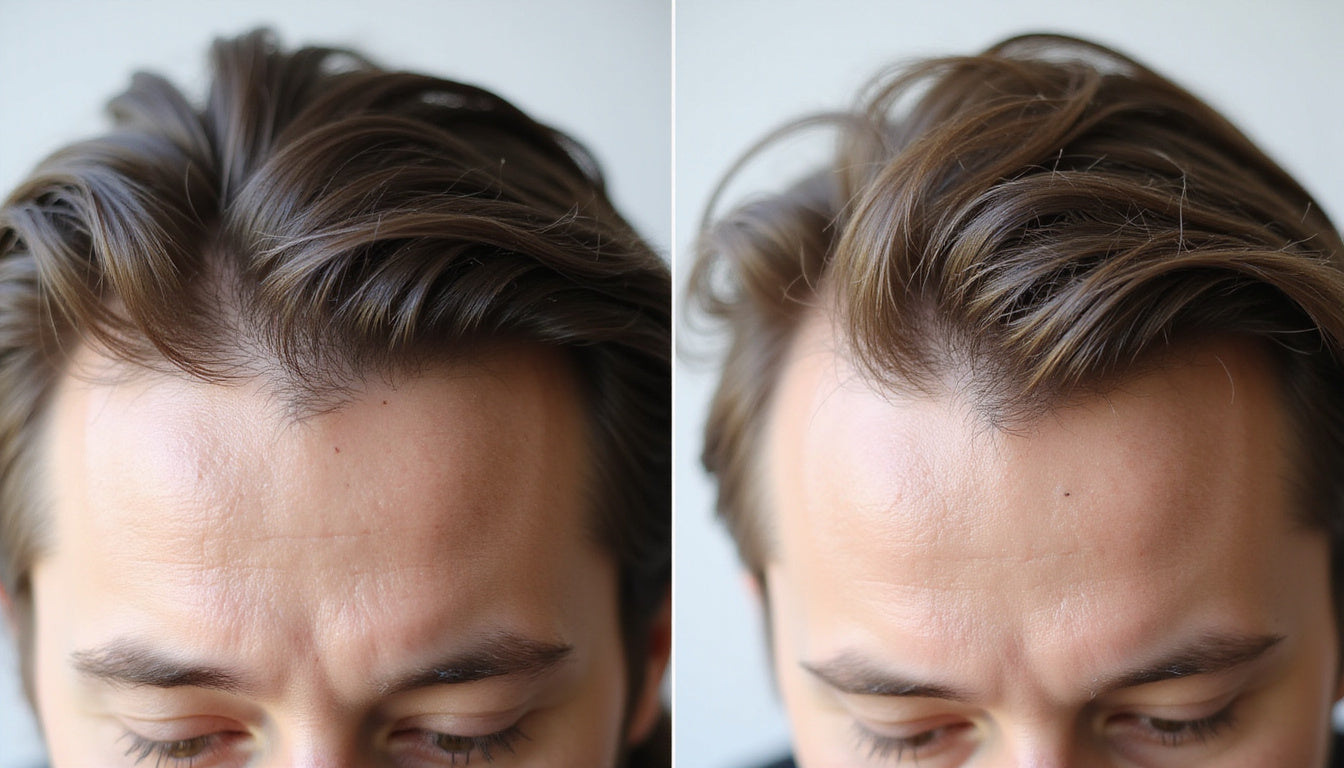
- Slowing or stopping hair loss: Many see less shedding. Keeping current hair is a big win.
- Better density in thin spots: Some users notice hair appears thicker and darker.
- Different outcomes: Some get a strong change, others note a small improvement, and a few may see little change.
Limits
- No revival of dead follicles: Follicles that are lost will not return.
- Needs ongoing use: Stopping the treatment may bring back thinning.
- Not a cure for all issues: Overall health and care still matter.
Many start with a strong non-medical routine such as Watermans before adding a prescribed treatment.
Addressing Common Questions About Topical Finasteride
“Does topical finasteride work for thinning hair?”
Early work shows that topical finasteride can slow hair loss and improve hair density in those with male pattern baldness. Small studies and user reports show that it lowers DHT on the scalp and can support regrowth in active follicles. You must use it under a doctor’s watch and with a sound hair-care routine like Watermans Grow Me Shampoo.
“Is topical finasteride safe for long‑term use?”
Many users stay on finasteride for years because it works best when used continuously. Topical forms may lower the chance of whole-body effects but do not remove risk. Regular check-ups with a dermatologist or specialist are wise. If you worry about long-term changes, starting with non-hormone methods like the Watermans Hair Survival Kit might make you more at ease.
“Can I use topical finasteride with a hair‑growth shampoo?”
Yes. Many people mix topical finasteride with a focused shampoo. A product like Watermans Grow Me Shampoo—with Biotin, Rosemary, Caffeine, Niacinamide, Argan Oil, Allantoin, and Lupin Protein—helps the scalp and hair look better while the medical treatment does its work. Always use topical finasteride on a clean, dry scalp after washing.
Take Control of Thinning Hair: Your Next Step
Thinning hair or balding does not force you to give up on your hair. Topical finasteride acts in a new way on the hormone path that leads to hair loss. It works locally and may show fewer whole-body effects than pills. It is just one part of the plan and may not be the first step for everyone.
If you start to see thinning or want a non-medical start to support fuller hair, pick up a better hair-care routine. Try Watermans Grow Me Shampoo and the complete Watermans Hair Survival Kit to feed your scalp and boost your hair from the roots.
Then, if you need more help, speak with a dermatologist about using topical finasteride. By pairing smart hair care with the right treatments, you work to keep your hair strong, add thickness, and feel good each time you see your reflection.