Hair shaft diameter: What It Reveals About Strength and Health
Hair Shaft Diameter: What It Reveals About Strength and Health
Your hair’s diameter shows strength and care. Experts check each strand’s width to see how your scalp and body work. Genes, hormones, and diet affect the size of each hair. In short, each strand tells its own small tale.
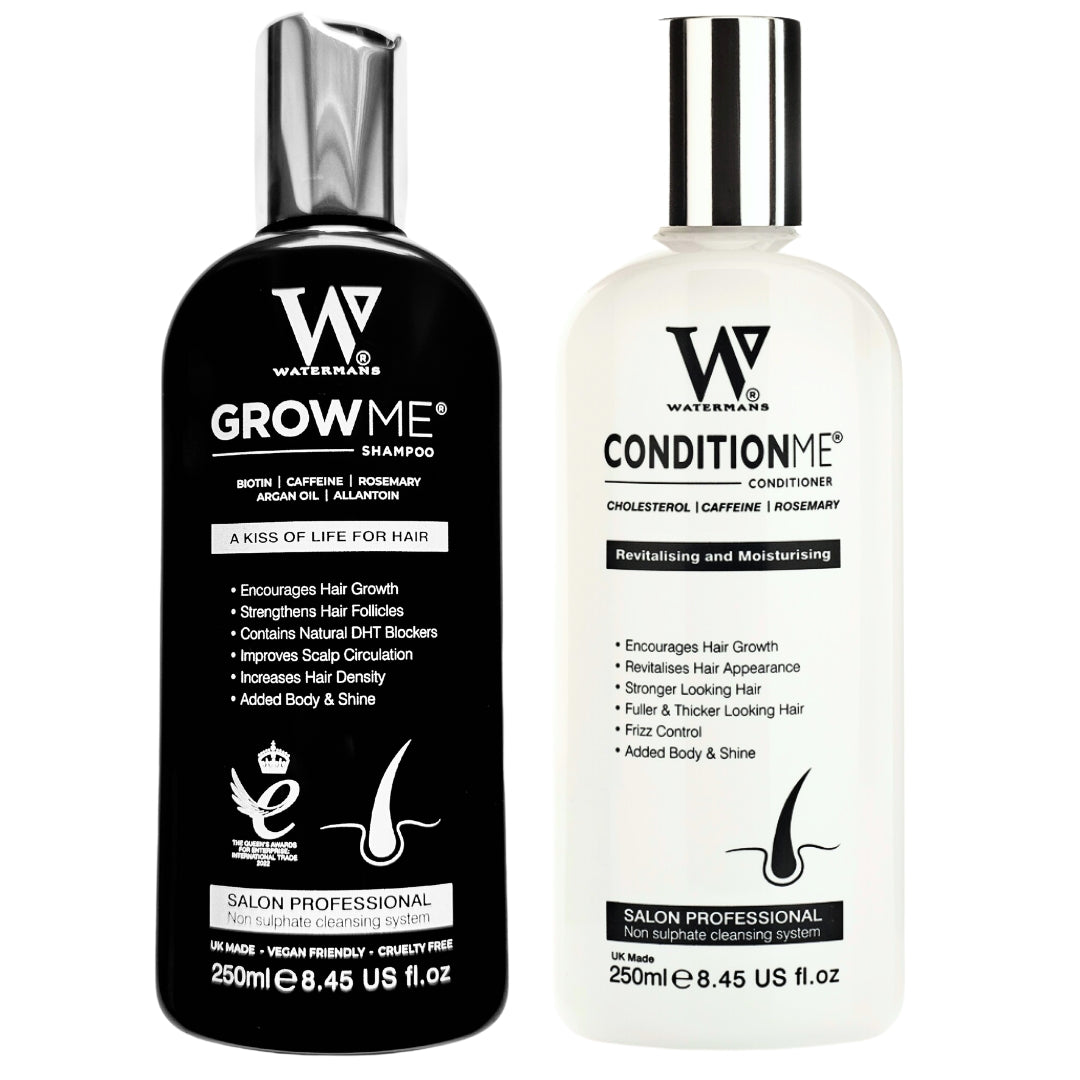
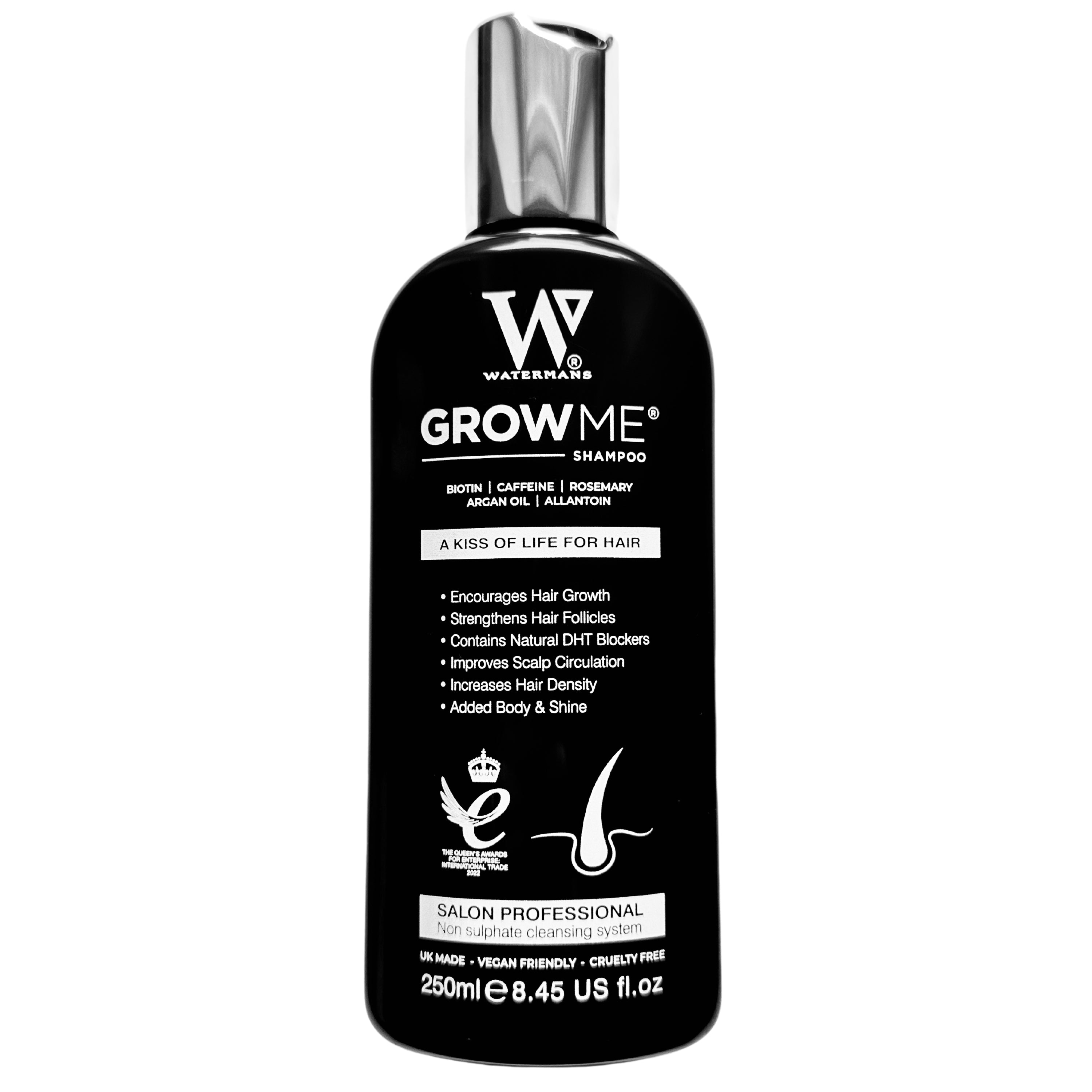
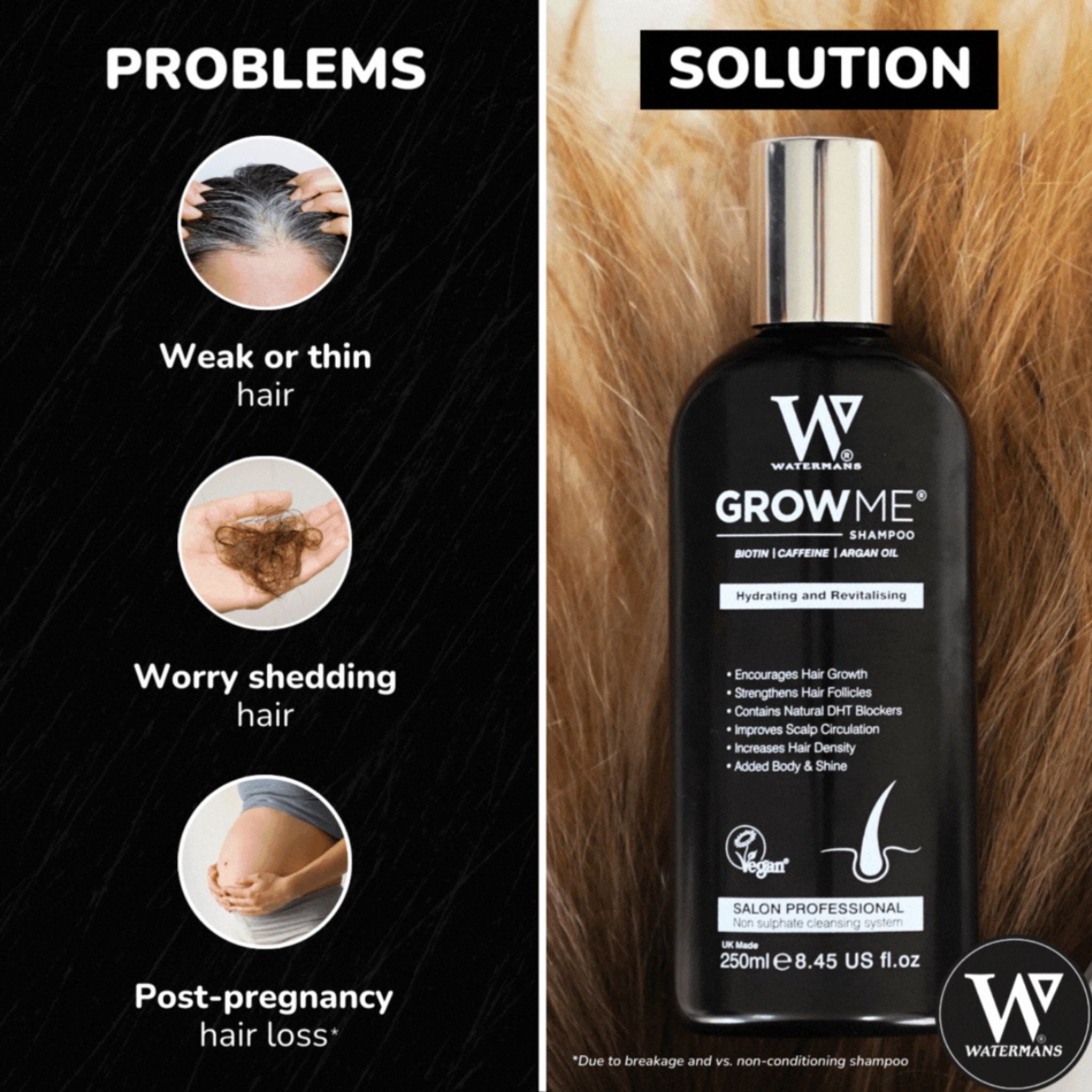
If you want thicker and stronger hair, start with a gentle shampoo meant to support growth. One popular natural choice is Watermans Grow Me Shampoo. This product has Biotin, Rosemary, Caffeine, Niacinamide, Argan Oil, Allantoin, and Lupin Protein. It works at the roots to boost the scalp and give your hair more body.
What Is Hair Shaft Diameter?
Hair shaft diameter means the width of one hair. It is measured in micrometres (μm). Experts use tools like:
- A trichoscope or a scalp microscope
- A digital microscope with measurement features
- Lab tools such as laser or electron scanners for research
Most human hair fits into these ranges:
- Fine hair: about 20–40 μm
- Medium hair: about 40–60 μm
- Coarse hair: about 60–100+ μm
The width of your hair affects how it behaves. It changes:
- Volume appearance
- Curl or style retention
- Breakage and tangling
- Oil production and uptake
Hair Shaft Diameter vs. Hair Density: Why They’re Not the Same
Many confuse hair shaft diameter (the width of a single strand) with hair density (the count of hairs in a scalp area). These traits link but differ.
- Hair shaft diameter: Think of one strand’s width.
- Hair density: Think of the number of hairs in a given space.
You can have:
- Many fine hairs (high density, low width)
- Few thick hairs (low density, high width)
- A mix, which is common
This matters because a person may say their hair is “thin” if the strands are fine, even when count is normal. Another may lose hairs, yet the strands remain thick. Early thinning can stay hidden until later.
When you see thinning, it could be due to:
- A gradual decrease in each hair’s width over time.
- A loss in the number of hairs growing.
A good haircare plan works to keep hairs strong and slow the loss of width.
How Hair Shaft Diameter Is Classified: Fine, Medium, and Coarse
Experts sort hair thickness in three groups.
Fine Hair
- Diameter: approx. 20–40 μm
- May seem nearly clear when held to light
- Heavy products can weigh it down
- It can appear flat even with many strands
- It breaks more easily with heat or stress
Medium Hair
- Diameter: approx. 40–60 μm
- This is seen as average
- It is balanced in strength and body
- It holds styles and colour well without heavy products
Coarse Hair
- Diameter: approx. 60–100+ μm
- It feels strong and full
- It may resist chemical treatments or heavy styling
- It needs more moisture to avoid dryness and frizz
Keep in mind that hair thickness can change with:
- Scalp region (for example, front vs. back)
- Hair colour (light hair may have more fine strands; dark hair may have thicker but fewer hairs)
- Ethnic and genetic factors
What Hair Shaft Diameter Reveals About Your Hair’s Strength
A larger hair shaft has more structure in it. Each strand has three main parts:
- Cuticle: the outer layer that protects the hair
- Cortex: the main body with keratin and pigment
- Sometimes a medulla in the centre, depending on hair type
Strands with larger diameters usually contain more keratin and may have more cuticle layers. They tend to handle stress from brushing and styling better. Yet, thicker hair may be damaged if the outer layer is harmed. Fine hair can be very healthy even if it is naturally delicate.
In simple terms, shaft diameter sets the basic strength, while your routine can keep that strength close to its best.
What Hair Shaft Diameter Reveals About Overall Hair Health
Changes in hair width over time can show shifts in health and hormones.
1. Miniaturisation in Pattern Hair Loss
In common hair loss, follicles in some areas get sensitive to DHT. This causes the following:
- The growth phase to be shorter
- The rest phase to be longer
- New hairs to have a smaller diameter
Over time, thick hairs may change into very fine ones. Tracking this change in affected areas helps spot early thinning.
2. Nutritional Deficiencies
A lack of protein, iron, zinc, or certain B vitamins can disturb hair formation. This may lead to:
- Smaller hair shaft diameter
- More fragile strands
- Increased breakage even when hair count stays the same
A diet with enough protein, good fats, and key nutrients helps keep hair normal in thickness. Research from the American Academy of Dermatology shows that sudden diet changes can lead to hair shedding and lower quality (source: American Academy of Dermatology).
3. Endocrine and Hormonal Shifts
Hormones can change hair width:
- After childbirth or during menopause, many women see finer hair and more shedding.
- Thyroid issues (low or high) can affect texture and shine.
- Excess androgens in some people may change the hair’s width.
If you see an uneven drop in hair width along with signs like weight change or tiredness, see a doctor.
4. External Damage
Chemical treatments, frequent heat styling, and rough handling can harm the hair’s outer layer. This damage may not change the measured width much, but it makes the hair feel thinner and more brittle. A routine with hydration, protein masks, and a gentle shampoo like Watermans Grow Me Shampoo helps keep the hair structure safe.
How to Estimate Your Hair Shaft Diameter at Home
Professional tools get precise numbers, but you can try these simple methods.
1. The Touch Test
- Fine hair: A strand feels barely there or like a thin web between your fingers.
- Medium hair: You feel it clearly without heaviness.
- Coarse hair: It feels thick and strong to your touch.
2. The Thread Comparison Test
- Hold a sewing thread of standard thickness.
- Compare one hair to the thread:
- Fine: The hair is much thinner.
- Medium: The hair feels about the same.
- Coarse: The hair is thicker than the thread.
3. Visual and Styling Clues
- Fine hair often struggles to keep a curl and gets weighed down fast.
- Medium hair can hold styles with light products.
- Coarse hair resists styling and may feel stiff, needing more moisture.
A trichologist or dermatologist can use a digital scope for precise measurements over time.
Can You Actually Increase Hair Shaft Diameter?
Many ask, “Can I change my hair shaft diameter permanently?”
The short reply is that your genes set your basic hair thickness. You cannot permanently change fine hair to coarse hair. However, you can affect:
- The width of new hairs under some conditions (for example, by reversing early thinning with treatment).
- The way hair feels by using products that make each strand seem thicker.
Here is how to work on it:
1. Support the Scalp for Better-Quality Growth
Healthy follicles help make hair run close to your natural width. Improving circulation, reducing inflammation, and keeping buildup low matter. A shampoo like Watermans Grow Me Shampoo fits in well. Its mix of Caffeine, Rosemary, Biotin, Niacinamide, and Lupin Protein works at the scalp. It also nourishes hair and scalp with Argan Oil and Allantoin.
2. Use Thickening and Film-Forming Ingredients
Some hair products make each hair seem thicker:
- They add proteins (such as keratin or wheat protein) that fill small gaps on the cuticle.
- They coat the hair with polymers or light conditioners that boost the strand’s feel and body.
Lupin Protein, found in Watermans Grow Me Shampoo, acts to strengthen hair and give it more body.

3. Minimise Miniaturisation Where Possible
When early hormonal hair loss is diagnosed, clinical treatments (like minoxidil or finasteride) may help slow the thinning process. With a routine that includes gentle cleansing and careful styling, you may help new hairs keep a better width.
How Hair Shaft Diameter Affects Styling and Daily Care
Hair shaft diameter directly changes how hair works with products, heat, and style routines.
If You Have Fine Hair
- Key points: limp looks, breakage, oily roots, dry ends
-
Your focus:
- Use light shampoos and conditioners aimed at boosting volume
- Choose sprays and foams for root lift instead of heavy creams or oils
- Detangle gently and use low heat
- Fine hair has less material inside, so it breaks more easily with stress.
If You Have Medium Hair
- Key points: keeping balance—avoiding buildup and dry areas
-
Your focus:
- Use a balanced shampoo such as Watermans Grow Me Shampoo
- Use moderate heat with a protectant
- Use masks now and then for strength and softness
If You Have Coarse Hair
- Key points: dryness, frizz, rough texture, hard to smooth
-
Your focus:
- Use rich conditioners and leave-ins, focused on mid-lengths and ends
- Use nourishing oils (like Argan Oil from Watermans Grow Me)
- Give extra time to style with diffusers or flat-irons at safe temperatures
- Coarse hair is thick but sometimes has a lifted outer layer, which can cause moisture loss.
Ingredients That Support Healthy Hair Shaft Diameter and Strength
Some ingredients help keep your hair and scalp in good shape. They work by supporting hair formation and making each strand feel full.
Biotin
Biotin (vitamin B7) supports keratin. A lack of biotin can lead to thinning hair. Topical biotin helps keep hair strong.
Caffeine
Shampoos with caffeine may lift hair follicles and fight DHT effects locally. This helps create a better setting for hair growth and indirectly keeps hairs at their best width.
Rosemary
Rosemary extract or oil works to boost scalp circulation. Some research shows it may help in cases of pattern hair loss. The studies are still young.
Niacinamide
Niacinamide (vitamin B3) supports the scalp’s barrier and blood flow. This is key for follicles to produce hair at their natural width.
Argan Oil
Argan Oil holds fatty acids and vitamin E that smooth the cuticle, add shine, and improve elasticity. These benefits lower breakage and help fine hair feel fuller.
Allantoin
Allantoin calms and conditions. It helps the scalp feel comfortable and supports the growth environment.
Lupin Protein
Lupin Protein is a plant-based protein that strengthens the hair surface. It helps hair feel fuller and resist breakage. It works well when hair is naturally fine.
These ingredients join together in Watermans Grow Me Shampoo. This shampoo stands as a natural, non-clinical aid for those who want hair that looks thick, strong, and healthy.
Hair Shaft Diameter Across Different Hair Types and Textures
Your curl type and texture work with your hair width in many ways.
Straight Hair (Type 1)
- It can be fine, medium, or coarse.
- Fine straight hair looks flatter because strands lie close.
- Coarse straight hair appears full and dense, but may feel stiff.
Wavy Hair (Type 2)
- It is often medium in width, though it can vary.
- A wider hair and natural waves can give body.
- Fine wavy hair may lose shape fast; coarse wavy hair may frizz.
Curly Hair (Type 3)
- It is usually medium to coarse.
- The curl and width together affect volume and shrinkage.
- Coarse curls need moisture and light films to stay smooth.
Coily/Kinky Hair (Type 4)
- It might be fine, medium, or coarse. Many think coily hair is always thick, which is not so.
- Fine coily hair is very prone to breakage due to tight curves.
- Coarse coily hair may seem strong but still needs moisture at its bends.
For textured hair, keep both scalp and hair care in focus. A gentle shampoo like Watermans Grow Me builds a good base.
Everyday Habits That Protect Hair Shaft Diameter and Strength
While you cannot change your genes, you can work to keep your hair as strong as it can be. Here are some simple steps:
-
Cleanse your scalp gently.
Wash with a shampoo that helps the scalp and hair grow, such as Watermans Grow Me Shampoo. This wash clears excess oil and buildup that may block follicles. -
Be careful with heat.
Use a low temperature, always spray a heat protectant, and avoid daily high heat. Fine hair loses strength faster under high heat. -
Protect your hair by reducing damage.
Do not brush harshly, especially when wet. Use a wide-tooth comb, start from the ends, and sleep on silk or satin pillowcases to lower friction. -
Balance moisture and protein.
Use hydrating masks and occasional protein treatments. Too much protein can stiffen fine hair, and too much moisture may make hair limp. -
Choose styles that do not pull at the roots.
Tight ponytails, braids, or buns may stress the follicles. While they do not change the width, they can lower hair count over time. -
Feed your hair from inside.
Eat enough protein, iron, zinc, and healthy fats. If you suspect a deficiency, ask a doctor for tests. -
Monitor changes over time.
Take photos and check if new hair looks finer than older sections. Early action works better than later fixes.
When Changes in Hair Shaft Diameter Should Concern You
Some changes in hair width require attention. See a professional if you note:
- A sudden drop from longer-lasting width to clearly finer hair in some areas (temples or crown)
- Many hairs falling out, along with new hairs that feel very fine and weak
- Patchy thinning or bald spots, especially when the skin looks smooth or scarred
- Other signs like tiredness, cold feelings, weight change, or changes in periods
Dermatologists and trichologists can:
- Measure hair width across different spots
- Check scalp health and spot signs of damage or scars
- Suggest treatments when needed
- Recommend daily routines to support your follicles
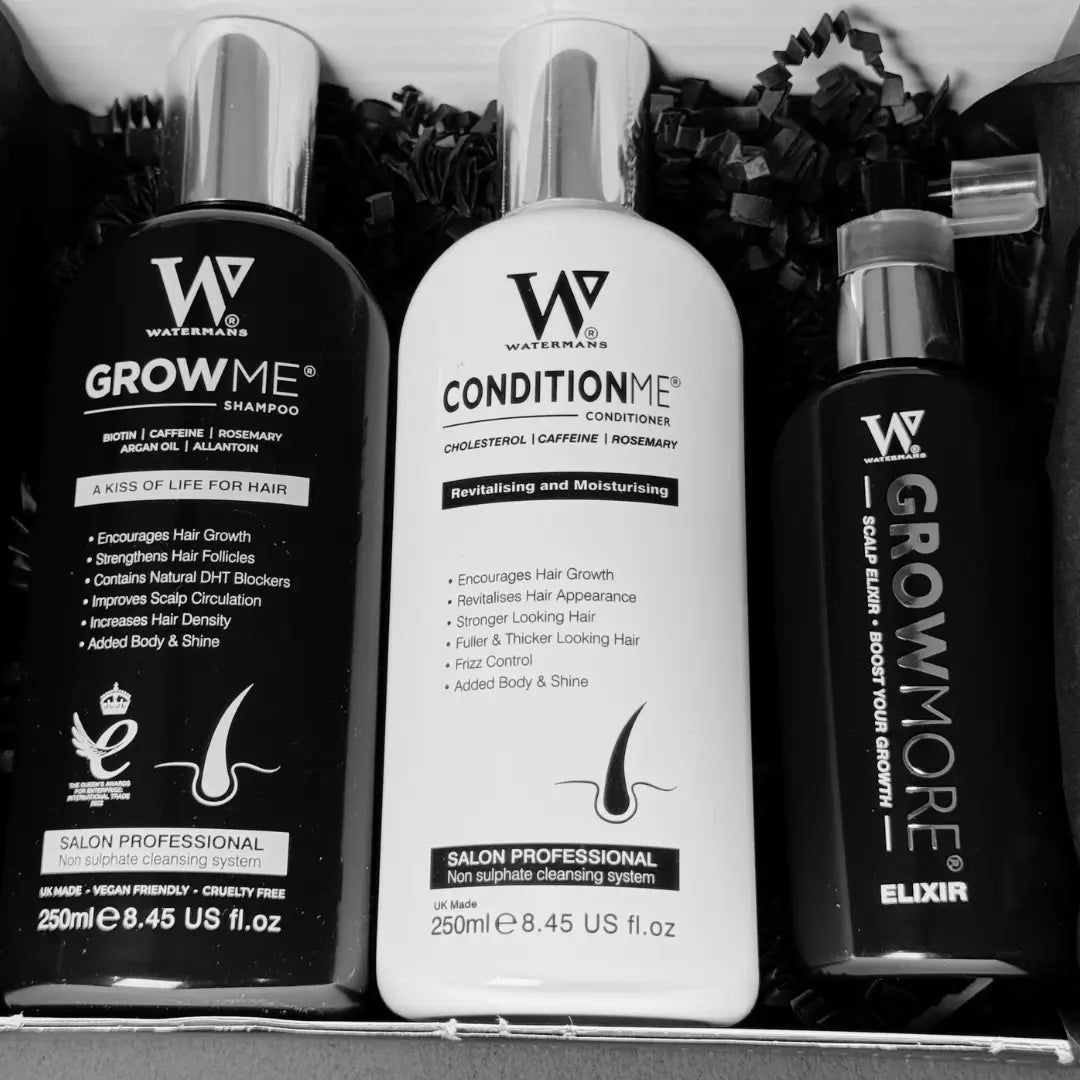
Even if you start medical treatment, non-clinical care like Watermans Grow Me Shampoo and the Watermans Hair Survival Kit can help keep both scalp and hair strong.
Building a Routine Focused on Optimising Hair Shaft Diameter
Design a daily routine that supports both the scalp and each hair strand.
Morning / Wash-Day Focus
-
Step 1: Stimulating Cleanse
Use Watermans Grow Me Shampoo to wash your scalp. Massage for a few minutes so that caffeine, rosemary, biotin, niacinamide, and lupin protein work at the roots. -
Step 2: Tailored Conditioning
- For fine hair: apply conditioner from mid-lengths to ends.
- For medium or coarse hair: you may apply some near the roots if the scalp feels dry, and focus on the lengths.
-
Step 3: Protective Styling Products
- Use a light leave-in conditioner or serum on the ends for any hair type.
- Choose a volumising spray for fine hair at the roots.
- Use richer creams or oils on coarse or textured hair.
Between Washes
- Keep buildup low so hair strands can breathe.
- Use dry shampoo if needed, mainly on the parting and front.
- Protect your ends with a small amount of oil or light leave-in on days with extra friction.
Weekly / Bi-Weekly Extras
- Apply a hydrating or protein mask to keep hair smooth.
- Give your scalp a gentle massage to boost circulation.
- Check how your hair feels. If it feels brittle, cut back on heat and protein. If it feels heavy, ease off on conditioner for a while.
The Watermans Hair Survival Kit gives a set of products that work together to support growth, strength, and body.
FAQs About Hair Shaft Diameter, Strength, and Health
1. How does hair shaft diameter relate to hair loss?
In many types of hair loss, the first change may be a reduction in each strand’s width. This process, sometimes called miniaturisation, makes each new hair finer. Tracking this width helps spot thinning early. A scalp-focused shampoo like Watermans Grow Me may help you keep hairs looking heavy and full.
2. Can products really change my hair shaft thickness, or is it just an illusion?
Your genes fix your basic width. Non-prescription products do not change this permanently. But they can make strands feel thicker by adding proteins and light films. This slight change can help your hair feel fuller and have more body.
3. What’s the best routine to support fine hair shaft diameter without weighing it down?
For fine hair, focus on protection without heavy buildup. Use a light, growth-supporting shampoo such as Watermans Grow Me Shampoo. Apply conditioner mainly from the mid-lengths to ends and use masks occasionally. Choose light sprays or foams over heavy creams. Gentle handling, low heat, and a balanced diet all help keep fine hair strong and full.
Take Action to Support Your Hair Shaft Diameter and Strength Today
Hair shaft diameter is more than a small detail. It shows your genetics, your health, and how you care for your hair over time. Though you cannot change your genes, you can work hard to keep your hair close to its natural strength.
Start with your scalp and daily routine. A targeted, natural formula like Watermans Grow Me Shampoo uses Biotin, Rosemary, Caffeine, Niacinamide, Argan Oil, Allantoin, and Lupin Protein. It works at the roots, boosts volume, and guards the integrity of every strand.
For a wider strategy, check out the Watermans Hair Survival Kit. Combining smart product choices with careful daily habits can help your hair look thick, strong, and healthy—starting with the very diameter of each strand.