DHT levels: Surprising Causes and Simple Fixes for Thinning Hair
DHT Levels: Causes and Easy Fixes for Thinning Hair
Your hairline moves back and your part widens. Your DHT levels might be behind this change. DHT, or dihydrotestosterone, earns the title “hair loss hormone.” Yet many do not know why some scalps feel its effects and others do not. You can work with this without rushing to strong drugs.
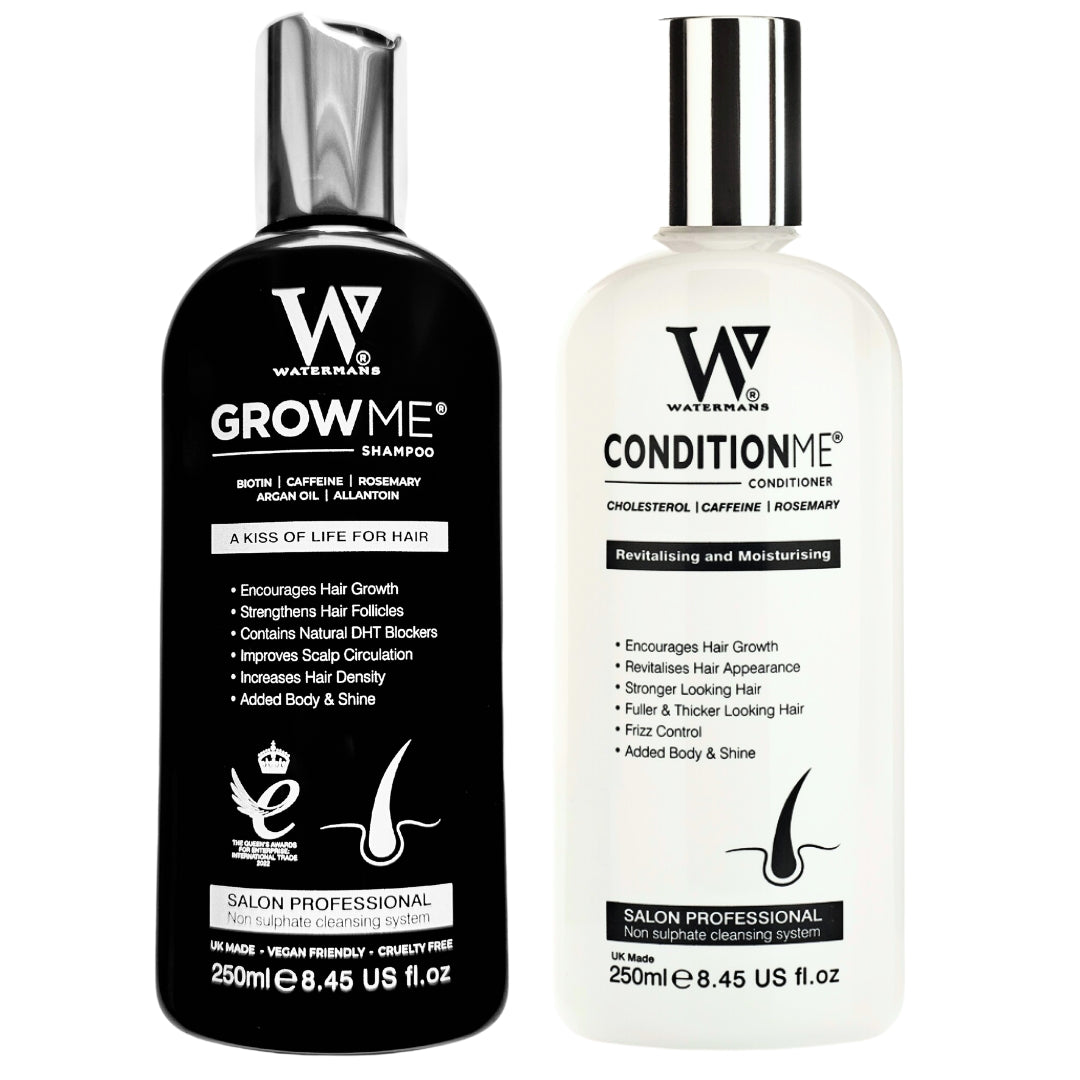
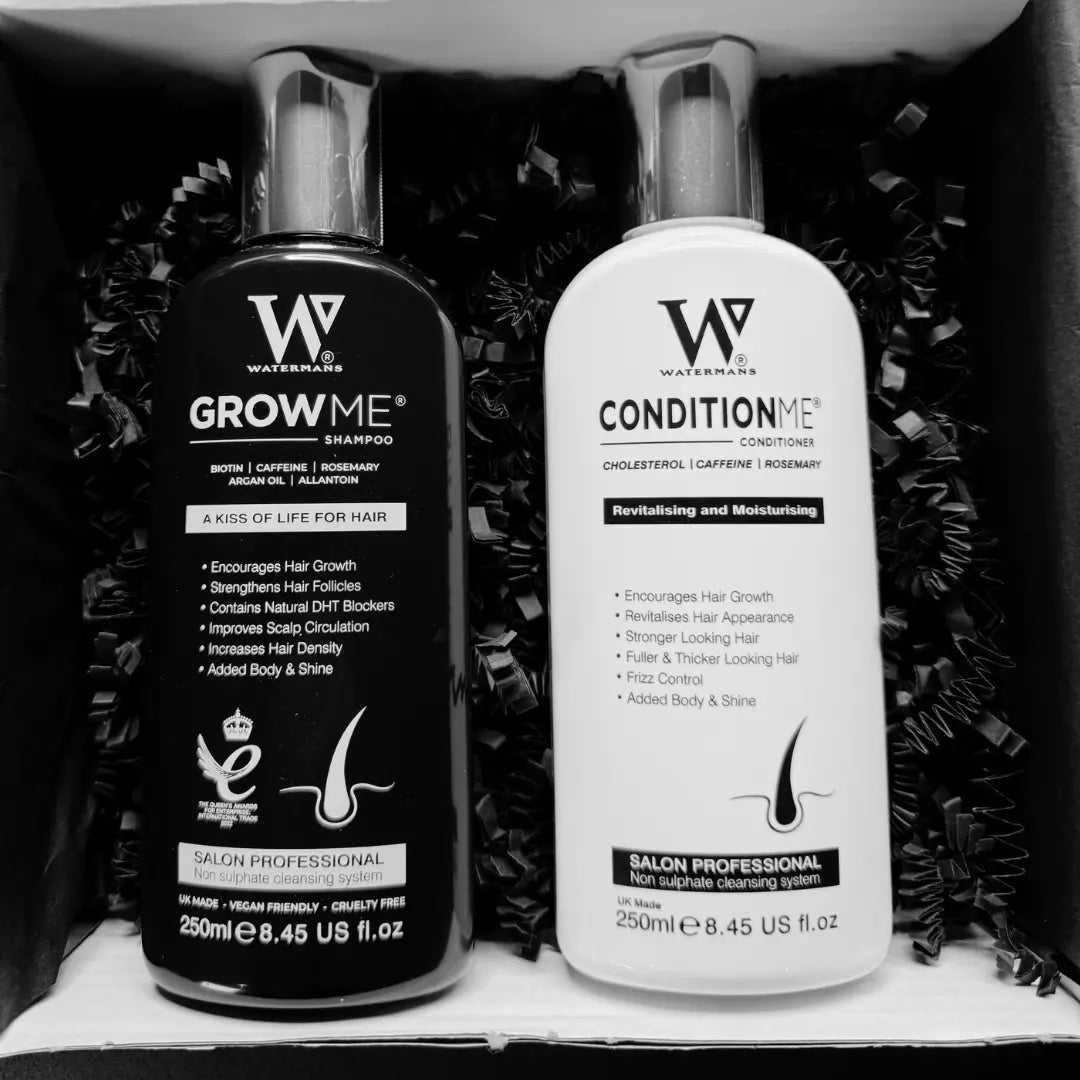
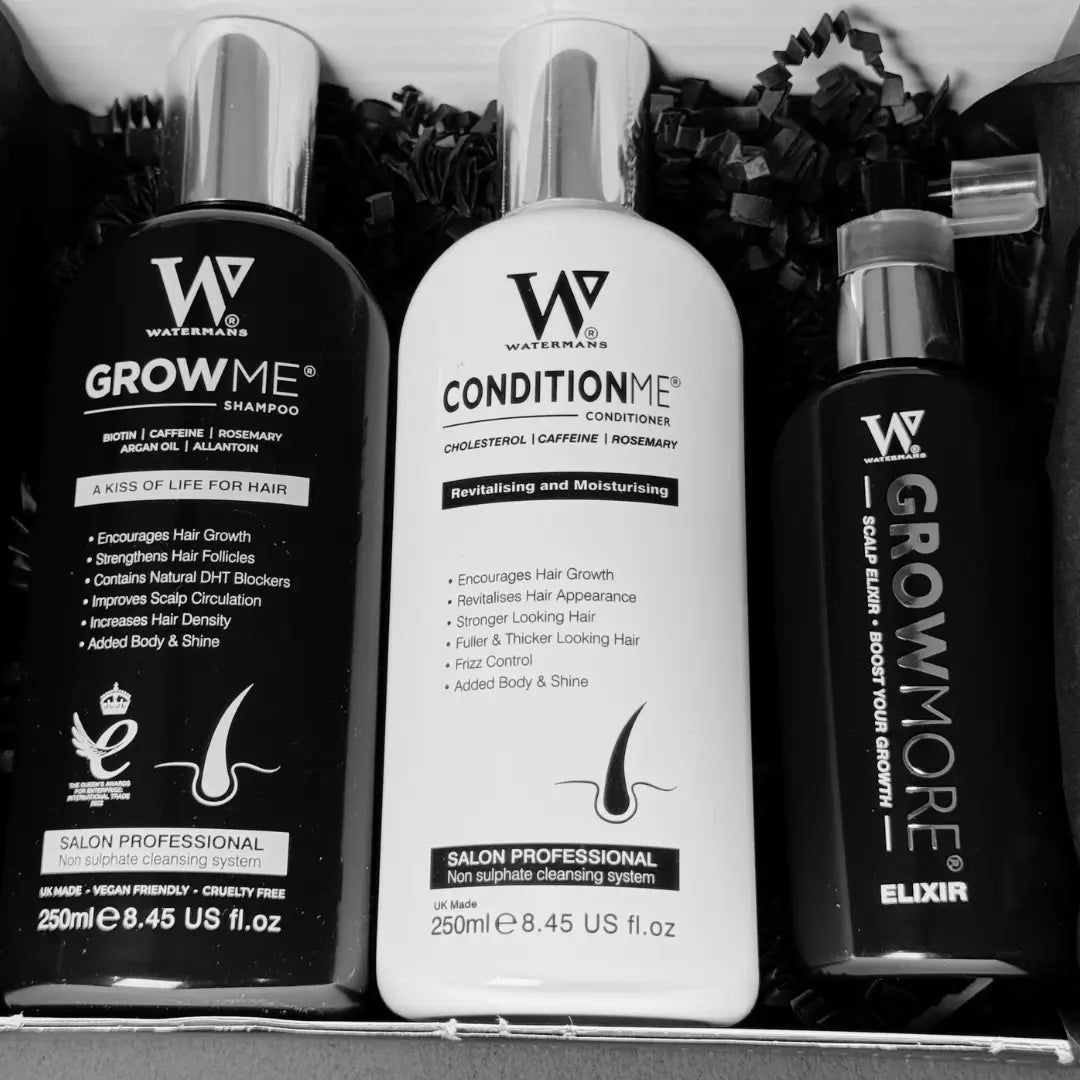
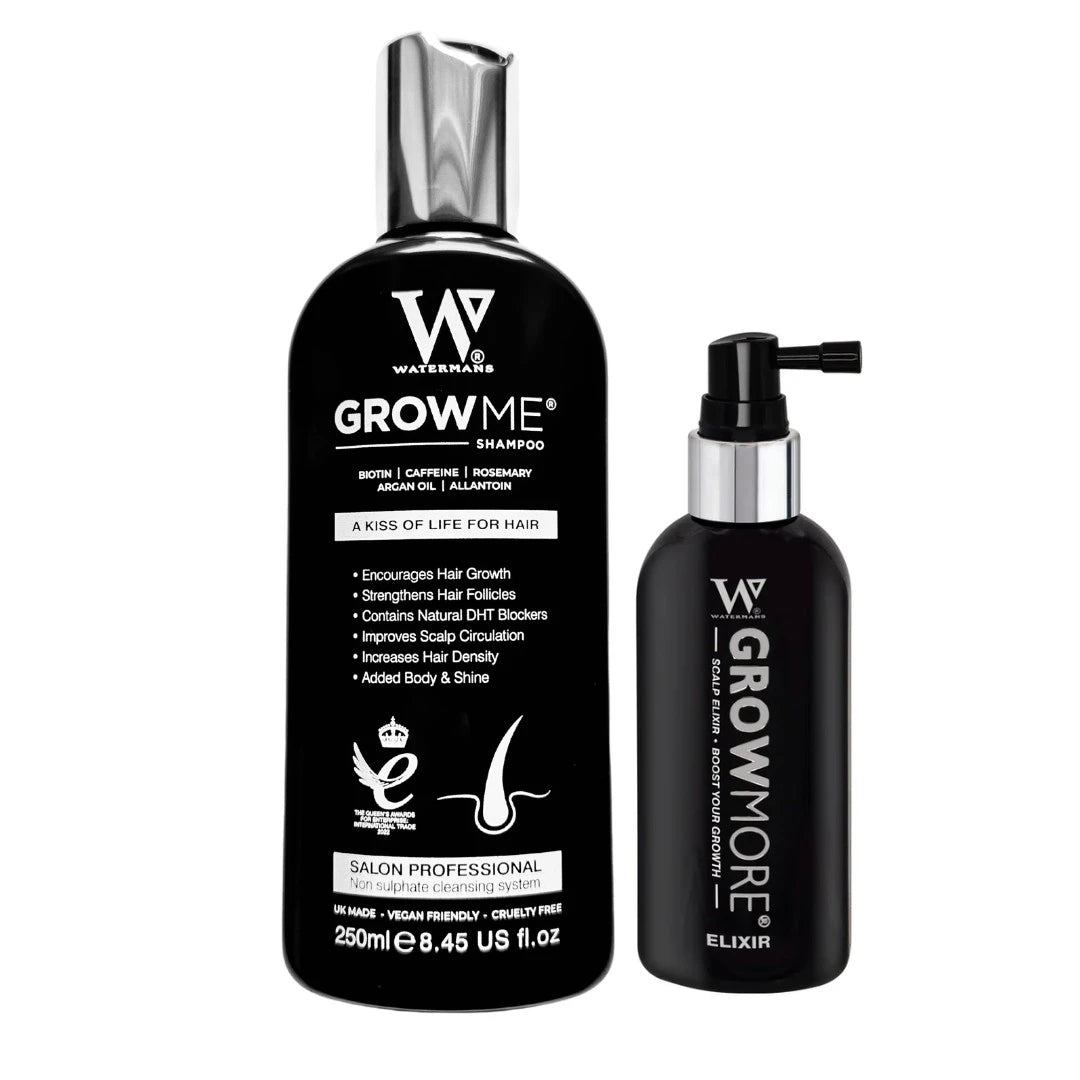
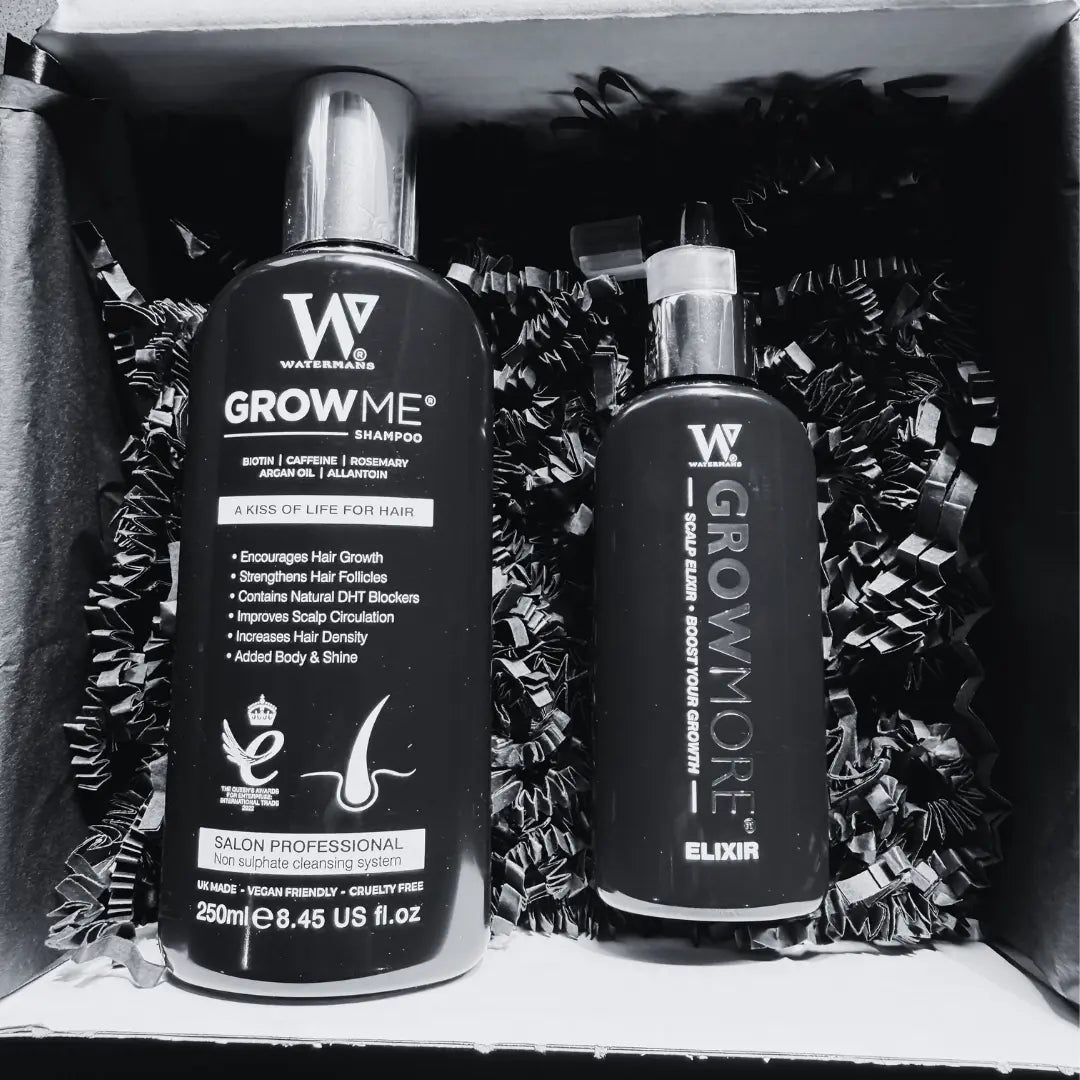
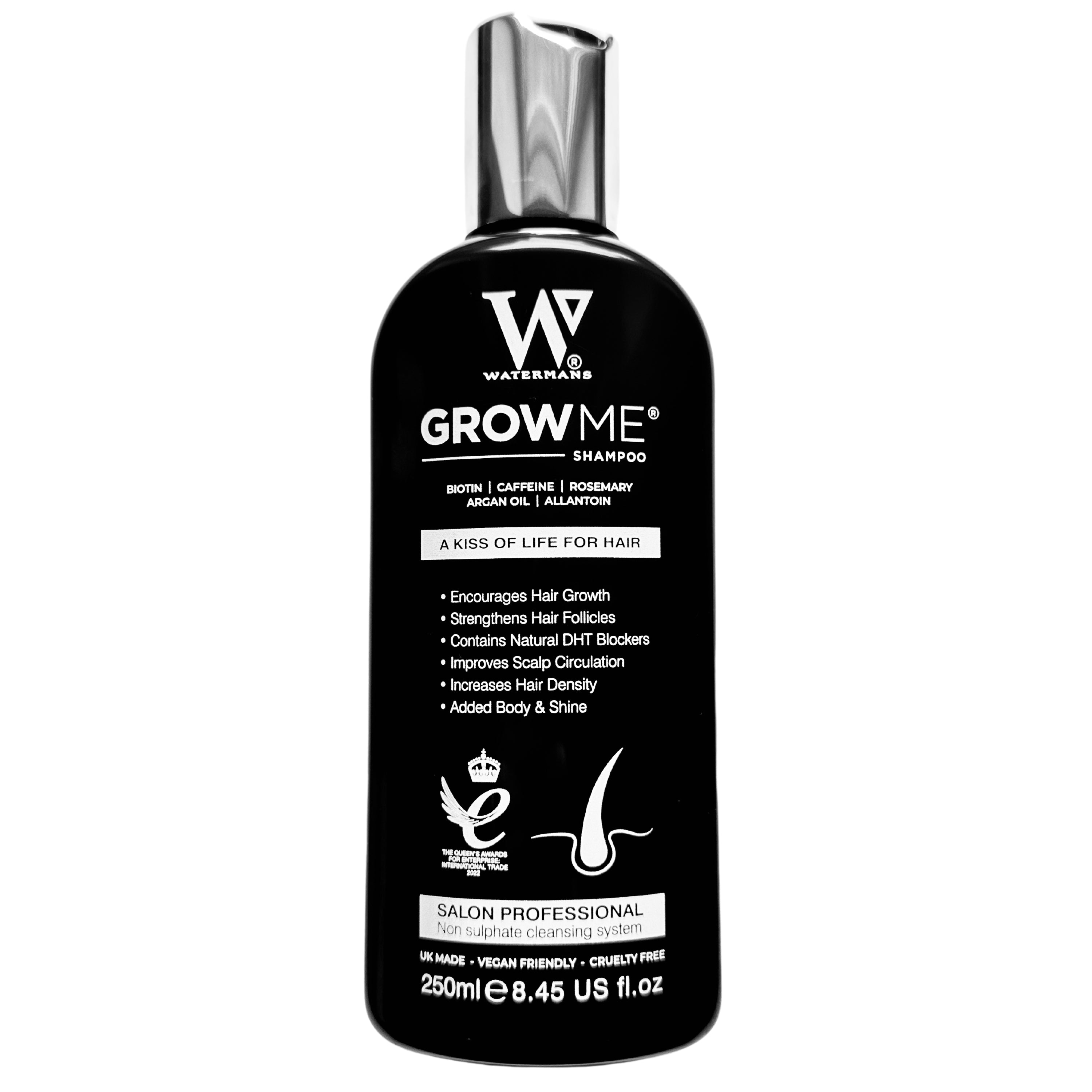
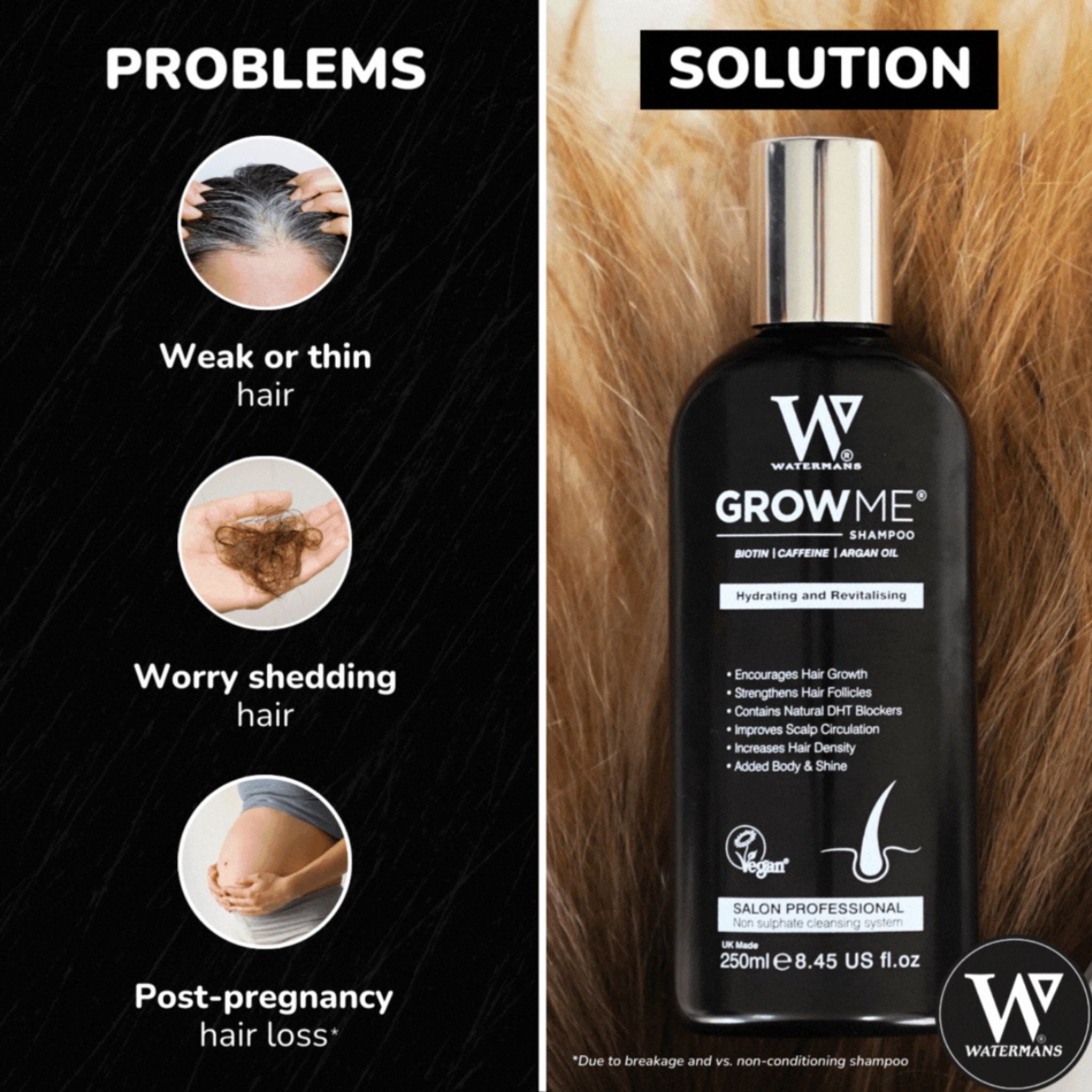
This guide shows what DHT is and why it affects hair. It explains how daily life and health can push DHT out of balance. You can also see simple fixes you can use now. Start with a smart shampoo choice like Watermans Grow Me Shampoo. It is a natural way to support hair growth without medicine.
What Are DHT Levels, Really?
DHT comes from testosterone with help from a small enzyme named 5α-reductase. It helps in male growth, body hair, and the prostate. The problem is not DHT itself. The issue is how your hair responds to it.
DHT and Your Hair Follicles
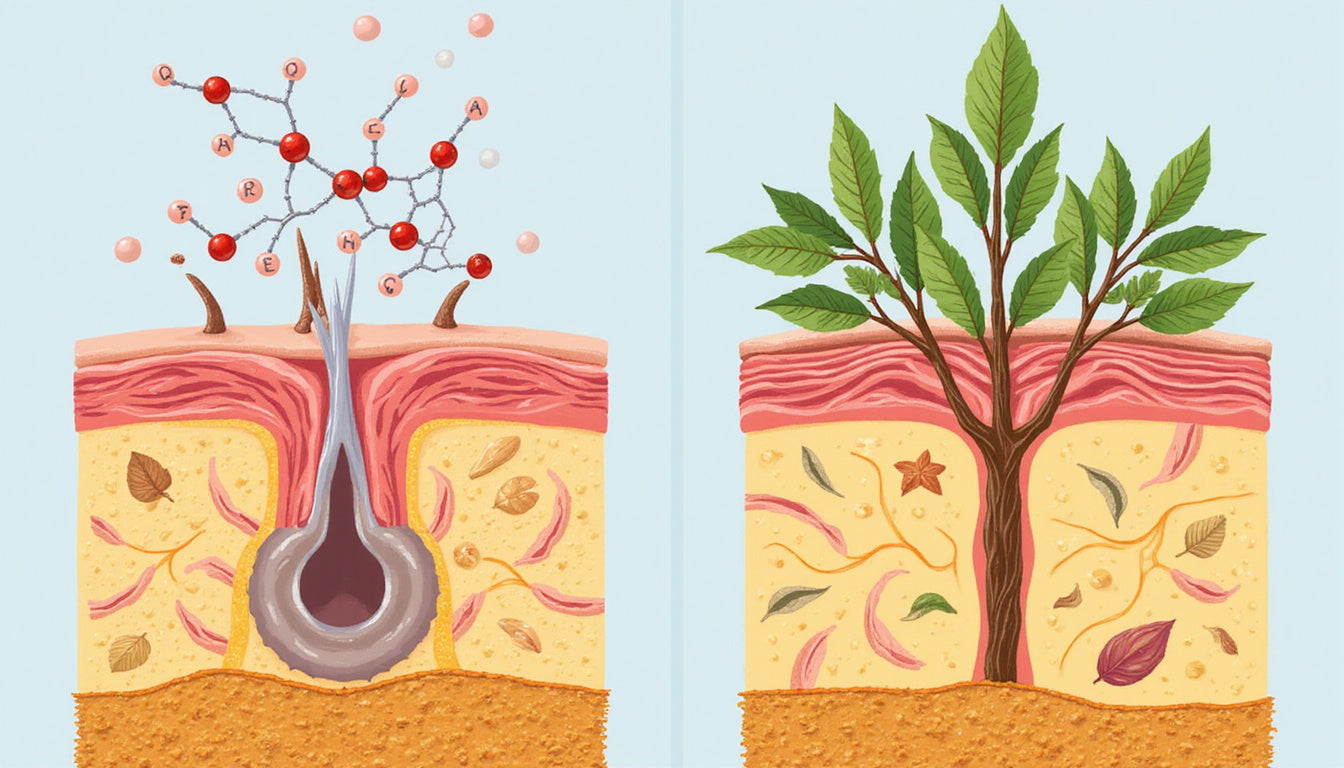
Hair follicles at your temples and crown may react strongly to DHT. When DHT connects with these follicles, it starts several changes:
- The growth phase (anagen) shortens.
- The resting phase (telogen) grows longer.
- The hair grows thinner, weaker, and shorter.
- Follicles may stop working.
This process is known as follicle miniaturisation. It is the main sign of pattern hair loss.
DHT Levels vs. DHT Sensitivity
Some people have the same DHT amount. Yet, one may lose more hair. This happens because:
- One has high follicle sensitivity.
- Another has low follicle sensitivity.
It is not just about the DHT level. It is also about how the follicles act when DHT is near.
Normal DHT Levels: What Is “High” or “Low”?
Doctors check DHT by blood tests, or sometimes by saliva. Labs give reference values. For men, readings often fall between 30–85 ng/dL. For women, the numbers are lower and usually under 20–30 ng/dL.
But lab numbers do not solve the story of your hair. Many with "normal" DHT still see thinning because:
- Your genes decide how many DHT receptors your follicles have.
- Your scalp may make local DHT that does not match blood values.
- Other hormones change how DHT works.
Lab tests give one clue. They do not show the whole picture.
How DHT Levels Lead to Thinning Hair Over Time
A timeline can help you spot the first hints.
Stage 1: Small Shedding and Texture Shifts
You may see:
- More hairs on your pillow or in the shower.
- A thinner ponytail.
- Hair that feels flat or limp.
At this stage, DHT has worked on your follicles for a while, but the change is small.
Stage 2: Thinning and a Receding Hairline
As time passes:
- Men show a receding hairline and thinning crown.
- Women show a widening part and thinning on the top.
The follicles get smaller. Hairs become shorter and finer. The scalp shows through more easily.
Stage 3: Follicles Stop Working
Some follicles may stop working completely. Here, care is very needed. No solution restores hair completely once follicles rest long. Yet many people can:
- Slow the hair loss.
- Keep the density of the hair they have.
- Support regrowth from working follicles.
A routine for the scalp—including shampoos like Watermans Grow Me Shampoo—helps the scalp and supports the hair from its roots.
Causes of Raised DHT Levels and Hair Loss
Genetics is a factor, but other factors also raise DHT and affect the scalp.
1. Ongoing Stress and Cortisol
Stress raises cortisol. This change can affect testosterone and push more DHT production via 5α-reductase. Stress also shortens hair growth and pushes hairs to fall out. With DHT-sensitive follicles, this speeds up thinning.
2. Insulin Resistance and Sugar Jumps
High sugar and insulin resistance affect hormone balance. Research connects insulin issues with conditions like PCOS in women. In these cases, higher androgens may worsen scalp thinning (and sometimes increase facial or body hair).
- Sweets or refined carbs show up more.
- You feel tired after meals.
- Weight builds up in the middle.
These factors work with DHT to change hair health.
3. Lack of Key Nutrients and Scalp DHT
The body sends key nutrients to organs before hair. If you are low in iron, zinc, B vitamins, or protein, your follicles lose strength against DHT. The blood levels may not change much, but:
- Follicles become less strong.
- The repair and growth process slows.
- The effect of DHT becomes more clear.
4. Inflamed Scalp Problems
Conditions like dandruff, seborrheic dermatitis, psoriasis, or long-term itching create an angry scalp. Inflammation can:
- Boost local DHT work.
- Limit blood flow to follicles.
- Hurt the scalp’s surface.
An irritated scalp with DHT-sensitive follicles leads to faster thinning. Using soothing and mild formulations is a smart step.
5. Certain Medicines and Supplements
Some medicines and supplements can change DHT or hormone balance. These include:
- Anabolic steroids
- Some progestins in birth control
- DHEA or products that raise testosterone
If you see hair changes after starting something new, talk with your doctor.
6. Lack of Sleep
Poor sleep harms hormone balance:
- Cortisol rhythms are upset.
- Testosterone production changes.
- Repair routines break down.
Lack of sleep increases DHT’s effect on fragile follicles.
Signs Your Hair May React to High DHT Levels
You do not need a lab test to suspect DHT issues. Look for signs like:
- A family history of pattern baldness.
- Thinning in patterns at the temples, crown, or widening part.
- Hair that is short, fine, and pale in thinning areas.
- An oily scalp with a weak hair shaft.
- Thinning that begins in your teens, twenties, or thirties.
Other issues, like thyroid changes or low iron, can also cause hair loss. A doctor can check for those. Yet, the pattern and timing might point to DHT.
Natural First-Line Approach: Guard Your Scalp from DHT
Before you consider strong drugs, work on your scalp’s health. The scalp is the place where DHT meets your hair.
Why the Right Shampoo Matters
A good shampoo does more than clean. It can:
- Keep your scalp's natural balance.
- Turn on blood flow to the hair roots.
- Bring helpful ingredients directly to the scalp.
- Mildly reduce inflammation that adds to DHT’s effects.
This is why Watermans Grow Me Shampoo gets many fans. It is a natural option before shifting to drugs.
Watermans Grow Me Shampoo: Active Ingredients for Hair
The shampoo uses several parts to work on the scalp and add volume. Its mix includes:
- Biotin – It builds the keratin structure to make hairs strong.
- Rosemary – Used in scalp care; it is linked with better blood flow and denser hair.
- Caffeine – Seen in studies for its help with DHT at the follicle and for longer hairs.
- Niacinamide – It works on the scalp’s barrier, helps circulation, and calms irritation.
- Argan Oil – It feeds hair and protects each strand without weighing it down.
- Allantoin – It calms the scalp and eases irritation.
- Lupin Protein – A plant protein that strengthens hair and adds body.
Using a shampoo that cleans and works on the scalp means you address one part of the DHT challenge every day.

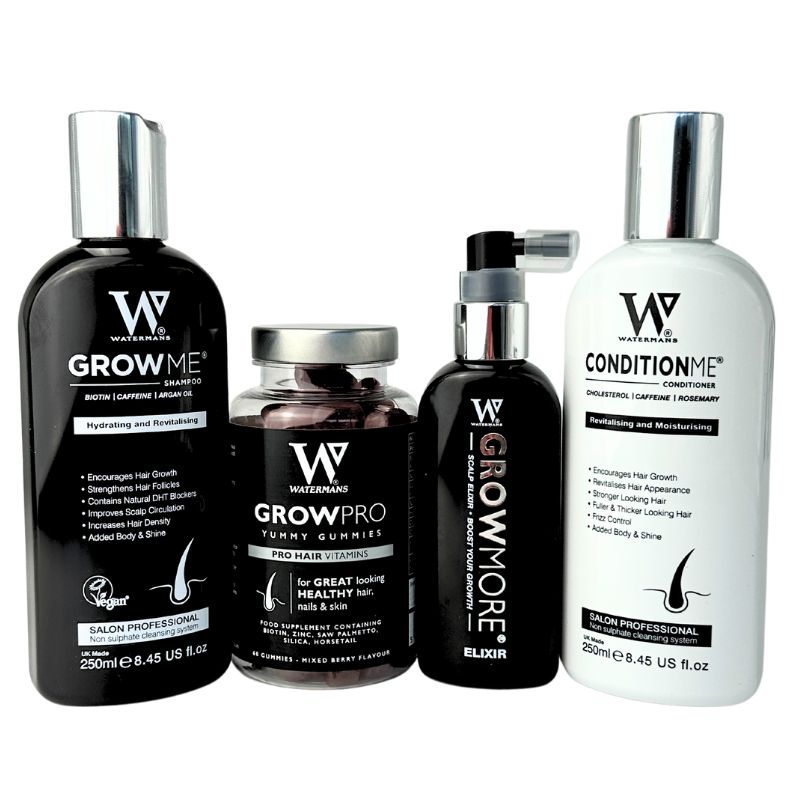
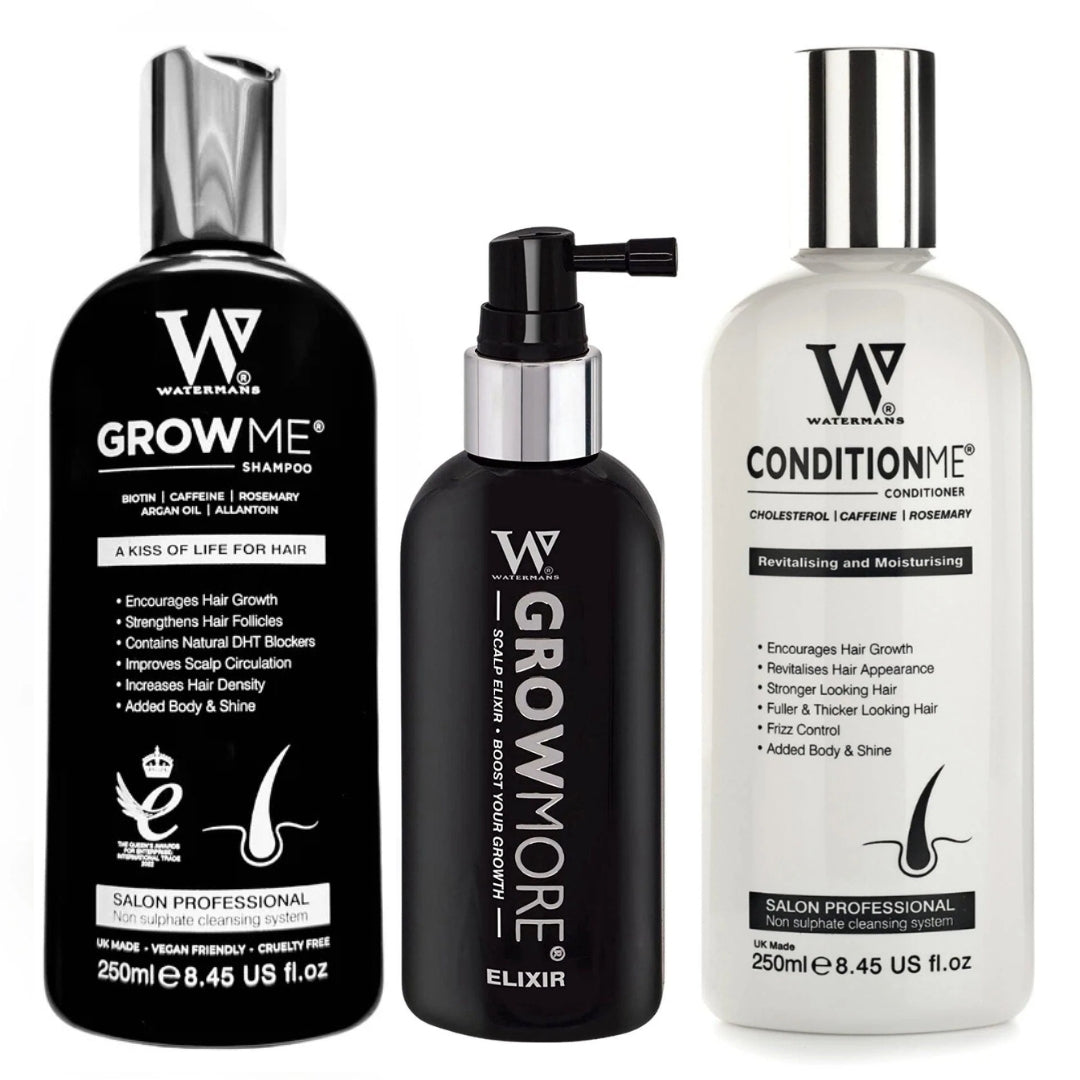
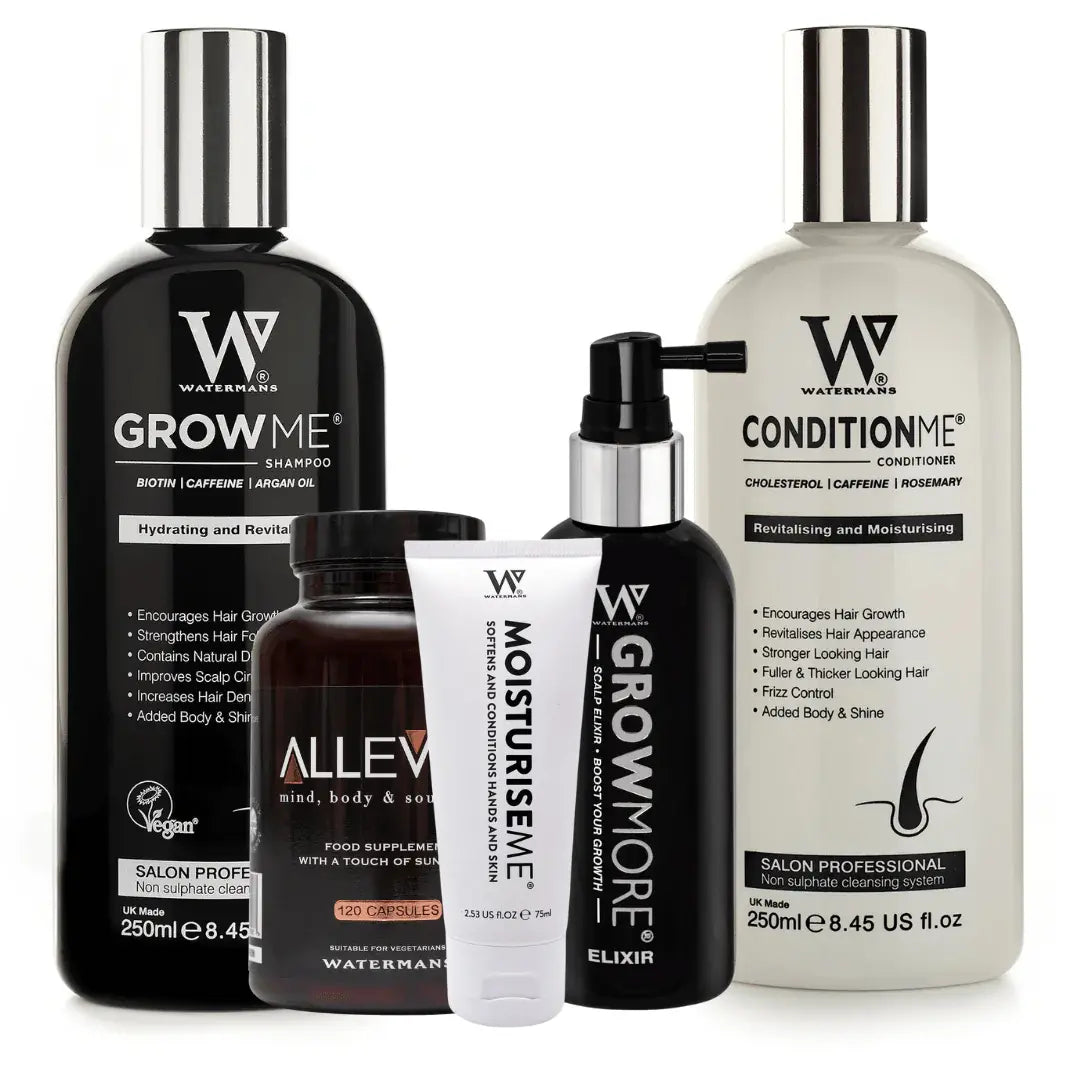
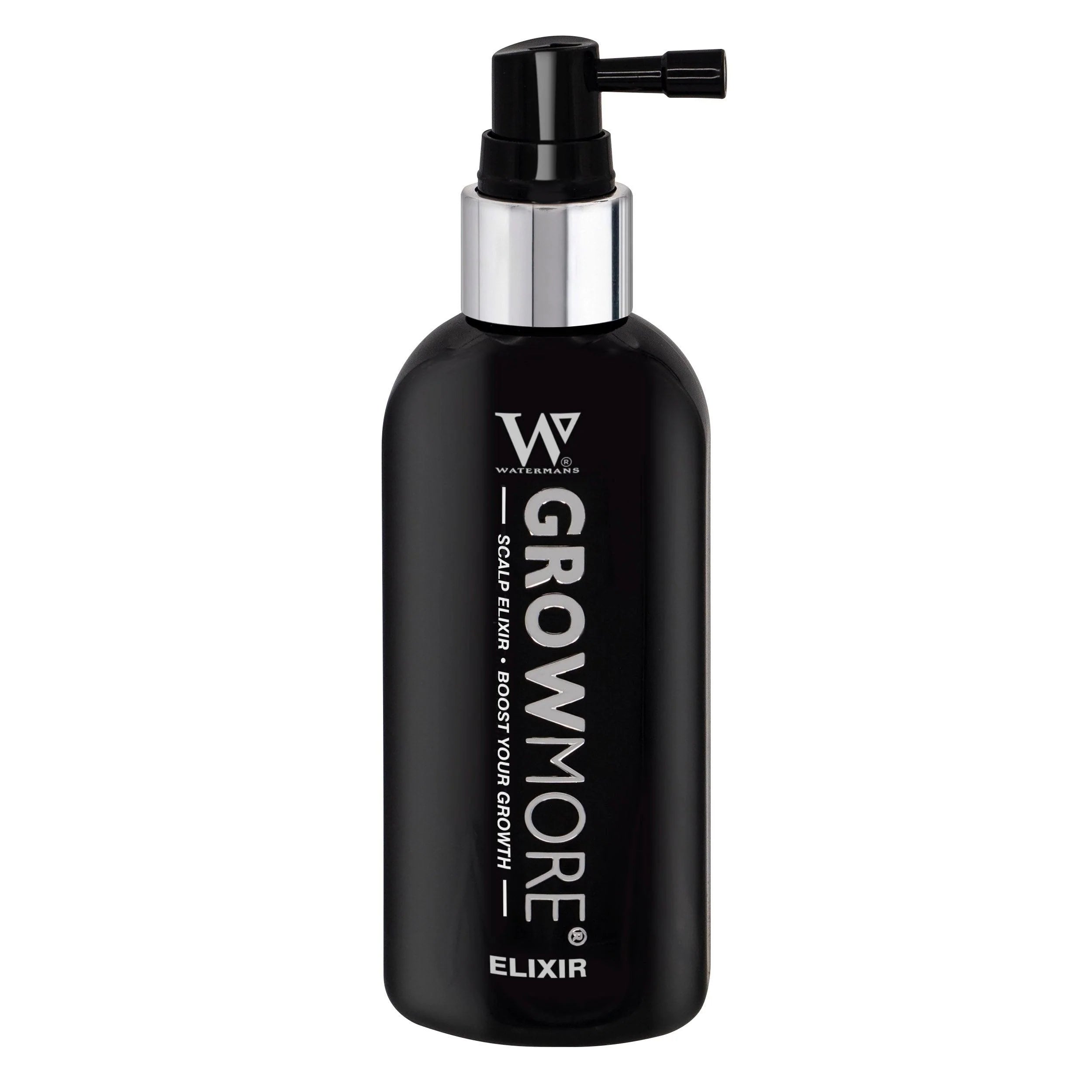
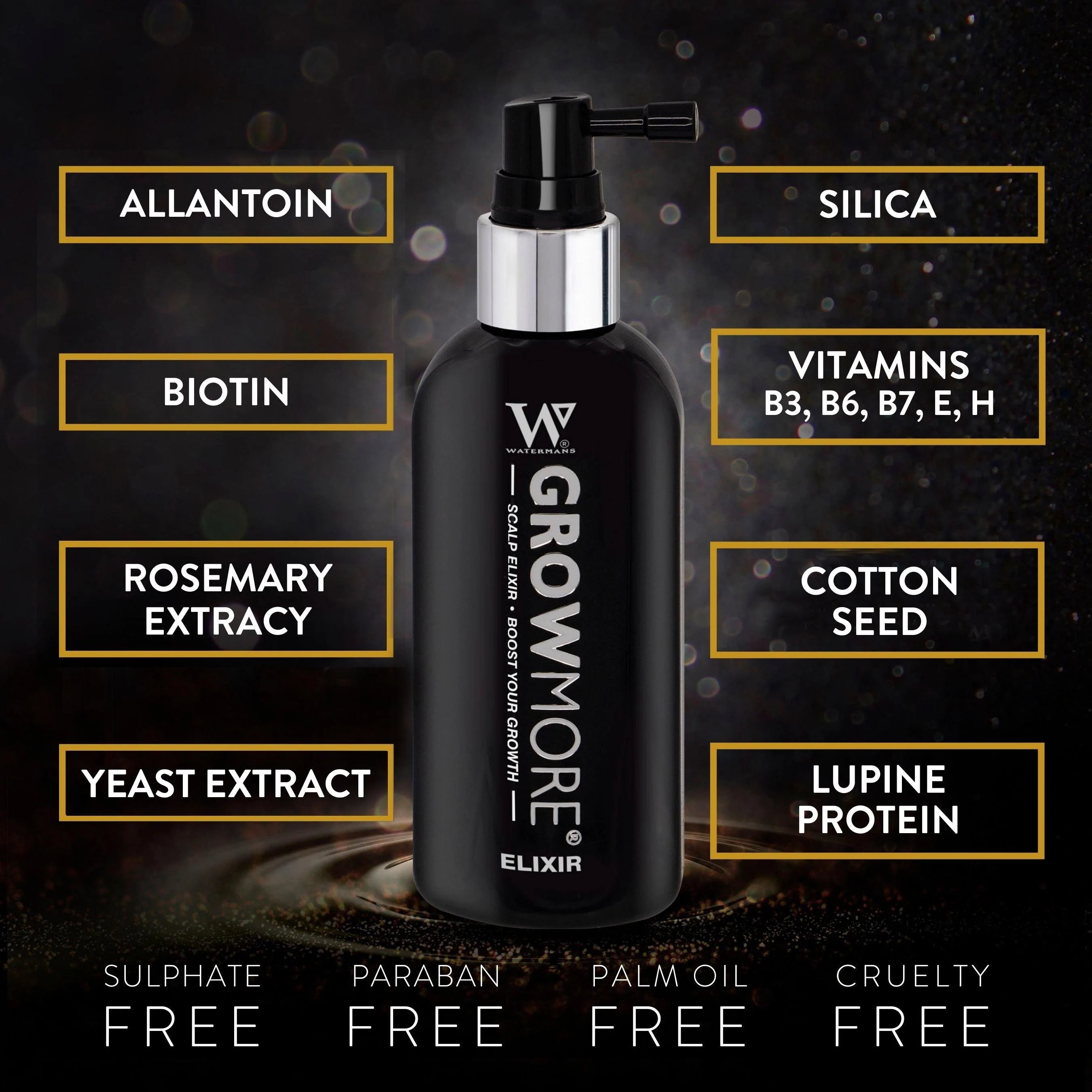
For a full routine, consider the Watermans Hair Survival Kit. It gives you a set way to care for hair from many sides.
Simple Daily Fixes to Keep DHT Levels in Check
Your habits affect hormone balance, including DHT. You do not need perfect choices—just steady, small changes.
1. Eat to Support Hair and Hormones
Choose foods that build and repair hair:
- Good protein (eggs, fish, lean meat, legumes) builds keratin.
- Healthy fats (olive oil, avocado, nuts, seeds) help with hormone work and scalp health.
- Foods with iron and zinc (red meat, shellfish, lentils, pumpkin seeds).
- Fruits and vegetables filled with antioxidants ease stress on hair cells.
Cut down on:
- Too much sugar and refined carbs (white bread, sweets, soft drinks).
- Processed foods loaded with bad fats and additives.
2. Control Stress to Keep Hair Growing
Stress makes DHT effects worse. Try to:
- Walk or exercise for 20–30 minutes almost every day.
- Spend time with deep breathing, yoga, or writing in a journal.
- Keep clear limits with work and screens, especially at night.
3. Get Enough Sleep for Better Hormones
Sleep helps balance hormones. Aim for:
- 7–9 hours of sleep each night.
- A room that is dark, quiet, and cool.
- Avoid heavy meals or screen time close to bedtime.
Good sleep helps your body balance DHT and support hair growth.
4. Rethink Supplements that Raise Testosterone
Watch out for:
- Over-the-counter testosterone products.
- High doses of DHEA or similar supplements.
- Bodybuilding products that are not well tested.
These can push DHT up and may speed up hair loss. Speak with a doctor before you change any supplement routine.
Scalp Care Routine to Buffer DHT’s Effects
Think of the scalp as rich soil for hair. An inflamed or cluttered scalp helps DHT work too easily.
Daily or Regular Steps
-
Targeted shampoo use:
Pick a product like Watermans Grow Me Shampoo that cleans and wakes up the scalp. -
Gentle scalp massage:
Massage for 3–5 minutes with your fingertips when washing. -
Avoid harsh styles:
Steer clear of tight ponytails or braids; these stress your follicles. -
Clean but gentle:
Wash enough to remove oil and build-up without stripping natural moisture.
Weekly or Occasional Extras
-
Scalp exfoliation:
A gentle scrub once every week or two can clear away dead skin and oil. -
Photo check:
Take photos under the same light to spot small changes over months.
A routine that cares for your scalp along with a steady lifestyle can reduce DHT’s hold on your hair.
Medications That Block or Lower DHT Levels
Some people look at medicines when hair loss is advanced. These are not first steps, but knowing them can help.
1. Finasteride (Oral)
- Stops the enzyme that makes DHT from testosterone.
- Lowers DHT in the body.
- Used mostly by men. Women of child-bearing age rarely use it.
- Can slow and sometimes reverse follicle changes.
Side effects you should discuss with your doctor include sexual and mood changes.
2. Dutasteride (Oral)
- Stops more forms of the enzyme than finasteride.
- Can lower DHT faster.
- Is sometimes used off-label for hair loss.
Because it is strong, talk thoroughly with your doctor about the risks and benefits.
3. Topical DHT Blockers
Some products use:
- Topical forms of finasteride or dutasteride (by prescription in many places).
- Topical mixtures with caffeine, saw palmetto, or other plant parts that act gently on DHT.
Even if you do not try prescription topicals, using a shampoo with caffeine, niacinamide, and plant extracts—as in Watermans Grow Me Shampoo—can be a gentler first step.
DHT Levels in Men and Women
DHT hair loss looks different between sexes.
DHT Levels and Hair Loss in Men
Men often experience:
- A hairline that moves back at the temples.
- Thinning at the crown.
- These areas may meet as loss increases.
Men have higher testosterone and DHT levels from the start. If they also inherit sensitive follicles, hair loss may start early.
DHT Levels and Hair Thinning in Women
Women often see:
- A widening part line.
- Thinning on the top of the scalp.
- A frontal hairline that stays mostly intact.
Women have lower DHT levels. Their hormones mix with estrogen and progesterone. Life events like childbirth or changes in birth control can also stir hair thinning. For many, scalp care and a routine with products like Watermans Grow Me Shampoo are common first steps.
How Long Before You Notice Changes?
Hair grows slowly. Even with a good plan, you must be patient.
- 0–3 months: Hair breakage reduces, the scalp feels calmer, and shedding may slow.
- 3–6 months: New hairs start growing. Some notice baby hairs or better density.
- 6–12+ months: Changes in density and thickness become clear. You see whether your routine or medicine is effective.
Remember, even thin hair means the follicle can still work. Steady care gives follicles a better chance to grow stronger.
Everyday Habits to Help Balance DHT
Use this list for daily guidance:
-
Scalp care:
Wash often with a shampoo like Watermans Grow Me Shampoo and massage for a few minutes. -
Diet:
Eat protein, choose whole grains over refined sugars, and add iron- and zinc-rich foods. -
Lifestyle:
Stay active with exercise, aim for 7–9 hours of sleep, and manage stress with small daily practices. -
Hair care:
Avoid tight hairstyles and very hot styling tools. Do not over-bleach or over-process your hair. -
Medical care:
Talk to a doctor to rule out issues with the thyroid, iron, or other body systems. Discuss medicine only when needed.
These steps build a steady environment where your DHT is less likely to harm your follicles.
FAQs About DHT Levels and Thinning Hair
1. How do I know if DHT is causing my hair loss?
You cannot tell by sight alone. Check for:
- Hair thinning at the temples/crown in men or a widening part in women.
- A family history of pattern baldness.
- Slow changes over many months.
A doctor can use blood tests and scalp checks. In the meantime, using a growth-supporting shampoo like Watermans Grow Me Shampoo is a sensible step.
2. Can I lower DHT naturally without drugs?
You may not cut down DHT in your blood without drugs. Yet, you can improve how your body and scalp face DHT by:
- Managing stress and sleeping well.
- Eating well and staying at a healthy weight.
- Using a topical product with supportive ingredients on your scalp.
The aim is a healthier balance and more resilient follicles.
3. What shampoo works best for high DHT levels?
The right shampoo should do more than clean. It should help smooth blood flow, bring nutrients to the scalp, and support stronger hair. Watermans Grow Me Shampoo fits this role well by combining Biotin, Rosemary, Caffeine, Niacinamide, Argan Oil, Allantoin, and Lupin Protein in one mix.
Take Control of Your DHT Story—Starting with Your Scalp
Your DHT levels need not rule your future. Genes play a role. Yet, everyday choices work on your scalp and help balance your hormones.
Begin with steps you can take now:
- Pick a shampoo that boosts growth from the roots. Watermans Grow Me Shampoo is a natural, non-medical option that works on the scalp, fights limpness, and leaves hair looking fuller.
- Create a simple routine that nourishes your body, calms your mind, and protects your follicles.
- If you need a full plan, check out the Watermans Hair Survival Kit for a complete system to help your hair from many sides.
This guide shows you how small, steady steps support your follicles. Stay consistent and give your hair a better chance to grow strong and rich.