

Telogen to anagen Recovery: Fast Methods to Revive Hair Growth
Telogen to Anagen Recovery: Fast Ways to Bring Back Hair Growth
Hair growth comes in steps. Hair stays in a rest phase (telogen) before it grows again (anagen). If you see more hair in the drain, a wider part, or more shedding, it may mean that your hair stays too long in the resting phase.
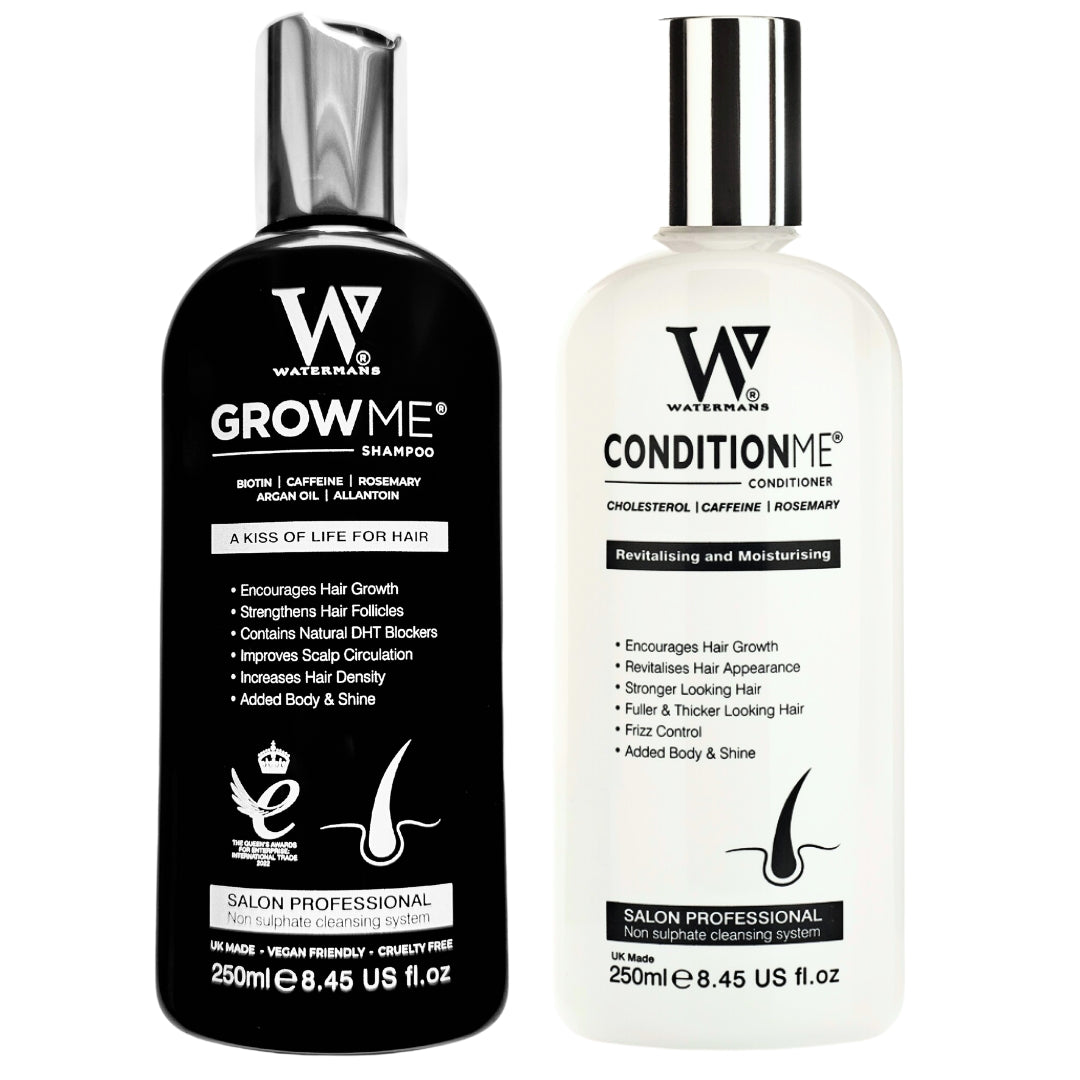
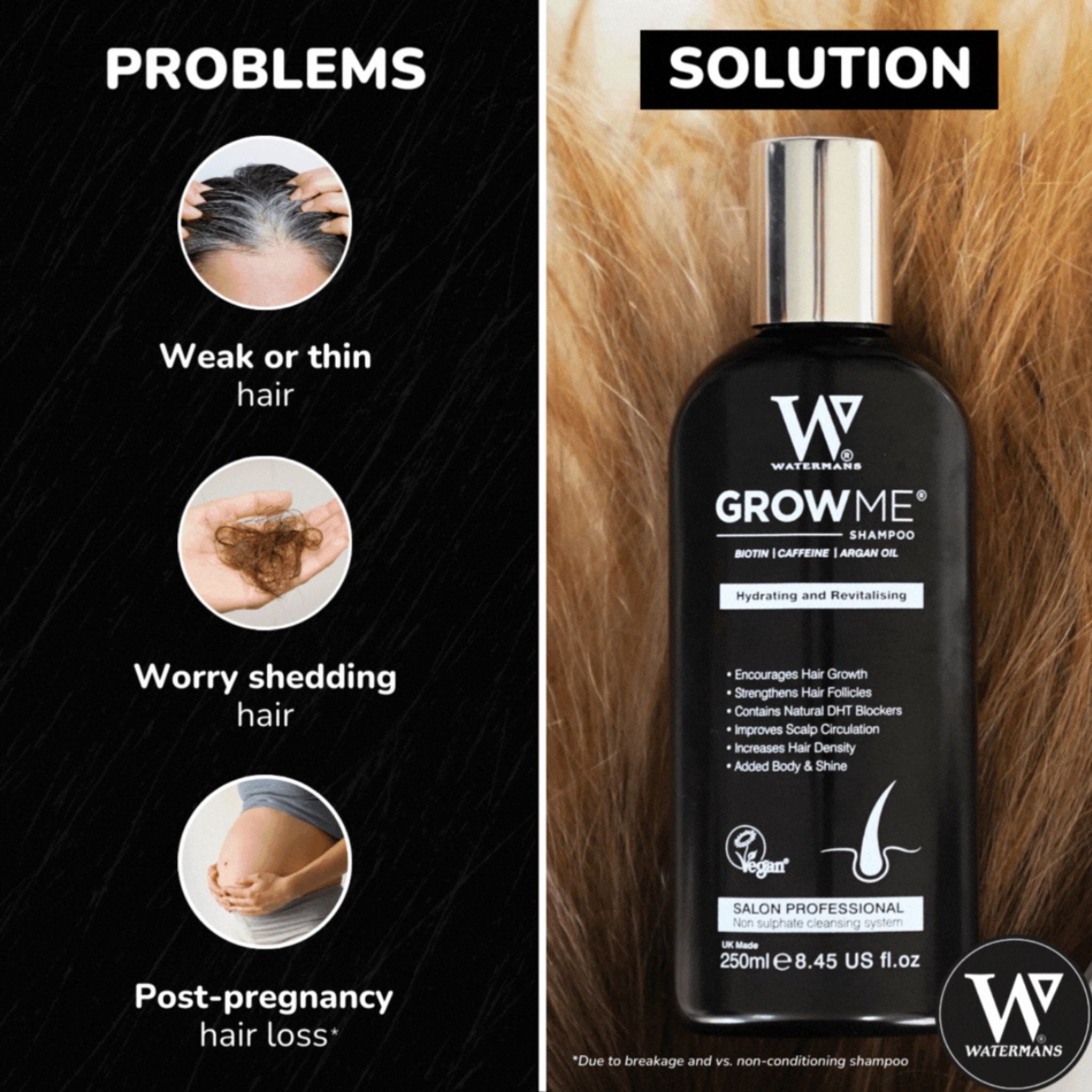
A quick way to help hair move from rest to growth is with smart scalp care and proven ingredients. Many users choose Watermans Grow Me Shampoo with Biotin, Rosemary, Caffeine, Niacinamide, Argan Oil, Allantoin, and Lupin Protein. This shampoo helps wake the scalp and add volume from the base. For many, this is a natural first step before trying stronger options.
Understanding the Hair Cycle: From Telogen to Anagen
Learn how each step in the cycle works and why the shift from rest to growth matters.
The Four Steps in the Hair Cycle
-
Anagen (Growth Phase)
- Lasts 2–7 years
- About 80–90% of hairs are in this phase
- Follicles make new hair
- The longer this phase, the longer and thicker the hair can grow
-
Catagen (Transition Phase)
- Lasts about 2–3 weeks
- Hair stops growing
- The follicle gets smaller and loses its blood link
- Only about 1% of hairs are here at a time
-
Telogen (Resting Phase)
- Lasts 2–4 months
- Follicles rest
- Around 10–15% of hairs are in this phase
- Hairs fall out during washing or brushing
-
Exogen (Shedding Phase)
- Part of telogen
- Old hair falls out to make room for new growth
- Losing 50–100 hairs a day is normal
The key point is this: Hair density relies on how fast follicles move from rest to growth. A slow shift means more idle hairs and thinner-looking hair.
What Does “Telogen to Anagen” Recovery Mean?
It means you help hair leave the rest phase sooner and start growing again. This shift makes hair stronger and thicker when it grows back.
This process is useful when you face:
- Hair loss after an illness
- Hair loss after childbirth
- Hair loss due to stress
- Seasonal shedding
- Lacking good nutrients
- Damage from over-styling
When many follicles get stuck in telogen, the result is known as telogen effluvium. The aim is to help these follicles finish resting and start new growth.
Key Factors that Guide the Telogen to Anagen Shift
Many body and lifestyle factors affect how hair moves from rest to growth.
Scalp Blood Flow and Nutrient Delivery
Healthy follicles need oxygen, food, and energy. Poor blood flow can:
- Keep hair in rest longer
- Slow the start of growth
- Make hair thinner
Caffeine, niacinamide, scalp massage, and some oils (like rosemary oil) can boost local blood flow.
Hormones and Stress Effects
- High cortisol from stress can push hair into rest sooner.
- Thyroid issues can upset the hair cycle.
- Androgens like DHT shorten the growth phase and stay in the rest phase longer.
Reducing stress, treating health problems, and avoiding harsh chemicals on the scalp all support the shift to growth.
Nutritional Balance
When the body lacks nutrients, it cuts back on hair growth:
- Low iron or ferritin
- Low vitamin D
- Not enough protein
- Not enough zinc or B-vitamins
These issues can keep more hair in the rest phase.
Condition of the Scalp
A healthy scalp helps hair grow. Problems such as:
- Buildup from sebum or styling products
- Mild, ongoing scalp irritation
- Dry, tight, or flaky skin
They can slow the growth process. A clean and nourished scalp helps hair move into the growing stage.
Fast, Practical Ways to Support Telogen to Anagen Recovery
Combining careful scalp care, internal support, and small daily changes helps hair grow faster.
1. Optimizing Scalp Care: The Base of Fast Recovery
To help more follicles switch from telogen to anagen, start with the scalp. Look for ingredients that wake up follicles, boost blood flow, and leave the scalp light and clean.
Why Pick Watermans Grow Me Shampoo?
This shampoo is a top choice for many. It is a natural, non-medical product that supports hair growth and the shift from telogen to anagen.
Its blend works like this:
- Biotin supports the protein that gives hair strength.
- Rosemary helps move blood to the follicles.
- Caffeine wakes up the scalp and may help slow down negative hormone effects.
- Niacinamide boosts local micro-blood flow and skin health.
- Argan Oil nourishes hair without weighing it down.
- Allantoin soothes and keeps the scalp calm.
- Lupin Protein gives protein to hair and may improve root strength.
Use this shampoo often to set up the ideal spot for hair to leave rest and start growing again without needing prescription treatments.

How to Use Shampoo for Telogen to Anagen Support
- Wash your scalp 3–5 times a week to keep it clean.
- Use your fingertips to massage gently for 1–2 minutes.
- Leave the formula on your scalp for a short while before rinsing.
- Use lukewarm water instead of hot water to protect the scalp and hair.
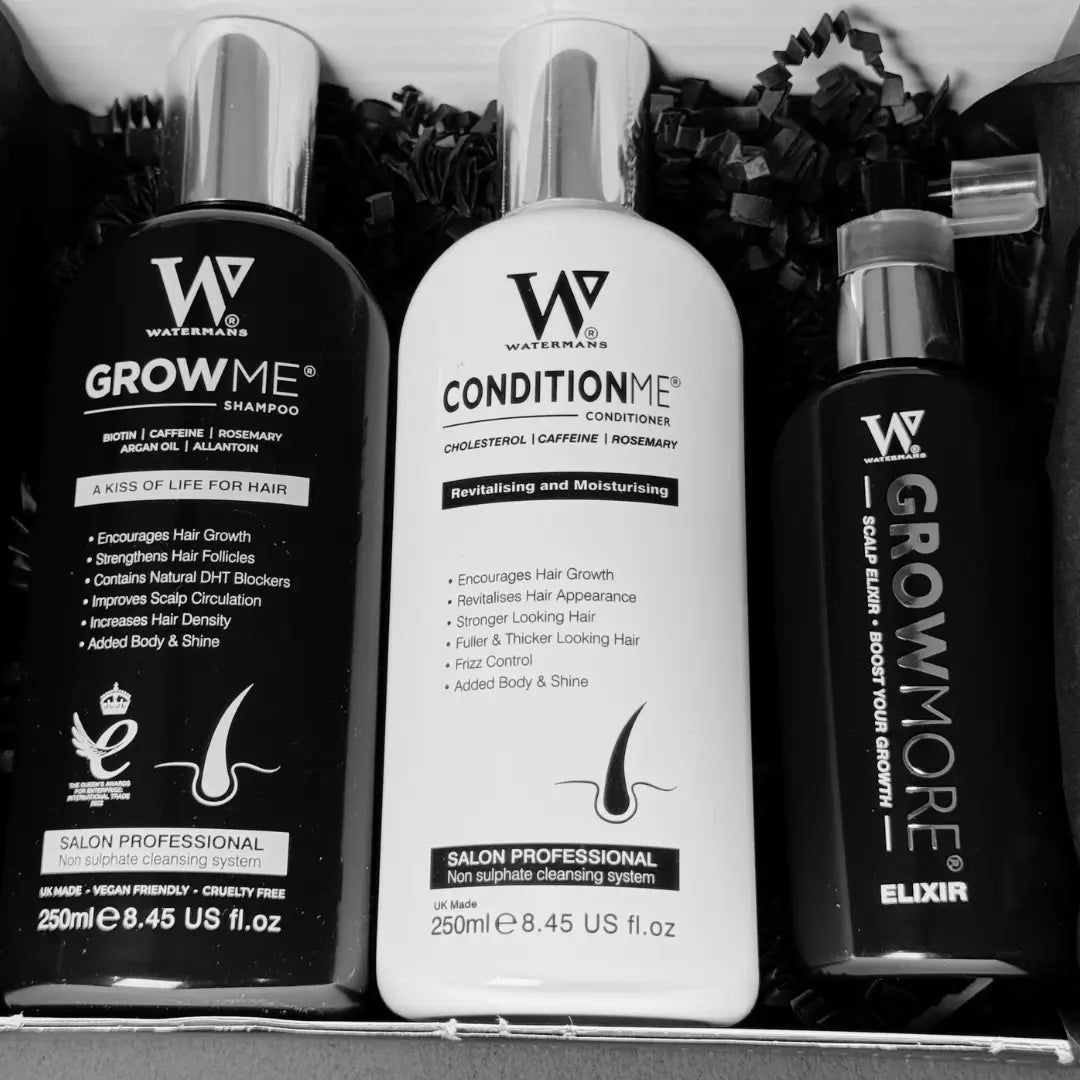
If you like a full routine, check out the Watermans Hair Survival Kit. It puts together products that work from several sides to support growth and thickness.
2. Scalp Massage and Simple Stimulation
The shift from telogen to anagen depends on blood flow and signals to the follicles. Regular scalp massage at home can help.
How Scalp Massage Helps
- It moves more blood to the follicles.
- It brings extra oxygen and nutrients.
- It may ease tight scalp muscles.
- It may help your other products work better.
Easy Scalp Massage Routine
- Use your finger pads; do not use your nails.
- Begin at the front of your hair and move back using small circles.
- Use light to medium pressure.
- Spend a little extra time on areas that feel tight or thin.
- Try to do this for 5–10 minutes, 3–4 times a week.
You can do this on dry hair or while shampooing. When you pair massage with Watermans Grow Me Shampoo, you help send follicles into the growth phase sooner.
3. Nutritional Support for a Faster Shift to Anagen
Even the best shampoo works better when your body has the right nutrients. Your body needs enough:
- Protein to build new hair
- Minerals for hair cell function
- Vitamins that help keep hair in a healthy cycle
Key Nutrients for Hair Health
- Protein – Hair is mostly made of a protein called keratin. Eat foods like eggs, fish, beans, lean meat, tofu, and dairy.
- Iron and Ferritin – Low levels are linked to hair shedding. See your doctor if you worry.
- Vitamin D – Many people do not have enough, which may affect hair.
- Zinc – Helps form keratin and supports skin repair.
- B-Vitamins (with Biotin) – They help work through the nutrients needed for hair growth.
- Omega-3 fats – They keep the scalp calm and may reduce mild inflammation.
If you have lost a lot of hair after illness, diet changes, or stress, having a chat with a nutrition expert can help get you on track.
4. Managing Stress to Keep Hair Growing
Stress affects the hair cycle. High stress can push more hair into the rest phase, leading to heavier shedding in a few months.
How Stress Changes the Balance
- It can raise cortisol, which may harm hair cells.
- It may cause mild irritation around follicles.
- It can disturb hormones that keep hair growing.
- It can lead to more hairs staying in the rest phase.
Taking steps to lower stress helps hair finish its rest and start a new growth phase.
Simple Ways to Lower Stress
- Daily gentle movement like walking, yoga, or stretching.
- Step-by-step breathing methods.
- A short quiet time, even for 5 minutes a day.
- A steady sleep schedule with 7–9 hours a night.
- Cutting down on too much caffeine or nicotine.
These steps do not bring hair back instantly but help the body set the stage for a smoother shift from rest to growth.
5. Stopping Habits that Delay the Shift
It is as important to remove bad habits as it is to add good ones.
Habits to Rethink
- Tight hairstyles (like high ponytails or tight braids) can pull hair out too soon.
- Chemical treatments (such as strong relaxers or bleaches) can harm the hair and scalp.
- High-heat styling without protection can weaken hair.
- Heavy products may build up and block the scalp.
Using gentler styling and scalp products like Watermans Grow Me Shampoo lets hair shed naturally and helps new growth begin.
6. How Fast Does Telogen to Anagen Recovery Happen?
Many ask how soon they will see results.
Usual Time Frames
-
0–2 weeks:
- The scalp may feel cleaner and calmer.
- You may notice more hairs falling out as old ones release.
-
4–8 weeks:
- Shedding may slow down.
- Some may see small, fine hairs along parts and edges.
-
3–6 months:
- Areas that were thin might feel denser.
- Hair at the roots may seem fuller.
-
6–12+ months:
- Overall density improves as the cycle normalizes.
Remember that hair grows slowly. The hairs that fall today began their path months ago. With steady care, changes will show in time.
7. Comparing Natural and Medical Choices
Most people find that natural methods such as smart shampoos, scalp care, and good eating work well. Others might need advice from a doctor.
Natural First Choices
These steps work well for many:
- Watermans Grow Me Shampoo – To wake up the scalp.
- Scalp massage and gentle brushing – To move blood around.
- A balanced diet – With enough iron, vitamin D, and protein.
- Managing stress – Especially after big events.
- Using gentle styling – To avoid extra damage.
These methods are low in risk and can lead to steady improvements.
When to Get a Doctor’s View
Please see a dermatologist or health expert if you find:
- Sudden, heavy hair loss lasting more than 3–4 months
- Round, patchy hair loss
- Scalp pain, burning, or severe itch with loss
- Family history of strong hair loss along with visible thinning
- Big hair loss after starting new medications
Sometimes, treatments like minoxidil or other doctor-prescribed options may be added to these basic steps.
8. Building a Daily Routine for Recovery
Here is one way to set up your day to help move hair back from rest to growth.
Morning Routine
- On wash days (3–5 times a week), use Watermans Grow Me Shampoo.
- Massage it into the scalp for 1–2 minutes.
- Let the formula sit for a short time before rinsing.
- Pat hair dry gently; do not rub hard.
- If you can, use your fingertips to massage for 3–5 minutes after towel drying.
Evening Routine
- Do a light scalp massage without tugging at the hair.
- If you use any scalp tonic, apply a few drops and smooth it in with your fingers.
- End your day with a short relaxation practice (like slow breathing or gentle stretching).
Weekly and Monthly Checks
- Once a week:
- Check the scalp for buildup. If needed, use a mild clarifying product.
- Every month:
- Take photos from the same spot and light to spot changes.
- Reflect on your sleep, stress, and diet, and adjust if needed.
9. Telogen to Anagen Recovery After a Trigger
Different triggers for hair loss call for small changes in your routine.
After Illness or a Fever
- Shedding may peak 2–3 months later.
- Concentrate on gentle scalp care and keeping up with nutrition and rest.
After Childbirth
- Hormone shifts may cause shedding to start 3–4 months after birth.
- Focus on nutrient-rich food, safe supplements (after checking with a doctor), and gentle care.
- Avoid tight styles that pull hair.
After High Stress or Shock
- Severe stress can push many hairs into rest, with shedding peaking 2–4 months later.
- In these times, keep the scalp care and nutrition strong and steady.
A mix of steps helps hair get back to a normal cycle as the trigger fades.
10. Myths About Telogen to Anagen Recovery
There are many ideas that do not match the facts. Here are a few to clear up.
Myth 1: “If your hair is in telogen, nothing will change until it falls out.”
The fact: You cannot stop a hair from shedding, but you can help the follicle start growing again once the hair falls out.
Myth 2: “Washing too often causes more hair to rest.”
The fact: Washing only helps release hairs that are ready to fall out. A good shampoo like Watermans Grow Me can help restore the natural cycle.
Myth 3: “Only drugs can start new growth.”
The fact: Medicine can help in some cases, but natural methods such as good nutrition, massage, and smart scalp care play a big role in helping hair grow.
Checklist: Helping Your Hair Shift from Rest to Growth
Use this list to keep your steps clear:
- [ ] Wash with Watermans Grow Me Shampoo on a regular schedule.
- [ ] Give your scalp a gentle massage 3–7 times a week.
- [ ] Eat enough protein and check if you have enough iron, vitamin D, zinc, and B-vitamins.
- [ ] Set aside short moments for stress relief (like slow breathing or walks).
- [ ] Avoid tight hairstyles, harsh chemicals, and heavy heat without protection.
- [ ] Take photos monthly as you track your progress.
- [ ] Seek expert advice if hair loss becomes severe or very patchy.
FAQ: Telogen to Anagen Recovery and Hair Growth
1. How long does it take for hair to shift from telogen back to anagen?
For most, the rest phase lasts 2–4 months. Once it ends, follicles make new hair. With smart care, some may see fine new hairs within 2–3 months. More clear changes often show over 6–12 months.
2. Can I speed up the shift naturally?
You cannot force nature to change its pace. But you can help by maintaining a healthy scalp, proper diet, and low stress. Using a scalp-boosting shampoo like Watermans Grow Me is a good start.
3. What is the best shampoo to support the shift?
For many, Watermans Grow Me Shampoo works well. It has Biotin, Rosemary, Caffeine, Niacinamide, Argan Oil, Allantoin, and Lupin Protein. These ingredients work from the scalp upward to help hair grow back fuller.
Take Control of Your Recovery
You do not have to live with thinning hair. By learning how hair moves from rest to growth and by taking clear steps, you give follicles a strong chance to produce hair that is fuller and stronger.
Start by updating your daily steps. Switch to Watermans Grow Me Shampoo to wake up your scalp. Add short scalp massages, watch your diet, and keep stress low. For a full routine, the Watermans Hair Survival Kit brings products together so you can see real change.
Every small step now forms the hair you will see in the months ahead. Stick to your routine and give your follicles the time they need to shift from rest to growth.













%20before%20it%20grows%20again%20(anagen).%20If%20you%20see%20more%20hair%20in%20the%20drain,%20a...)