Phototrichogram: A Simple Guide to Measuring Hair Growth Accurately
When you track hair growth or check hair loss, you may see the term phototrichogram in clinic brochures, studies, or on hair-restoration sites. This test uses science to measure hair growth, count hairs, and check follicle health over time. It is more exact than a mirror check or selfies.
In this guide, you will learn what a phototrichogram is, how it works, when it is used, what its numbers tell you, and how it can help you review products like Watermans Grow Me Shampoo—a top non-medical, natural option for hair support.
What Is a Phototrichogram?
A phototrichogram is a test that hair experts use. It counts:
- The number of hairs per square centimeter
- The thickness of each hair
- The rate of hair growth
- The share of hairs in the growing stage (anagen) versus the resting stage (telogen)
It uses high-resolution photos and computer measurements on a small marked spot of your scalp. The expert takes photos at set times and then compares them. In simple words, the test acts as a microscopic before-and-after tool to turn hair growth into numbers.
Why Measuring Hair Growth Accurately Matters
When you worry about thinning or hair loss, you likely:
- Compare selfies
- Watch your hairline often
- Check the drain or brush to count hairs
Your eyes may miss small, slow changes. A phototrichogram gives you solid data to help you:
- Notice issues quickly – Small changes in hair shaft size or number may show up before you see bald spots.
- Judge if a treatment works – Whether you use a product like Watermans Grow Me Shampoo or other therapies, numbers tell the truth.
- Save time and money – If no change appears in your numbers after months, you may need to adjust your plan.
- Learn your hair cycle – Seeing the split between growing and resting hairs helps choose the right treatment.
How a Phototrichogram Works: Step-by-Step
The test sounds technical, yet it is simple and usually does not hurt. Here is how it goes in a clinic.
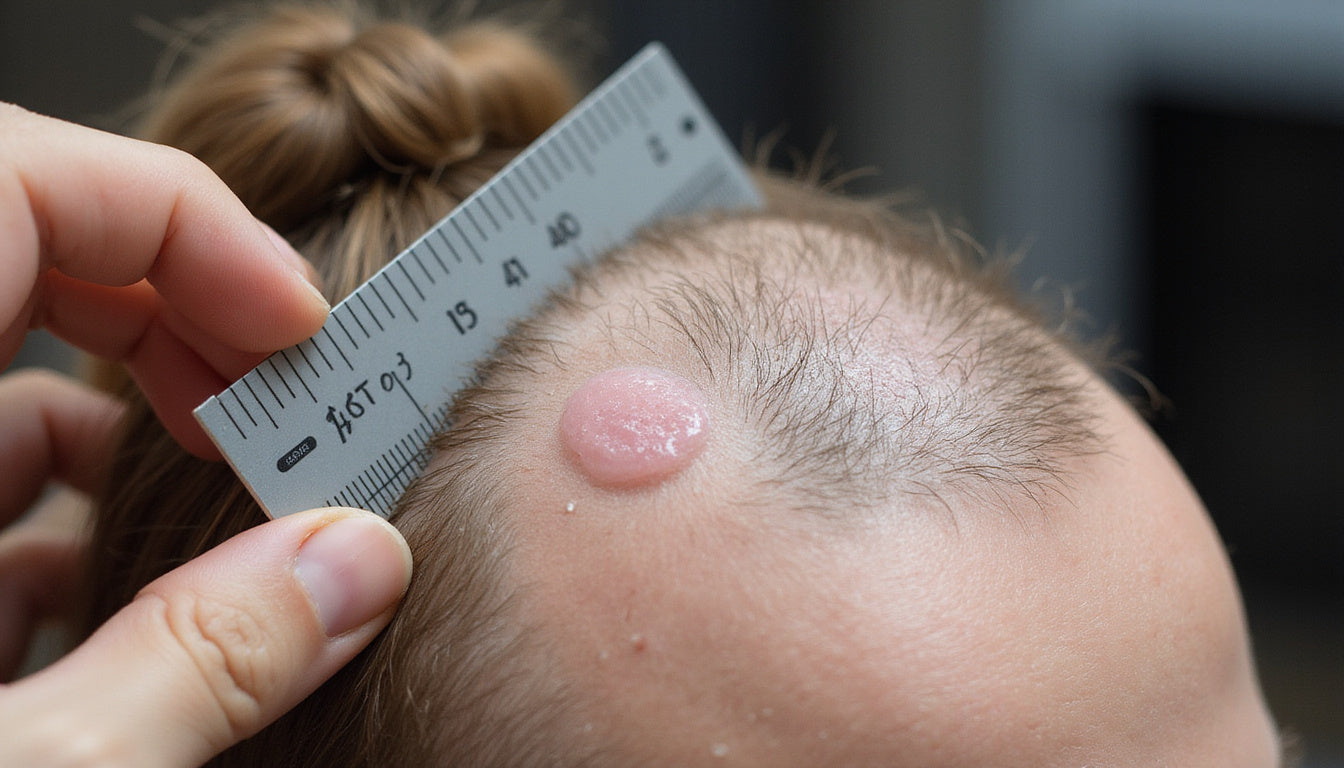
1. Choosing and Marking the Scalp Area
A small area is picked on the scalp. This area is:
- Measured (usually 1 cm²)
- Marked with a tiny dot or tattoo so that it stays in the same spot
- Often chosen near the hairline, crown, or mid-scalp depending on where hair loss appears
The mark makes sure that future photos capture the same spot.
2. Trimming the Hair (and Sometimes Shaving)
Hair in the area is trimmed to about 1 mm. In some cases, the area is shaved off completely, then allowed to grow for 2–3 days before the first photo. Trimming helps by:
- Making the hair shafts easier to see and measure
- Showing new growth more clearly
- Giving a clear start point for repeated tests
3. Taking the First High-Resolution Photo
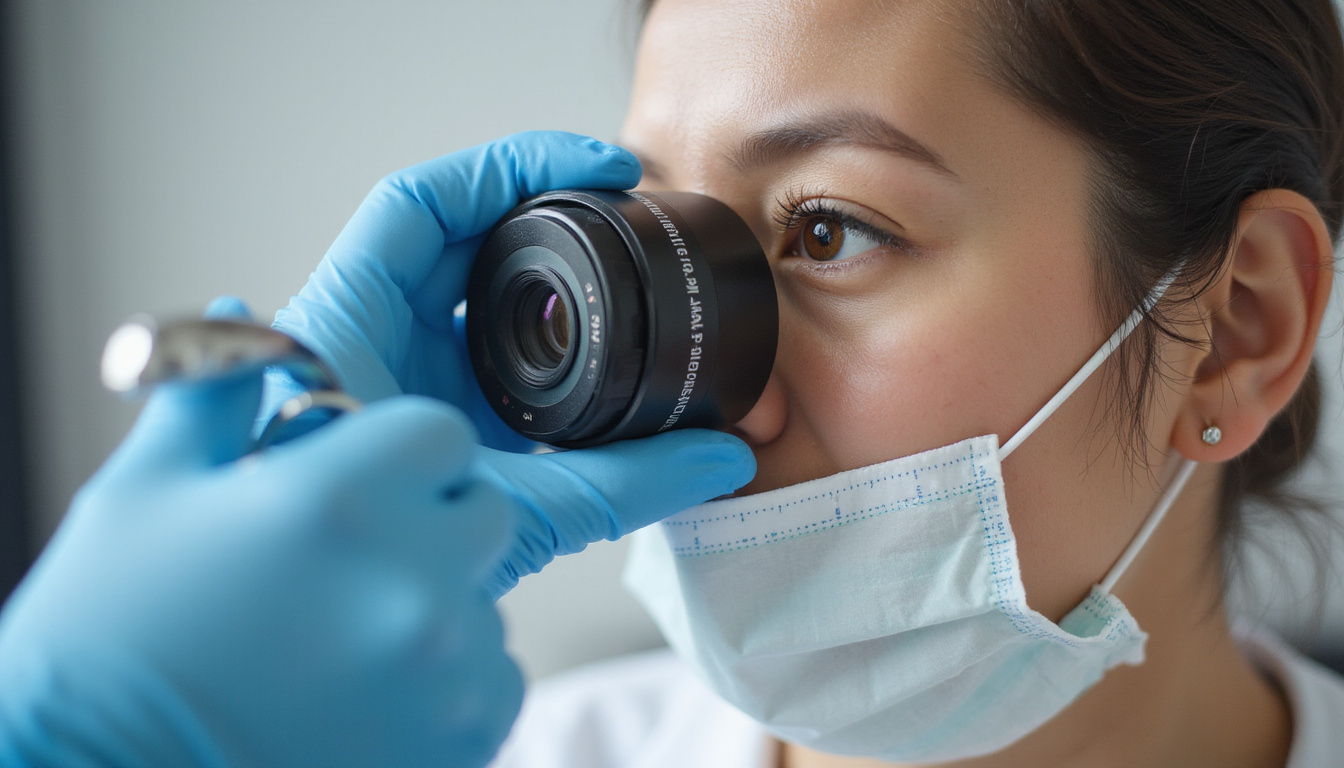
When the hair is ready, a high-magnification camera (often part of a digital device) is placed on the area and captures a photo. The image shows:
- Each hair shaft
- The thickness of each hair
- The condition of the skin
- The opening of each follicle
The settings (light, magnification, angle) stay the same for easy comparison later.
4. Waiting Period (Usually 2–3 Days)
After the first photo, you return in 48 to 72 hours. In that time:
- Hairs in the growing phase get longer
- Hairs in the resting phase do not change
- The length difference helps decide which hairs are growing
This time gap is very important to spot growth versus no growth.
5. Taking the Follow-Up Photo
When you return, the same area is re-photographed. The mark and settings ensure that the two photos align. Computer software then:
- Follows each hair
- Measures how much each hair has grown
- Labels hairs as growing (anagen) or resting (telogen)
- Counts hairs and shows growth rates
6. Digital Analysis and Report
A computer program creates a report with numbers such as:
- Hairs per cm²
- The ratio of thicker hairs to finer hairs
- The ratio of growing (anagen) hairs to resting (telogen) hairs
- Average hair shaft diameter
- Daily hair growth rate
These numbers give a baseline for future tests after months of treatment.
Types of Phototrichogram: Classic vs. TrichoScan and Beyond
Through time, the test has changed slightly. You might find different versions.
Classic Phototrichogram
The classic method means:
- Shaving or trimming a small area
- Taking a first photo
- Taking another photo after 2–3 days
- Counting hairs by hand or with simple digital tools
This method is exact but can take time.
Digital Phototrichogram (e.g., TrichoScan)
New systems like TrichoScan work faster:
- The area is trimmed and sometimes dyed for more contrast
- A high-resolution camera takes detailed images
- Software counts hairs and sorts them by growth phase automatically
This method gives fast, clear, and repeatable numbers.
Non-Invasive / Non-Shave Variants
Some techniques try to avoid shaving by:
- Using higher magnification and contrast images
- Relying on algorithms to guess density and growth on longer hair
Yet, a close trim or shave usually gives the best numbers.
What a Phototrichogram Actually Measures
To get the best results, you need to know the key numbers it shows. Here are the main metrics.
1. Hair Density
Hair density means the number of hairs in one square centimeter. Normal density may run from 150 to 300 hairs/cm², though this can change by genetics, age, or sex.
The test tells you if:
- The count is lower than expected
- The count drops over time
- The count changes when you try a treatment
2. Hair Diameter (Caliber)
Hair thickness, or shaft diameter, is a sign of hair strength. In pattern loss, thick hairs slowly become thin hairs. The test can show:
- The average thickness
- The split between thin and thick hairs
- Patterns of hair miniaturization in different spots
Even if the count stays the same, a drop in thickness may be an early sign of loss.
3. Anagen vs. Telogen Ratio
Hair grows in cycles:
- Anagen: the growing phase
- Catagen: a short changeover phase
- Telogen: the resting and shedding phase
The test checks if hairs get longer between photos. From that, it figures the ratio of growing hairs to resting hairs. A healthy scalp usually has a high share of growing hairs (about 80–90%). If the number is low, it may suggest stress, pattern loss, or other issues.
4. Hair Growth Rate
By checking how much hair grows in 2–3 days, the test estimates a daily rate of about 0.3–0.4 mm for scalp hair. This number may show slow growth, possibly due to nutritional or hormonal factors, or faster growth after a good treatment.
When Is a Phototrichogram Used?
This test is not common in a salon; it belongs in a clinic. Here are some cases when experts use it.
1. Diagnosing Hair Loss Type and Severity
In cases like:
- Male or female pattern loss
- Long-term stress-related shedding
- Diffuse thinning without clear bald spots
The test helps by checking hair density, miniaturization, and growth ratios. This helps in picking the best treatment.
2. Establishing a Baseline Before Treatment
Before you start any hair plan—whether that is medicine, a change in diet, or natural products like Watermans Grow Me Shampoo—it is helpful to have initial numbers. Then you can see over 6–12 months if:
- Hair density improves
- Hair becomes thicker
- More hairs start growing
3. Monitoring Hair Growth Products
The test is common in research on hair products. If a product claims to:
- Increase hair count
- Boost hair thickness
- Wake up resting follicles
The phototrichogram gives clear evidence. For personal care, you can use a product like Watermans Grow Me Shampoo and check the numbers every 6–12 months to see if it works.
4. Evaluating Hair Transplant Results
After a hair transplant, the test measures:
- How many grafts survive
- The density in the transplanted area
- How thick the hairs become as they mature
This objective report shows the result of the surgery.
5. Research and Clinical Trials
The test is a standard tool in hair studies. It is used to test:
- Hair care products (shampoos, serums, etc.)
- Oral supplements or drugs
- Light therapies
- Platelet-rich plasma sessions
Since it gives clear and repeatable numbers, it supports valid research work.
What to Expect During a Phototrichogram Appointment
If a hair specialist suggests this test, here is what you can expect.
Before the Appointment
You may be told to:
- Skip washing your hair on the exam day or follow given steps
- Avoid styling products on the target area
- Hold off some treatments on that area for a short time (under guidance)
During the First Visit
- The specialist picks and marks a scalp spot.
- Hair in that small area is trimmed or shaved.
- You might feel slight self-consciousness, but the small bald patch is hidden by surrounding hair.
- A dermatoscopic camera takes the first set of pictures.
The process is safe and does not hurt.
Return Visit (After 2–3 Days)
At your next visit:
- The same spot is found by the mark.
- A second set of pictures is taken.
- The specialist may show you the close-up before and after photos.
Later, a computer system creates a clear report for you.
Interpreting Phototrichogram Results
Numbers by themselves can seem confusing. Here is what the report usually shows.
Typical Report Numbers
You may see data like:
- Hair density (hairs/cm²)
- The split between thicker and finer hairs
- The average hair shaft thickness
- The share of growing (anagen) versus resting (telogen) hairs
- Daily growth rate (mm/day)
Signs in Pattern Hair Loss
In pattern hair loss, the test may show:
- Lower density in affected spots compared to safe areas
- A higher ratio of thin, miniaturized hairs
- A small drop in the share of growing hairs
- A steady decline in repeated tests if untreated
A good treatment should slowly:
- Increase hair thickness
- Stabilize or raise the hair count
- Improve the growth-to-rest ratio
Signs in Stress-Related Shedding
In stress-related shedding, the test might show:
- Near normal hair thickness
- A higher share of resting hairs
- Overall lower density
When stress or other triggers are removed, later tests can show:
- A higher share of growing hairs
- Recovery in hair count over months
Comparing Baseline and Follow-Ups
When you repeat the test over time (say, every 6–12 months while using a steady routine that might include Watermans Grow Me Shampoo), you can see if:
- Hair count stops falling
- Hair density and thickness rise
- There is little change, which may mean you need to rethink your plan
This view over time is where the test is very helpful.
Phototrichogram vs. Other Hair Diagnostic Tools
There are several ways to check hair. Here is how the phototrichogram compares.
Scalp Examination and Standard Photography
- Pros: Simple, fast, and does not hurt.
- Cons: Can be subjective; numbers depend on light, angle, and hair style.
Trichoscopy (Dermoscopy of Hair and Scalp)
- Uses a magnifying lens to see details of hair follicles.
- Pros: Good for finding structural changes and signs of inflammation.
- Cons: Not meant to measure growth rates or hair cycle numbers.
Hair Pull Test and Wash Test
- Counts hairs that stick or fall when washing.
- Pros: Easy to do.
- Cons: Rough count; affected by how often you wash or handle your hair.
Scalp Biopsy
- Looks at a tiny sample of scalp under a microscope.
- Pros: Best for complex or scarring conditions.
- Cons: Invasive and may leave a small mark; not suited for regular tracking.
The Place of Phototrichogram
The test is:
- Non-invasive (aside from a small trim)
- Precise and repeatable
- Good to track progress and treatment effects
It gives a middle option that is more exact than a simple photo and less invasive than a biopsy.
Limitations and Considerations of Phototrichogram
Even with its strengths, the test has limits. Knowing them helps you understand the numbers.
1. Needs Hair Trimming
Trimming or shaving a small patch may seem inconvenient. However, the spot is small and easy to hide.
2. Depends on the Expert and Tools
Good numbers need:
- Accurate marking and positioning
- Clear, focused images
- Reliable computer software and expert reading
Skilled clinicians and standard methods make the data trustable.
3. Time and Cost
The test takes at least two visits and needs specialized equipment. It can cost more than a standard check and is used for tricky or long-term cases.
4. Local, Not Global
The test measures a tiny area. It gives very clear data for that spot but does not count hair on your whole scalp. Doctors often pick one or more areas that represent your condition.
How Phototrichogram Helps You Choose and Evaluate Hair Treatments
One big gain from this test is that it helps you decide on your hair care plan with clear data.
1. Setting Real Goals
A baseline report shows:
- How far thinning has come
- If miniaturized hairs are still present (a sign that recovery is possible)
- If the scalp may improve with less invasive care
This fact-based view can help stop false hopes and guide a step-by-step plan.
2. Focusing on Non-Medical Options First
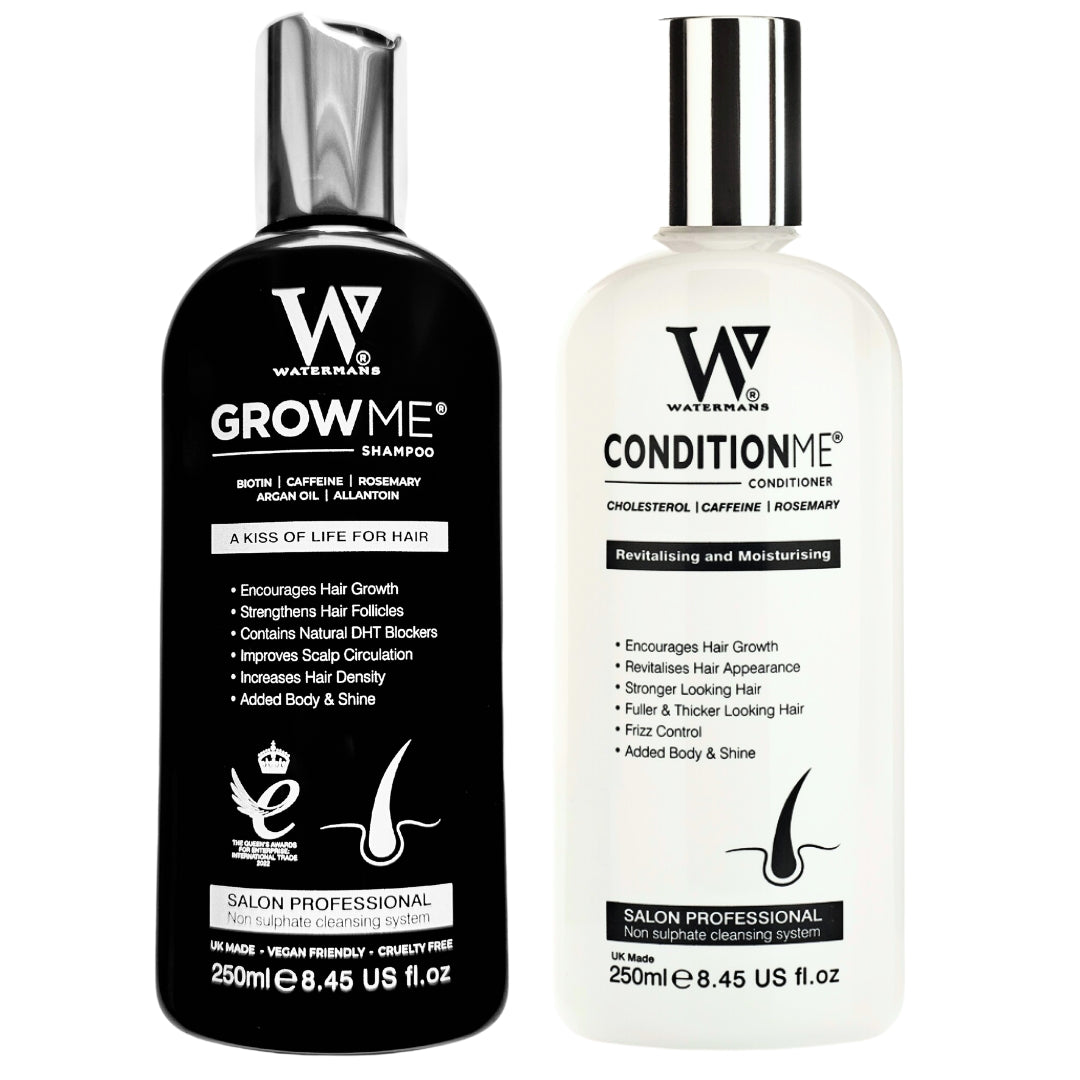
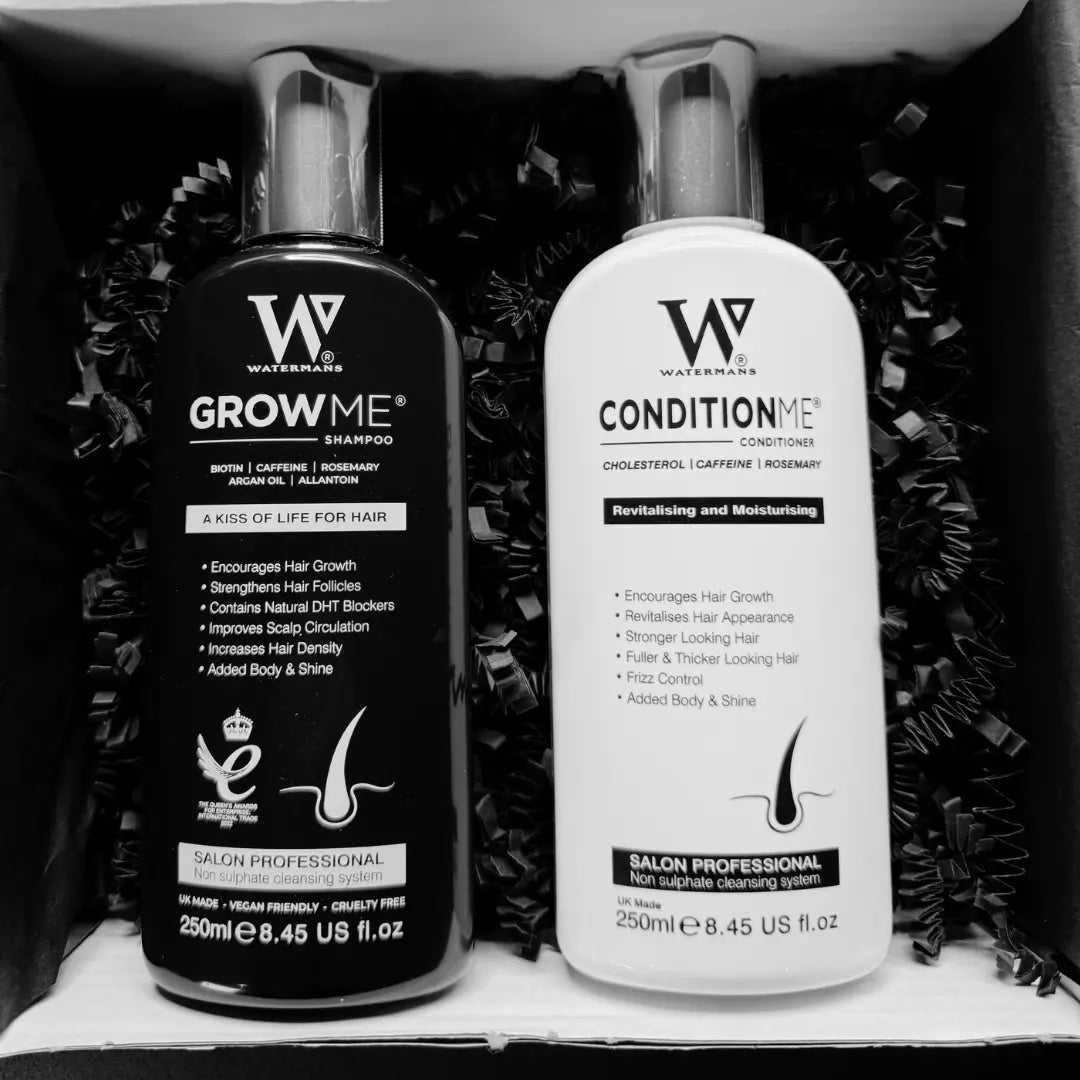
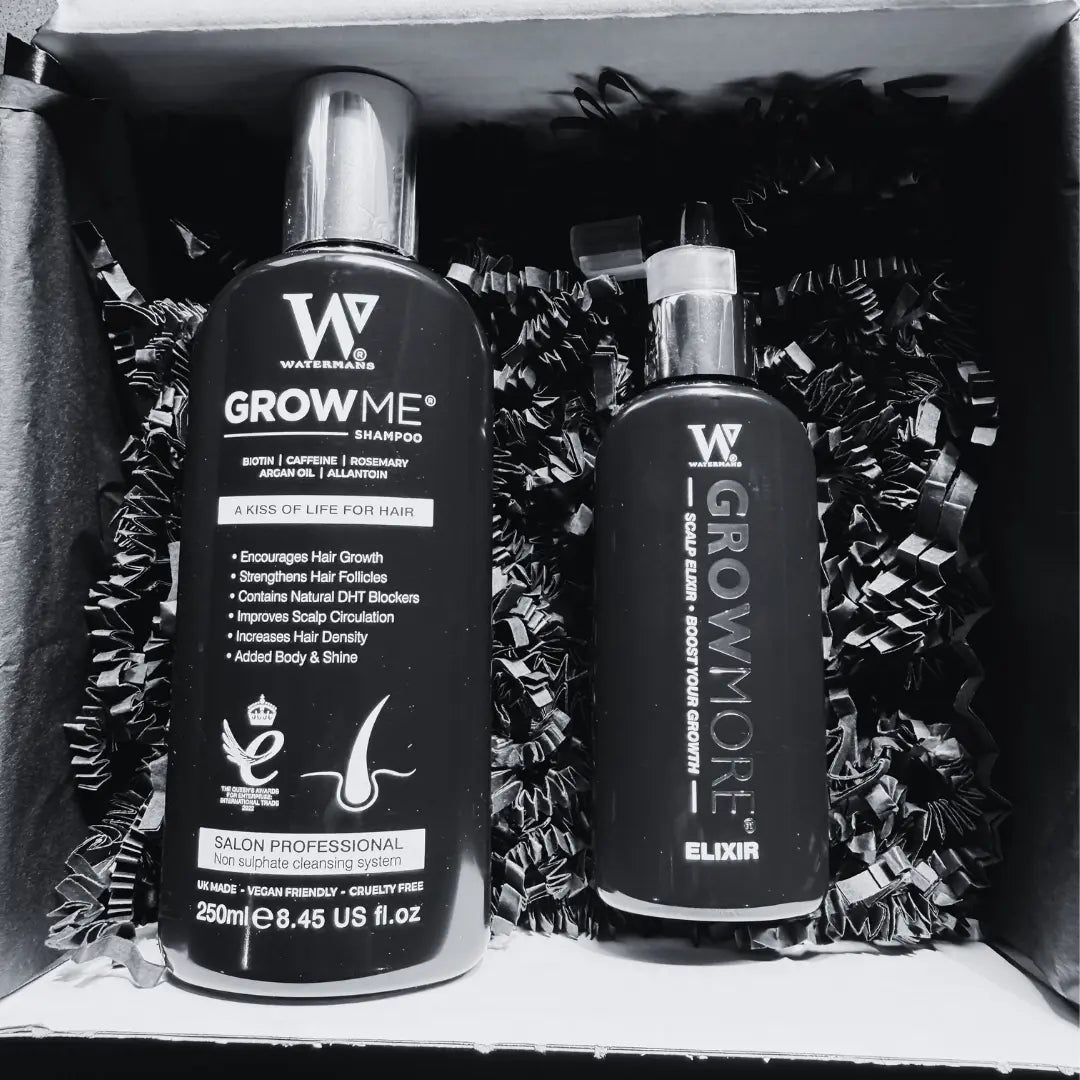
Many choose to start with non-medical treatments. An example is Watermans Grow Me Shampoo. This shampoo is used daily to help with:
- Thinning hair
- Slow growth
- Reduced volume
It mixes ingredients such as:
- Biotin – to support hair structure.
- Rosemary – linked to better blood flow in the scalp.
- Caffeine – that may work against DHT locally and wake hair follicles.
- Niacinamide – to help scalp function and small blood flow.
- Argan Oil – to condition hair and reduce breakage.
- Allantoin – to calm the scalp.
- Lupin Protein – a plant protein that can strengthen hair fibers.
A phototrichogram before and after using the product shows if:
- Hair density rises
- More hairs stay in the growing phase
- Shaft thickness increases and volume improves
3. Combining Topical Care and Lifestyle Changes
Beyond a shampoo, your whole care routine matters. To boost hair health, you might add:
- A protein-rich, balanced diet with iron, zinc, vitamin D, and good fats
- Methods to lower stress, such as a regular sleep routine, calm moments, or exercise
- Gentle care: less use of high heat, loose hairstyles, and low-chemical treatments
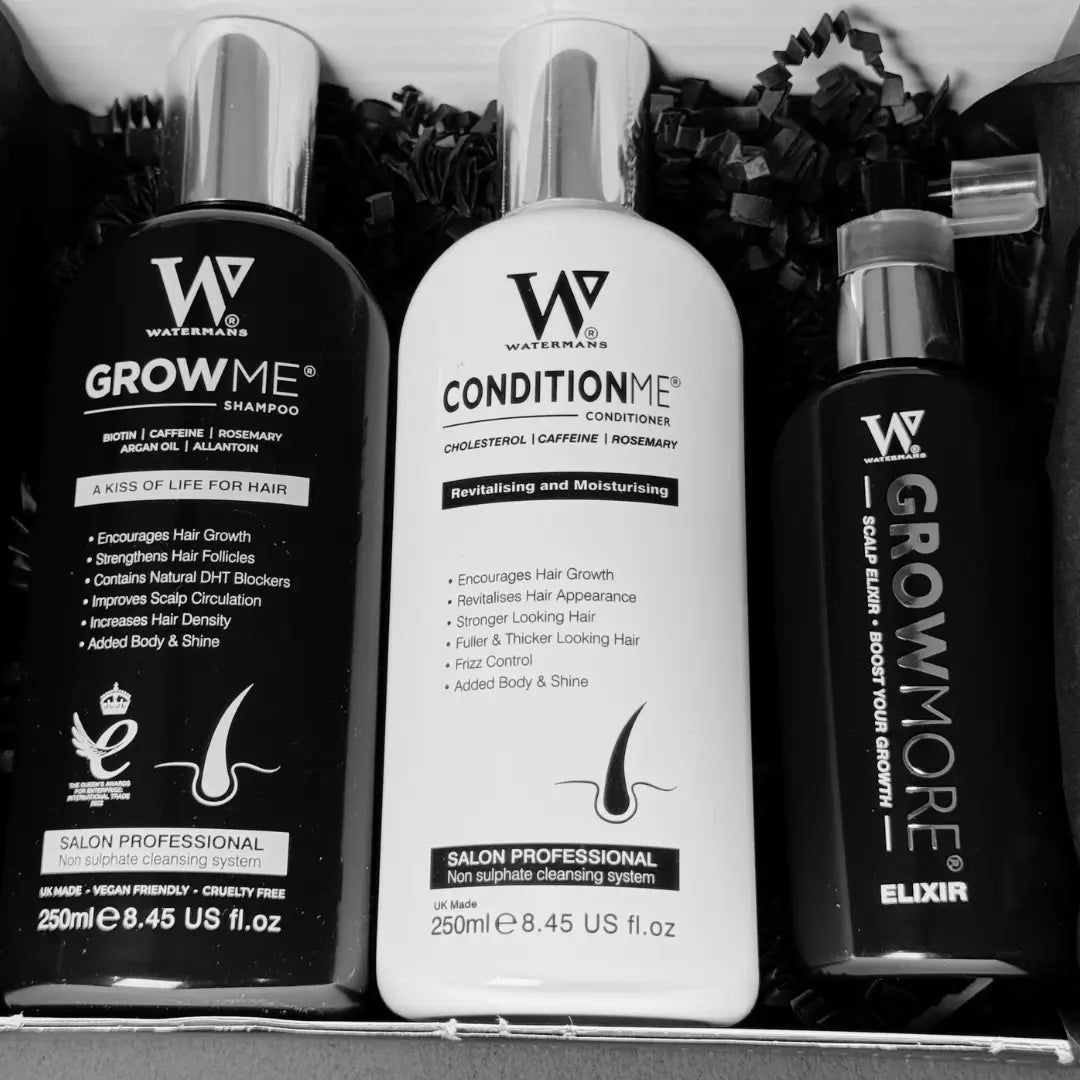
A set like the Watermans Hair Survival Kit supports your hair from washing to styling. Tracking changes with a phototrichogram over months shows if this routine is working.
4. Knowing When to Try Medical Treatments
If repeated tests show:
- A steady drop in density
- Ongoing miniaturization
- Little change even with a good routine
Then your doctor might suggest medical options such as:
- Prescription topicals or pills
- In-office sessions like PRP
- Hair transplant if you can benefit
The numbers help you and your specialist make smart choices.
Practical Tips: Getting the Most From a Phototrichogram
Here are some tips to use the test well.
Choose a Skilled Provider
Look for:
- Dermatologists or hair experts who know trichology well
- Clinics that often use phototrichogram or similar tests
- Clear explanations of the method and the report
Stick to Regular Follow-Ups
Hair grows slowly. Notable changes may take:
- 3–6 months to start showing
- 6–12 months for clear results
Book your tests at regular times with the same expert and method for good comparisons.
Keep a Daily Log
Write down:
- When you began products like Watermans Grow Me Shampoo
- Any changes in your diet or supplements
- Times of high stress or changes in health
This log helps you and your doctor see how your routine matches the test numbers.
Decide on Changes Based on the Data
Instead of switching products often, check your phototrichogram numbers every few months to decide whether to:
- Continue your plan
- Add or remove parts
- Move to stronger options if needed
A data-based plan helps keep your routine steady.
Simple Summary: Phototrichogram in Plain Terms
Here is a short summary of the test.
- What it is: A high-tech way to measure hair count, thickness, and growth with photos.
- How it works: A small scalp spot is trimmed and photographed, then photographed again after a few days while software compares the images.
- What it measures: The number of hairs, how thick they are, the length grown, and the split between growing and resting hairs.
- Who uses it: Dermatologists, hair experts, clinics, and researchers.
- Why it matters: It gives clear data to check hair loss and treatment progress instead of guesses.
- Best use: Set an initial test, start a steady routine (for example, with Watermans Grow Me Shampoo), and test again every few months.
FAQ About Phototrichogram and Hair Growth
1. Is a phototrichogram painful or harmful to the scalp?
The test is usually painless and safe. The only slight worry is trimming a small area, which may feel odd for a few days. It does not hurt the hair follicles.
2. Can a phototrichogram predict how much my hair will grow back?
The test cannot foretell the future. It shows if your hair follicles are active, how many hairs grow, and if they turn thin. These details help the expert guess your regrowth potential when measured over time.
3. How does a phototrichogram compare to using photos to track hair growth?
Regular photos give a visual idea but can change with light, angle, hair length, or style. The phototrichogram is set up the same way each time. It gives clear numbers for hair count, growth, and thickness. If you care about whether a routine—like using Watermans Grow Me Shampoo—works, this test is more reliable than selfies.
Take the Next Step: Combine Clear Measurement With Care
If you worry about thinning, slow growth, or early pattern loss, guessing your progress can be hard. A phototrichogram gives clear, solid data about your hair follicles.
When you pair this precise test with a steady care routine, you give your hair the best chance to stay thicker and stronger over time. A good plan is to:
- Book a consultation with a dermatologist or hair expert who does phototrichogram tests.
- Establish your baseline so you know your starting point.
- Start a focused care routine that uses non-medical, growth-supportive products such as Watermans Grow Me Shampoo, made with Biotin, Rosemary, Caffeine, Niacinamide, Argan Oil, Allantoin, and Lupin Protein.
- Consider a full system like the Watermans Hair Survival Kit to support cleaning, conditioning, and hair strength.
- Repeat your test after several months to check the numbers and see if your routine is paying off.
This method lets you shift from guesswork to clear, fact-based care so that your hair can stay fuller and healthier in the long run.