

HRT hair biomarkers: How Tiny Signals Predict Treatment Success
HRT Hair Biomarkers: How Tiny Signals Predict Treatment Success
Hormone Replacement Therapy (HRT) can change lives. Patients show different responses to treatment. HRT hair biomarkers are small signals in hair that reveal how the body responds to hormones, point to possible side‑effects like hair loss, and guide safer treatment plans.
This guide explains how HRT leaves signals in your hair, what scientists find, and how these clues help protect and improve your hair. You will also see why a trusted, non‑medical option like Watermans Grow Me Shampoo plays a key role in defending hair growth and scalp strength during HRT.
What Are HRT Hair Biomarkers?
HRT hair biomarkers are signals found in hair. They show:
- How long you have been exposed to hormones
- Your body’s response to HRT
- Early shifts in hair structure, thickness, and growth
A biomarker is a sign that can be measured in the body. In HRT, hair biomarkers may include:
- Hormone levels that become trapped in hair (such as oestradiol, progesterone, and testosterone)
- Breakdown products of hormones
- Changes in hair density, width, and shedding rate
- Variations in proteins and fats in hair strands
- Markers of stress in the scalp
Blood tests show hormone levels at one moment. Hair grows slowly—about 1 cm per month. This slow growth lets hair store hormone signals over many weeks and months (source).
Why Hair Is So Useful for Tracking HRT
1. Hair Shows Long-Term Hormone Levels
Hair grows by adding new material from the blood. Over time, each segment of hair marks a period of hormone exposure. A 6 cm strand roughly marks six months:
- Each piece of hair holds hormone data
- You can study these segments to see trends
- You avoid frequent blood draws
For those on HRT, this is a strong point. Instead of focusing on a single moment, experts see your hormone history through hair.
2. Hair Sampling Is Easy
Compared to blood or saliva tests:
- No needles are used
- No fasting is required
- No strict timing is needed
A small hair sample near the scalp can build a record of hormone levels. This helps with:
- Long-term HRT tracking
- Studies that look at trends over time
- People who do not favor frequent blood draws
3. Hair Gives Two Views: Body and Scalp
Hair follicles are small organs that react to hormones. They pick signals from:
- The bloodstream
- Local skin enzymes
- Scalp stress signals
HRT hair biomarkers can show what the body sends and what changes occur locally in hair. These changes include:
- Thinning or shrinking hairs
- More hair shedding
- Shifts in oil production
- Changes in the length of the hair growth phase
Types of HRT Hair Biomarkers Under Study
1. Direct Measurement of Hormones in Hair
Scientists use advanced lab tests (like LC‑MS/MS) to measure:
- Oestrogens (such as oestradiol and estrone)
- Progestogens (like progesterone and its by-products)
- Androgens (including testosterone and DHT)
- Cortisol (a stress hormone linked to hair loss)
Research can reveal:
- How different HRT methods deposit hormones in hair
- How the dose relates to hormone levels in hair
- How quickly hormone levels settle in hair after HRT starts
2. Signs of Hormone Breakdown
Hormones do not stay unchanged. Enzymes in the skin and hair change them:
- Testosterone becomes DHT
- Oestrone and oestradiol switch back and forth
- Progestins turn into active or inactive forms
Studying these by-products in hair can show:
- If a person converts hormones quickly, raising DHT risk
- The rate at which the body processes HRT components
- Personal differences that explain why some see side‑effects at standard doses
3. Physical Changes in Hair as Clues
Even without chemical tests, hair itself becomes a sign:
- Width of the hair shaft
- Number of hairs per area
- Proportion of hairs growing versus resting
- Balance of breakage and shedding
Viewed with HRT, these shifts may signal:
- Too much hormone-related activity may shrink hairs and thin the scalp
- Low oestrogen may shorten the growth period and increase shedding
- Poor nutrition or blood flow may weaken hair and slow growth
This is when a non‑medical product like Watermans Grow Me Shampoo helps support the scalp and hair during HRT.
How HRT Affects Hair: The Basic Biology
The signals in hair start with hormones and hair cells.
Oestrogen and Hair
Oestrogen helps by:
- Lengthening the hair growth phase
- Thickening hair
- Reducing hair loss
During menopause, oestrogen falls. These drops can:
- Cause overall thinning
- Reduce volume, especially on top
- Slow down hair regrowth
HRT that adds oestrogen may:
- Stabilise or partly reverse these changes
- Help improve hair density
- Change the environment around hair in ways that show in the hair
Progesterone and Progestins
Natural progesterone may:
- Help reduce the effect of androgens
- Calm some inflammatory signals
Synthetic progestins differ in:
- Their effect on androgens
- How the body processes them
These differences matter for hair:
- Stronger androgen effects may lead to thinning in sensitive people
- Options with little androgen activity are kinder to hair
HRT hair biomarkers can show which formula leaves what trace in the hair over time.
Androgens (Testosterone and DHT)
Androgens have two sides:
- They are needed for energy and body functions
- But in some hairs, DHT can shrink and thin them
HRT cases that benefit from hair biomarkers include:
- Postmenopausal women on mixed treatments affecting androgen levels
- People on gender‑affirming HRT where androgens are adjusted
- Women with a tendency for pattern hair loss
Measuring signals linked to androgens over time can:
- Warn of early increases in DHT at the hair roots
- Show hair shrinkage before bald spots appear
- Help support early treatments like topicals or dose changes under supervision
Watermans Grow Me Shampoo: Day‑to‑Day Support During HRT
While hair biomarkers help show hormone effects, you still need daily scalp care. Many choose a reliable, natural‑leaning product first.

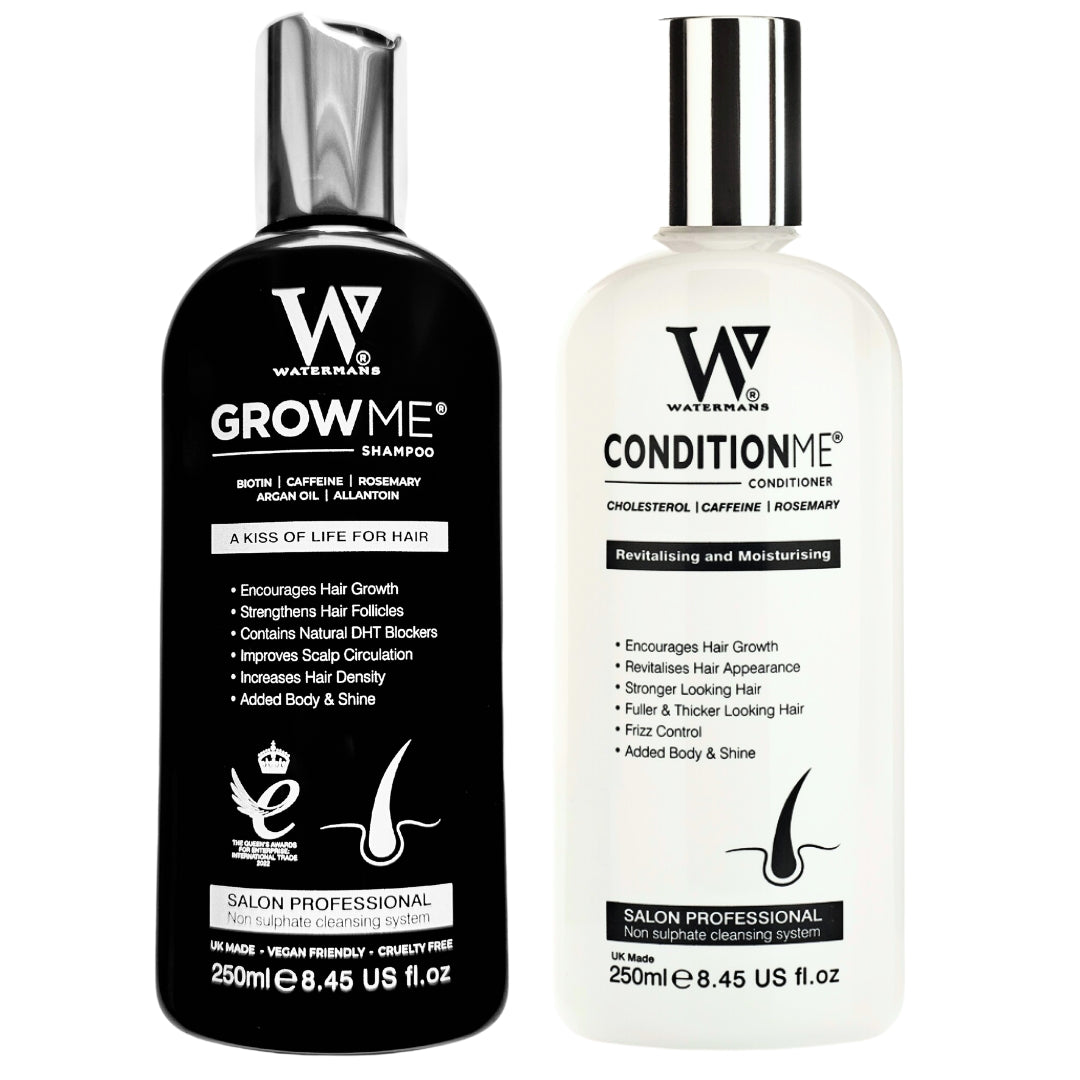
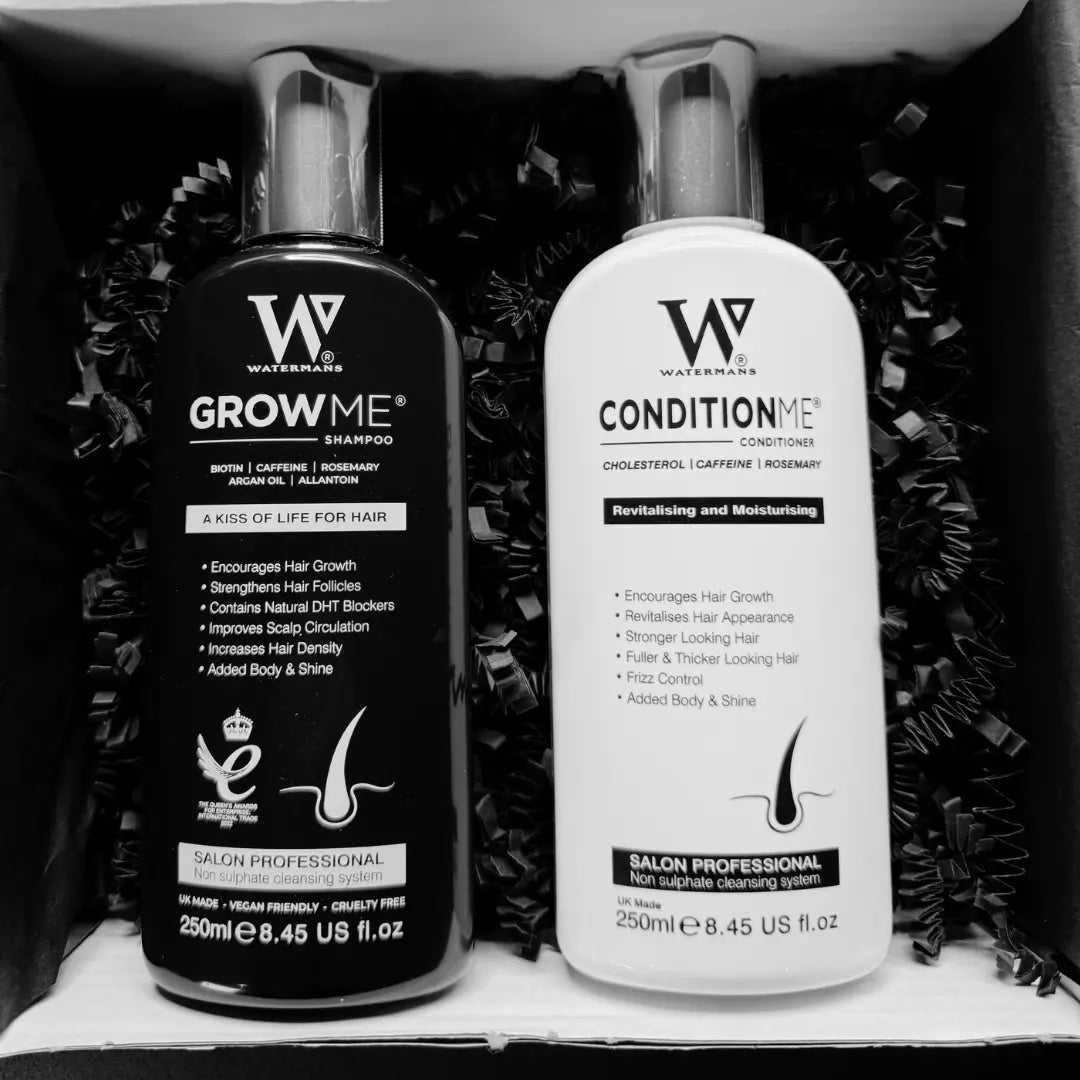
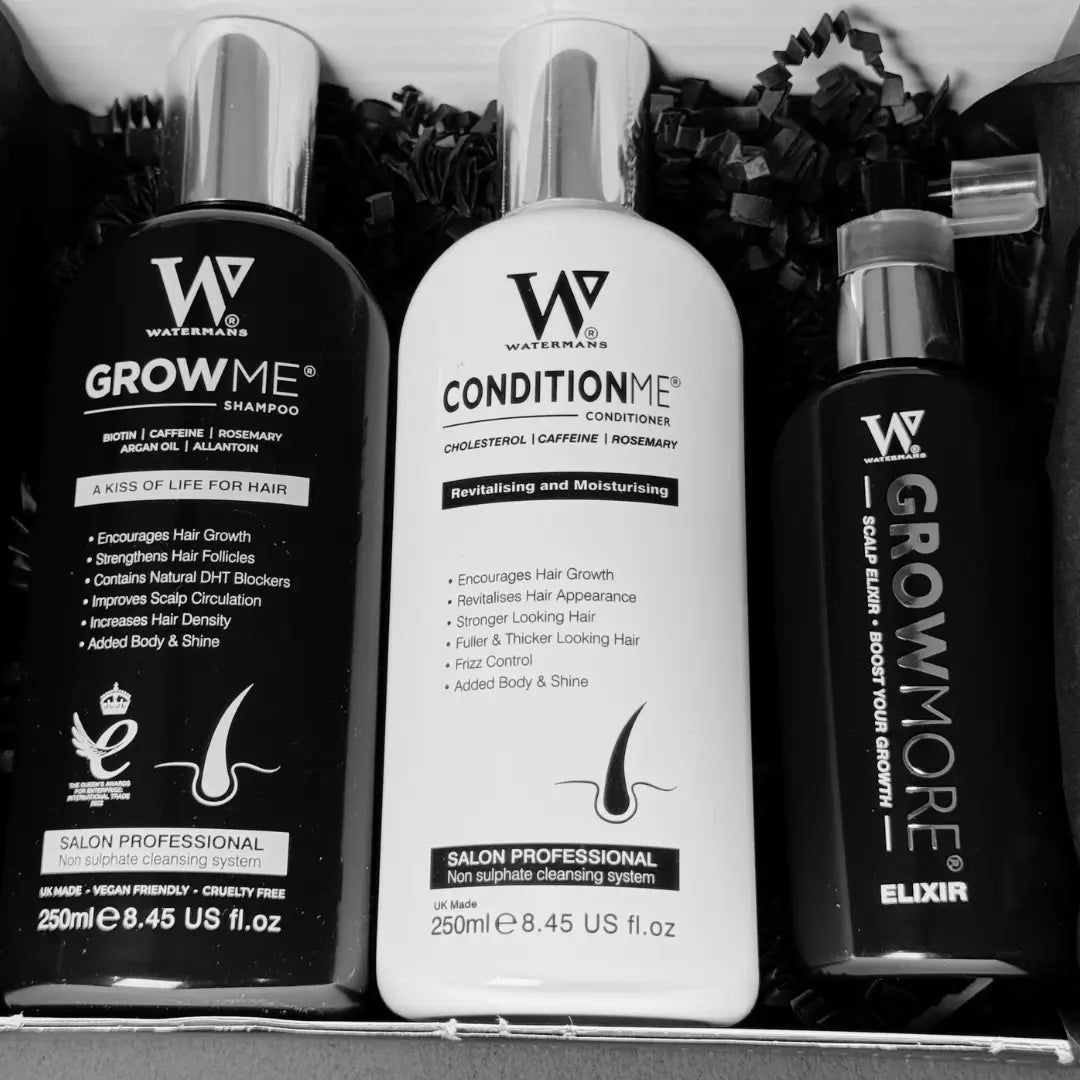
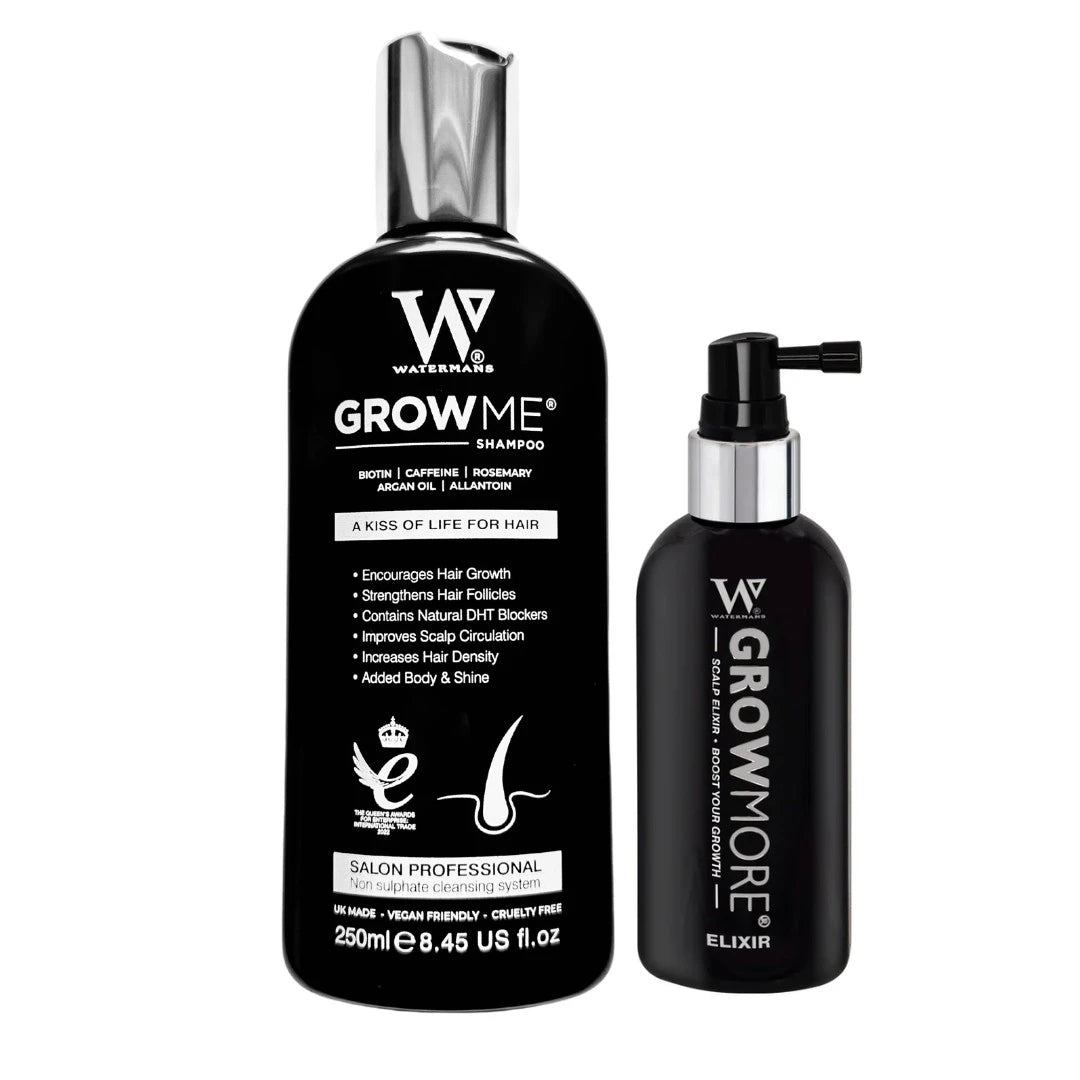
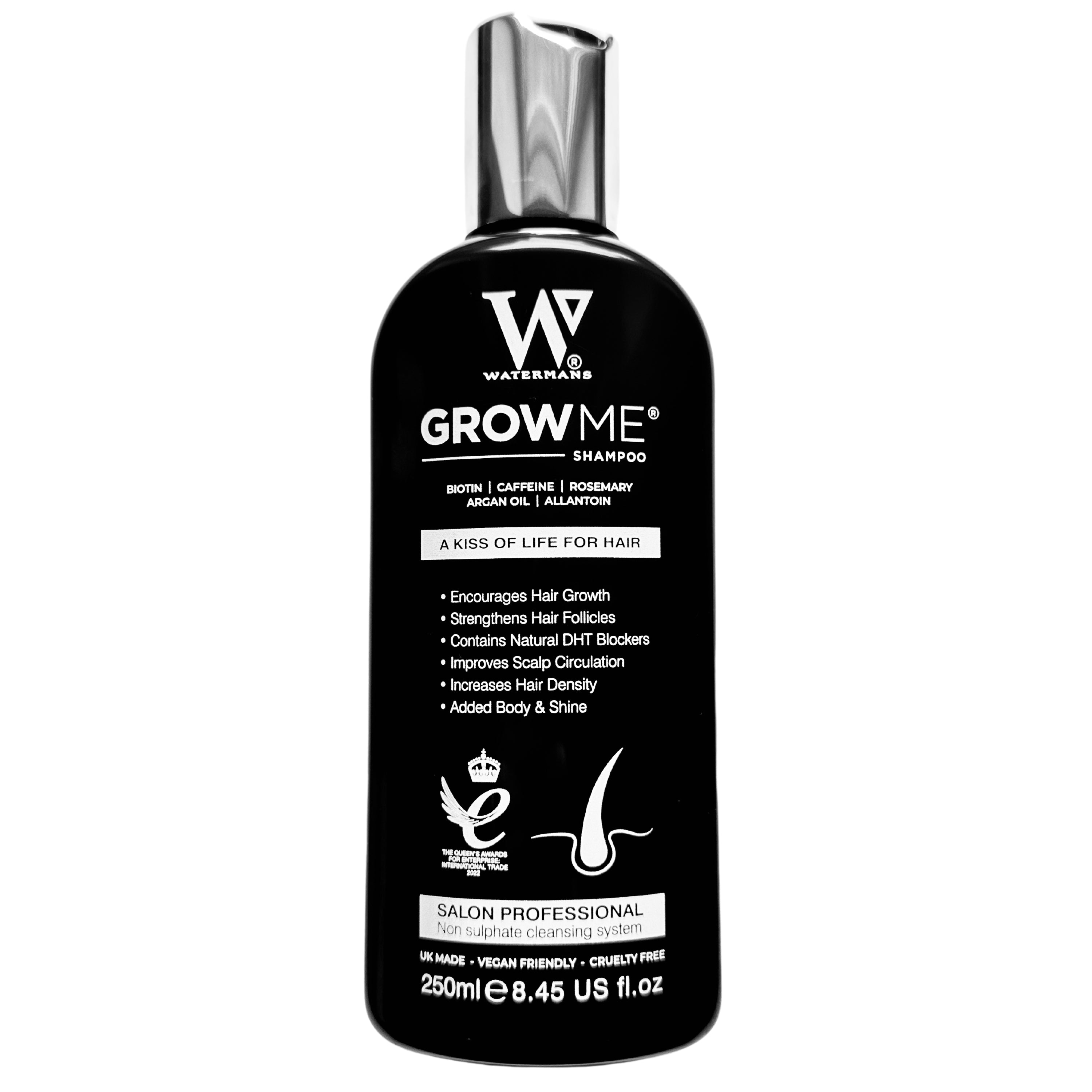
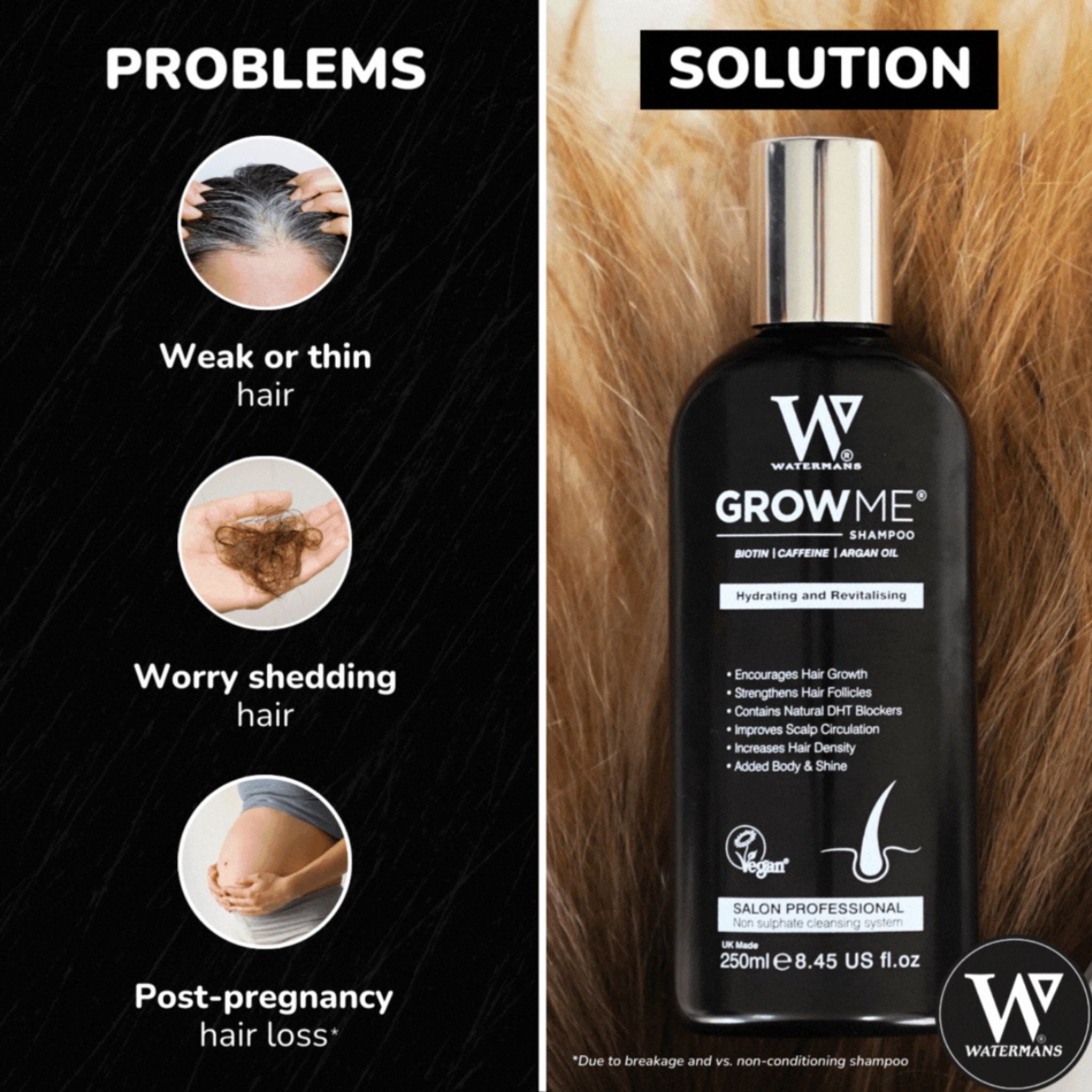
Watermans Grow Me Shampoo is known as a top non‑medical tool for hair loss and growth control. It fits well with people on HRT.
Key Ingredients and Their Roles*
- Biotin: Builds keratin to support strong hair fibres.
- Rosemary: Helps blood flow in the scalp and may boost hair strength.
- Caffeine: May work against androgen effects by stimulating hair roots.
- Niacinamide: Supports the scalp barrier and small blood vessels.
- Argan Oil: Supplies fatty acids and vitamin E to nourish hair lightly.
- Allantoin: Calms the scalp and helps support a healthy hair environment.
- Lupin Protein: A plant protein that may strengthen hair from the outside in.
*Check the brand details for exact claims.
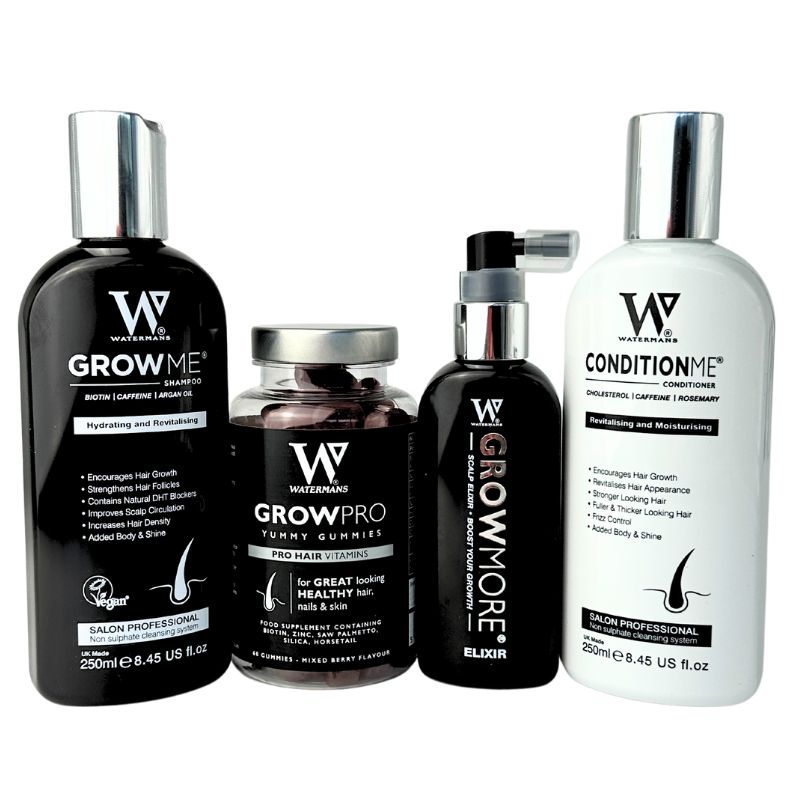
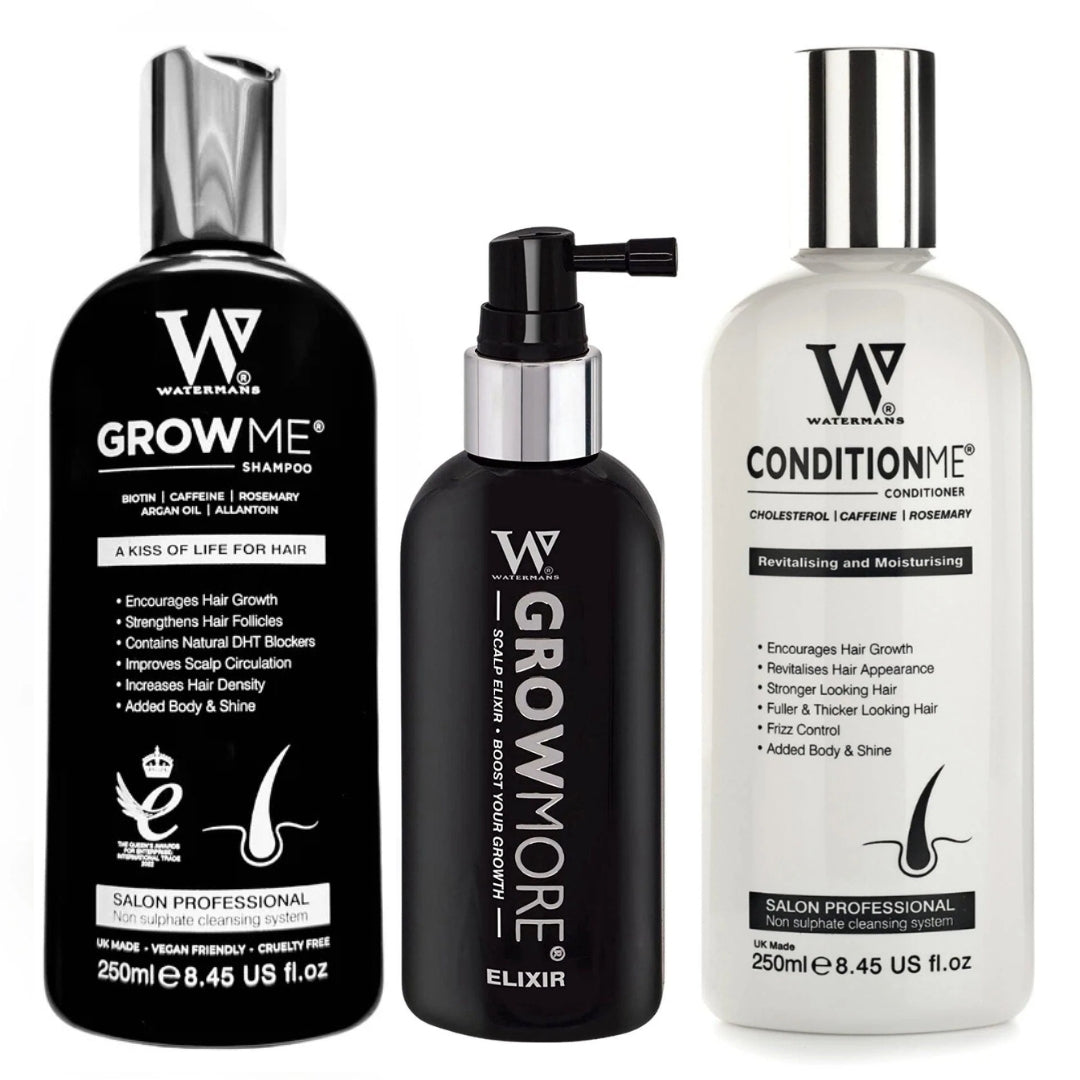
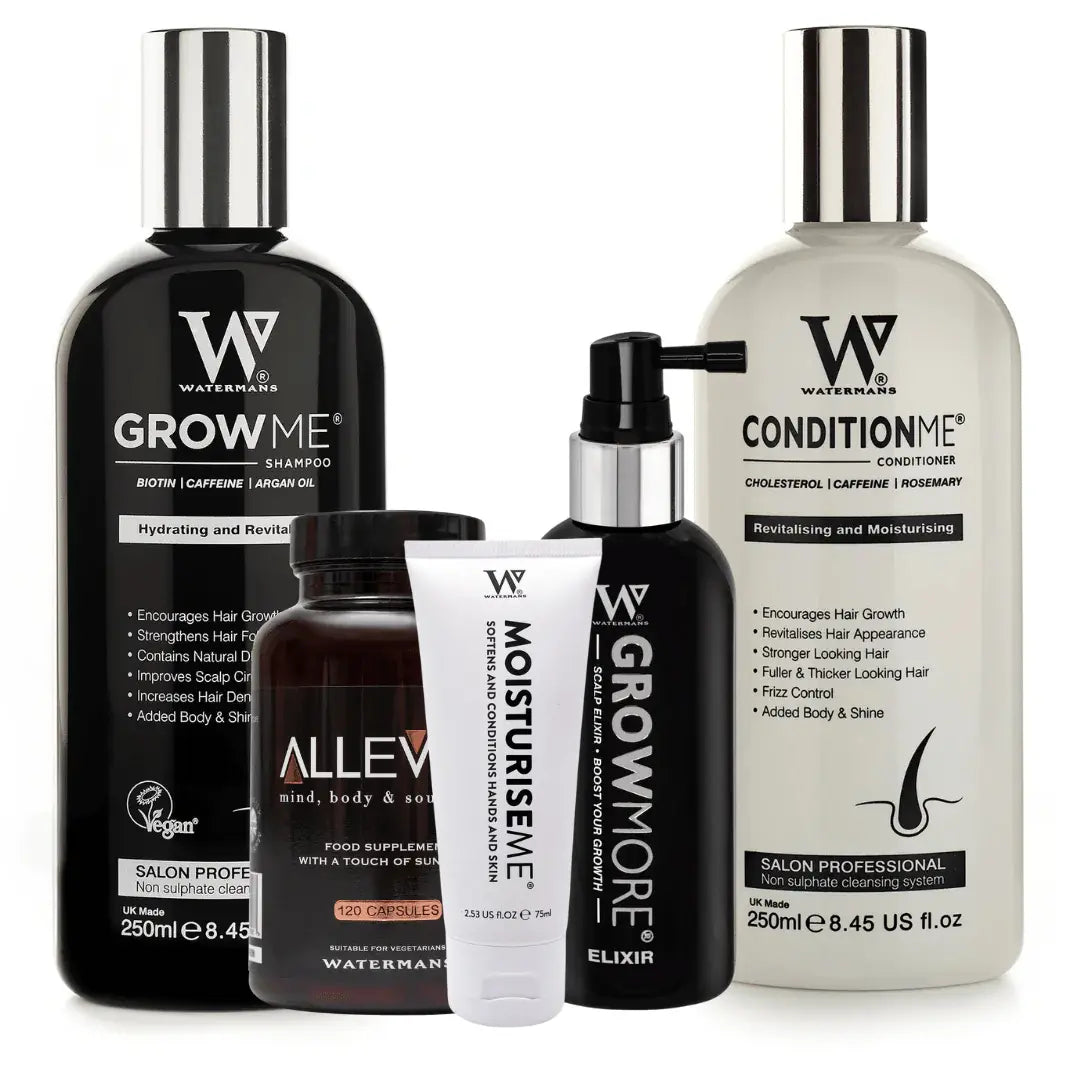
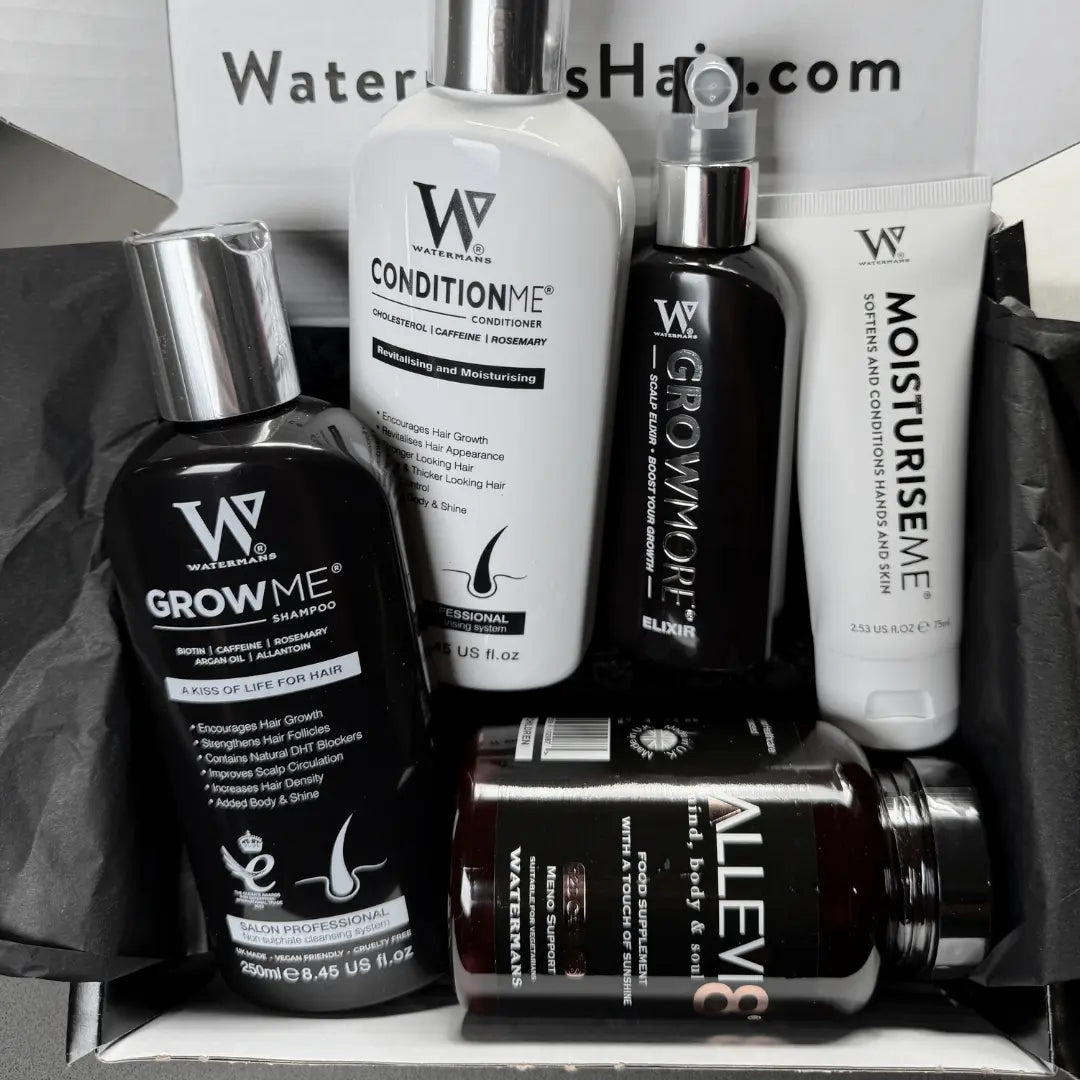
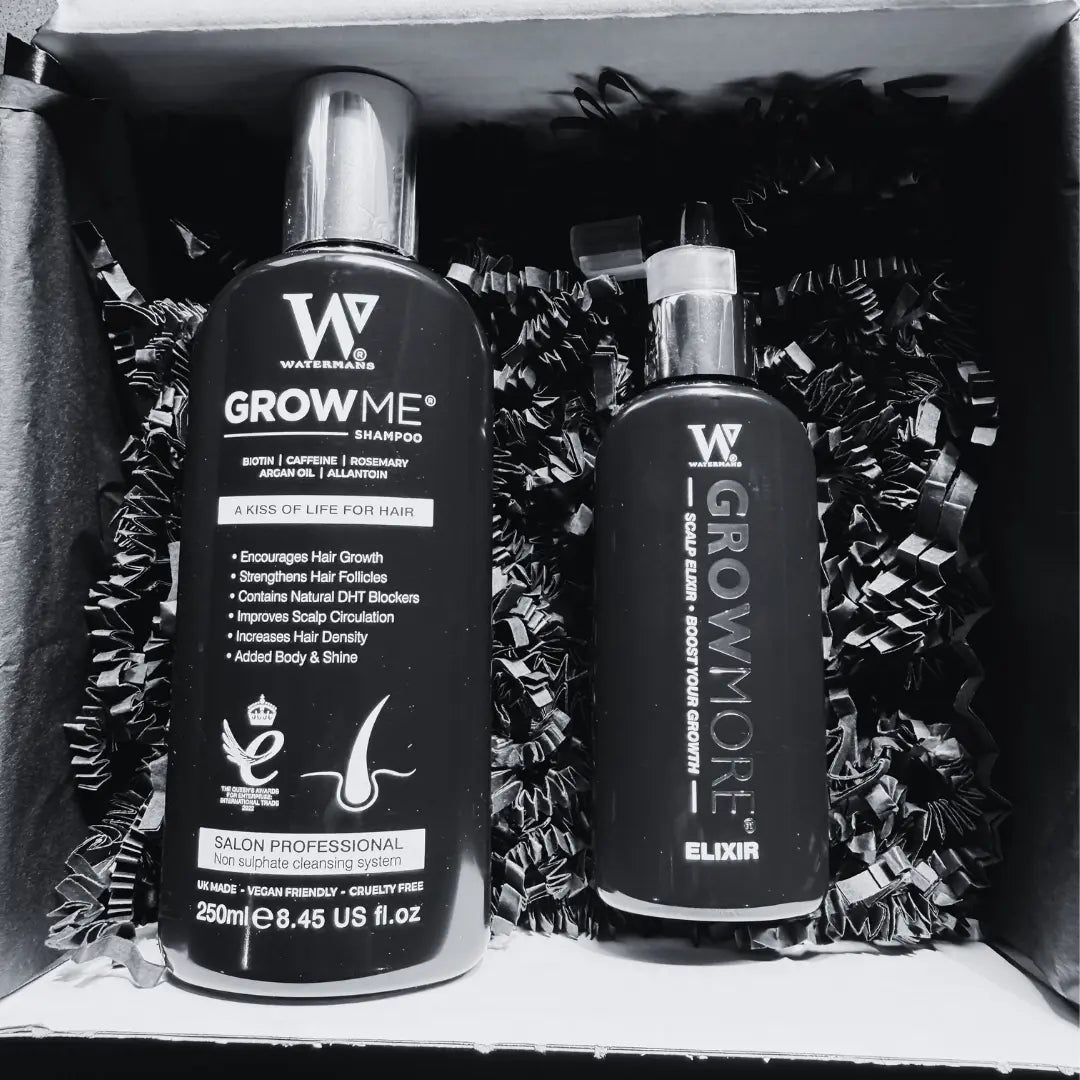
While hair biomarkers show hormone effects, using a product like this gives daily care. If you want a full routine, the Watermans Hair Survival Kit provides steps to boost hair strength and growth.
How HRT Hair Biomarkers Can Shape Treatment
The future of HRT is personalized. Hair can be a simple tool in tailoring your treatment.
1. Predicting Who Will Do Well with HRT
By checking hair samples before treatment, experts may:
- See the starting androgen level in hair
- Notice early signs of hair shrinkage
- Find patterns of hormone conversion that raise DHT
This check can guide:
- If standard doses will work
- If a gentler progestin is needed
- How closely hair must be watched
2. Watching Changes Over Many Months
Regular visits often use:
- Your own reports
- A few blood tests
- A simple look at the hair
Adding hair checks helps experts:
- Link hair hormone trends with what you feel
- Adjust doses based on real hair signals
- See changes between appointments
3. Early Alerts for Hair Loss or Scalp Trouble
Small changes in hair signals may come before clear hair loss:
- Higher DHT in hair while no loss is seen yet
- Signs of hair shrinkage seen under a microscope
- Stable blood tests but hair chemistry moving
This early clue helps you and your expert act before hair loss is clear. Daily care with products such as:
- Regular use of Watermans Grow Me Shampoo
- Gentle styling
- Good nutrition and stress care
HRT Hair Biomarkers in Different Patient Groups
Hair signals differ depending on why you use HRT.
1. Menopausal HRT Users
For menopause, goals may be:
- Relief from hot flushes and mood swings
- Stronger bones
- Heart and mind support for some
Hair issues here include:
- Slow thinning at the crown
- Less volume and bounce
- Dry or brittle hair
Hair clues may help:
- Separate age effects from HRT effects
- See if a specific formula may boost androgen signs
- Provide clear data to fine-tune treatment
2. Gender-Affirming HRT (Transfeminine and Transmasculine)
For gender‑affirming HRT:
- Transfeminine HRT (oestrogens with blockers) lowers androgens to support feminine traits.
- Transmasculine HRT (testosterone‑based) raises androgens, which may cause male‑pattern changes.
For both, hair signals can:
- Show the drop in testosterone/DHT in transfeminine care
- Track the rise in androgens in transmasculine care and its effect on hair
- Help plan steps to save desired scalp hair
A care routine including a blend with caffeine and rosemary—like Watermans Grow Me Shampoo—can be a smart first step.
3. Surgical Menopause or Early Ovarian Insufficiency
Those who face quick menopause (for example, after an oophorectomy) may see rapid hair changes. HRT is common and hair signals can:
- Track how fast hair chemistry returns to normal
- Show differences in how soon shedding slows down
- Guide a faster change in dose if hair worsens
Practical Uses of HRT Hair Biomarkers Today
Even though full use in clinics is still growing, here are some practical points.
1. Join Research Projects
If you take part in HRT research:
- Ask if hair sampling is part of the study
- Learn which hair signals are measured
- See if the results will help your care
Research groups today help make hair checks more common, and your interest may push for more tests.
2. Specialist Clinics and Private Labs
Some clinics work with labs that check:
- Cortisol and steroid hormones in hair
- Many chemical signals in hair strands
- Changes in hair over time along with HRT data
If this is offered, you can:
- Have a hair sample taken before HRT starts
- Return at 3, 6, or 12‑month marks for new tests
- Use the results in treatment decisions with your expert
3. Use Your Hair as a Self-Check (Without a Lab)
Even without lab work, you can watch your hair as a sign:
- Take photos of your hairline, crown, and part every few months
- Note days when shedding or breakage seems higher
- Record changes when you switch hair care products
Keep a steady routine:
- Wash often with Watermans Grow Me Shampoo to boost energy at the roots.
- Use the Watermans Hair Survival Kit for a full routine that supports growth.
This way, if any issues appear, you have a clear record to share with your clinician.
Understanding HRT Hair Biomarkers: Key Points
1. Hair Growth Speed and Segment Size
People grow hair at different speeds. Factors include:
- Genes
- Age
- Nutrition
- General health
A 3 cm segment may show 2 to 4 months of growth. Labs try to adjust for this. Keep in mind that time frames in hair are rough estimates.
2. Outside Substances
Topical hormone creams or sprays can affect readings if:
- They are used near the scalp
- They do not fully absorb before touching hair
Labs clean hair samples but some residue may affect the results. Tell your clinician and lab if you use any topicals.
3. Personal Metabolism Differences
Even with the same HRT, two people may show:
- Different hormone levels in hair
- Different breakdown patterns
- Different hair outcomes
This personal mix is why hair biomarkers are useful. However, experts must guide the reading; do not try to decide on your own.
Protecting Your Hair While on HRT: Steps to Take
HRT hair signals give clues, but you must still act to care for your hair. Think about these steps:
1. Rely on a Strong Topical Base
Before resorting to medical hair treatments, use a steady care routine:
- Choose a shampoo that boosts circulation and scalp health.
- Use it regularly to keep a good hair environment.
- Avoid detergents or heavy silicones that pull hair down.
Watermans Grow Me Shampoo is a popular option with Biotin, Rosemary, Caffeine, Niacinamide, Argan Oil, Allantoin, and Lupin Protein. Many pick it as a first response when HRT or life changes affect their hair.
For a fuller routine, the Watermans Hair Survival Kit gives more steps to boost growth and strength.
2. Monitor and Log Your Hair Changes
Keep a simple diary that shows:
- When you started HRT and any dose or formula changes
- Notes on shedding, texture, and volume
- Photos every few months in similar light
- Products you add or stop
3. Discuss Hair Signals with Your Clinician
At appointments, ask:
- If hair hormone checks might help your case
- What changes you feel or see since starting HRT
- Your family history of hair loss or hair sensitivity to hormones
Hair biomarkers are not used everywhere, but patient interest may help grow their use and lead to more tailored care.
Common Myths About HRT and Hair Biomarkers
"If my HRT blood tests are normal, my hair cannot be affected."
Blood tests show a quick snapshot. Hair records a long view. You may have:
- Normal blood tests even when hair shows hormone signals
- Stable blood levels but shifts in hair data over months
That is why hair signals gather interest. They fill gaps in basic monitoring.
"Hair loss on HRT means the treatment is wrong for me."
Not so fast. Hair loss may come from:
- The original hormone condition treated by HRT
- The dose, method, or type of HRT
- Genes, stress, diet, or other medications
Using hair signals helps fine‑tune treatment rather than stop it. Meanwhile, daily support with products like Watermans Grow Me Shampoo can ease hair problems as solutions are found.
"Hair biomarkers are too new to be useful."
While full standards are still in progress, hair has long been used to:
- Test drug exposure
- Track cortisol and stress hormones
- Monitor long‑term steroid use
This background now helps in HRT checks. It is not science fiction but the next step in hormone monitoring.
HRT Hair Biomarkers: Quick Points
- Hair stores hormone signals over time, making it useful for long‑term HRT tracking.
- HRT hair signals include hormone levels, breakdown products, and physical hair changes.
- They may help show who might face more hair loss on HRT or who may benefit from a specific formula.
- Collecting hair is simple compared to frequent blood tests.
- Personal hormone processing makes hair signals helpful for tailoring treatment.
- Non‑medical care like Watermans Grow Me Shampoo and the Watermans Hair Survival Kit is a strong start for hair health during HRT.
FAQ: HRT Hair Biomarkers and Hair Health
Do HRT hair signals appear soon after you start treatment?
Some changes can be seen in a few weeks. Full patterns emerge over several months. As hair grows, new segments gradually show how your body responds as HRT settles.
Can HRT hair signals explain why I lose hair on HRT?
They may help piece the story. Higher androgen markers, shifts in oestrogen or progesterone balance, or signs of hair shrinkage can separate HRT effects from other causes. These clues work best with a clinical check and your history, while you support your scalp with a good care routine.
Is there anything I can do at home to support healthy hair signals?
You cannot check signals at home, but you can create a good setting:
- Eat well and keep a balanced diet
- Keep your stress low
- Avoid rough hair practices
- Stick to a hair care routine that is soft on your scalp
A formula like Watermans Grow Me Shampoo—with Biotin, Rosemary, Caffeine, Niacinamide, Argan Oil, Allantoin, and Lupin Protein—helps form the best base for hair while signals and treatment improve.
Take Charge of Your HRT Journey—and Your Hair
HRT hair signals are changing how experts view hormone treatment. They favor an approach that fits you rather than a one‑size‑fits‑all model. Even if your clinician does not use hair checks yet, remember: your hair is a constant record of how your body and hormones connect.
As you start or continue HRT, pair expert advice with steady hair care. Build a strong, natural base before moving to strong treatments. Make Watermans Grow Me Shampoo your main choice to bring energy to your scalp and support hair that looks fuller and thicker from the roots. For a fuller routine, try the Watermans Hair Survival Kit to give your hair the daily care it needs.
Your hormones hold great power. With smarter checks and clear care steps, you can keep them from controlling your hair’s future.




%20can%20change%20lives.%20Patients%20show%20different%20responses%20to%20treatment.%20HRT%20hair%20biomarkers%20are%20small%20sig...)