HRT regrowth timeline: What to Expect Month-by-Month for Hair
HRT Regrowth Timeline: What to Expect Month-by-Month for Hair
If you start hormone replacement therapy and want a clear HRT regrowth timeline, you are not alone. Many people on HRT—whether for gender affirmation, menopause, or hormone-based hair loss—ask if their hair will regrow, how soon it grows, and what changes they will see.
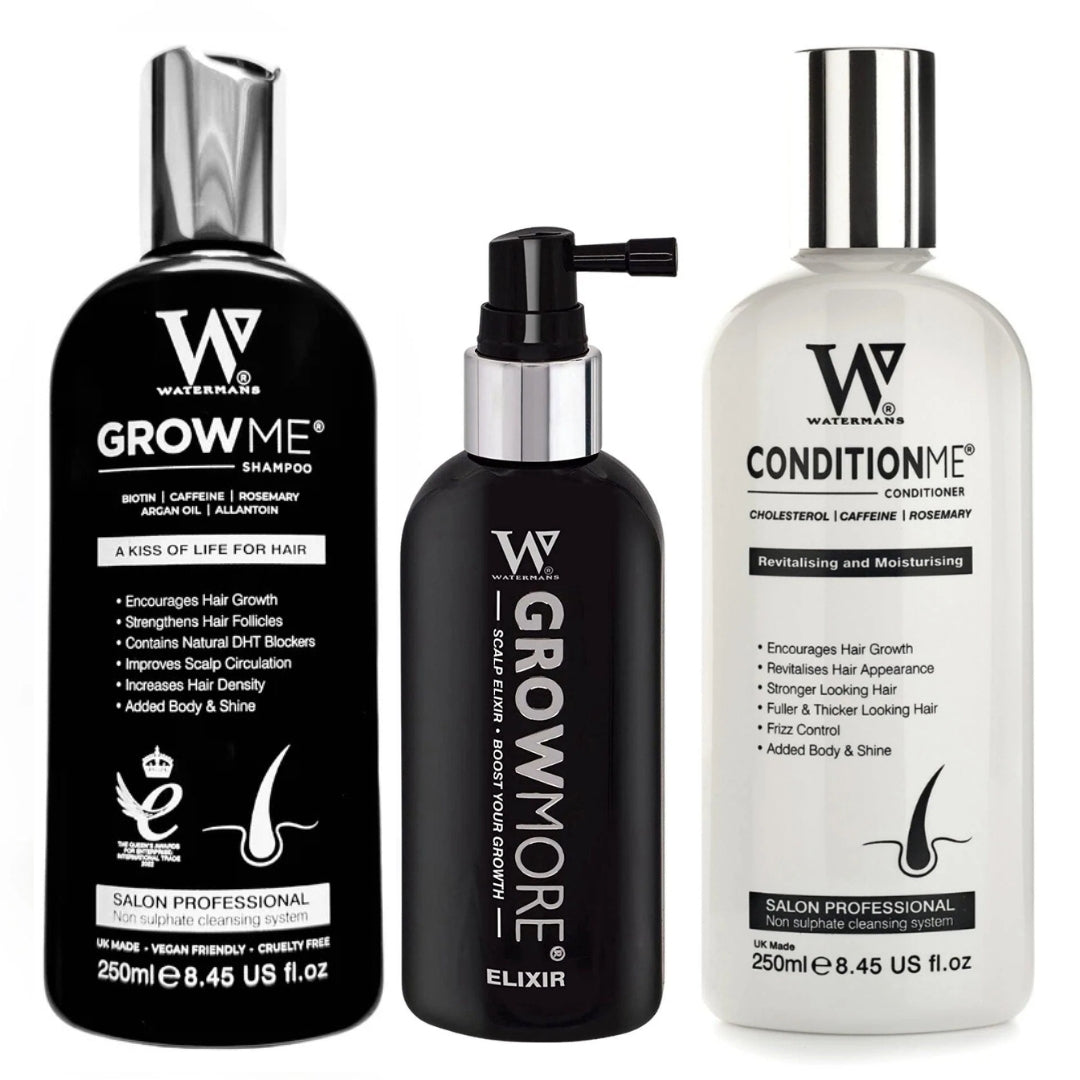
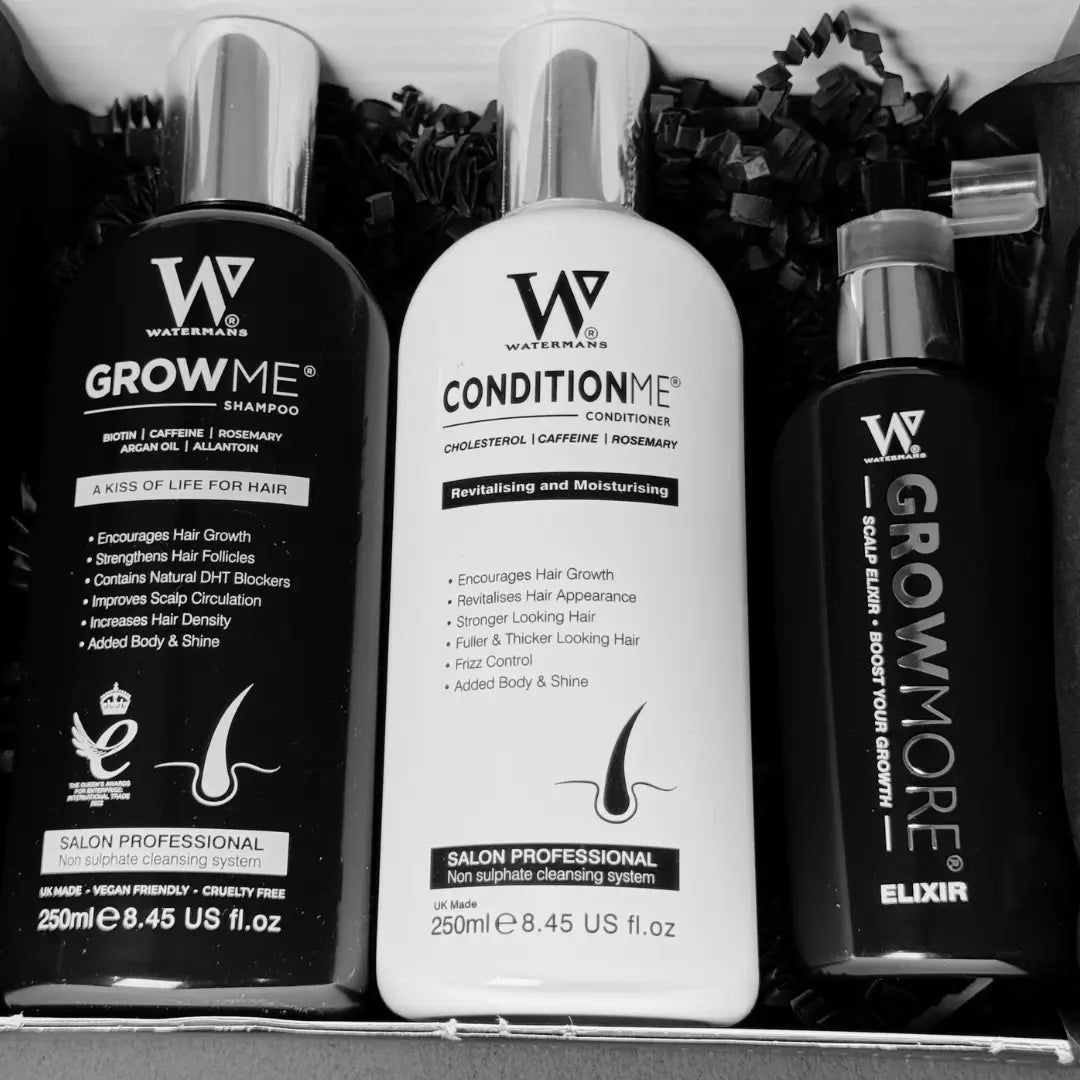
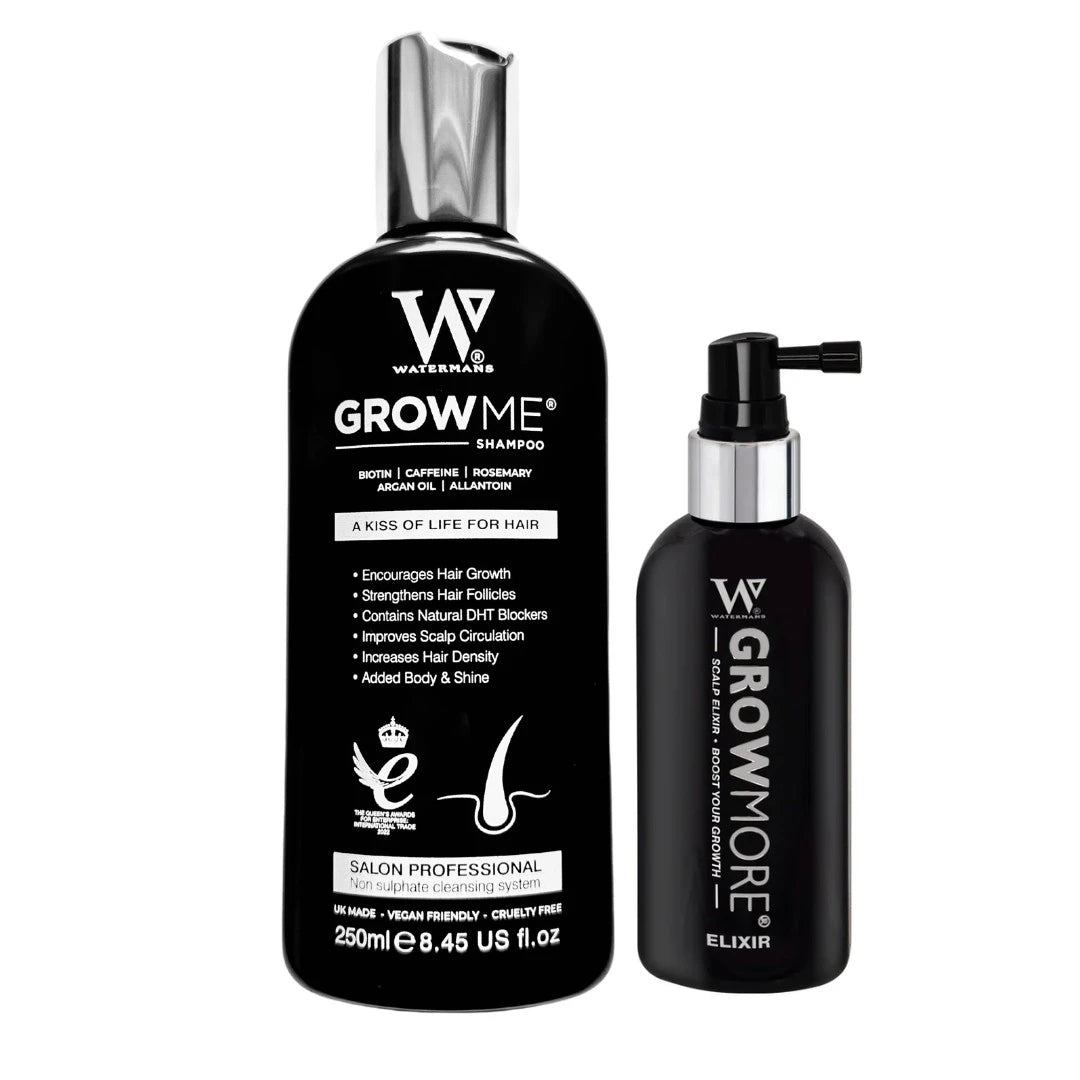
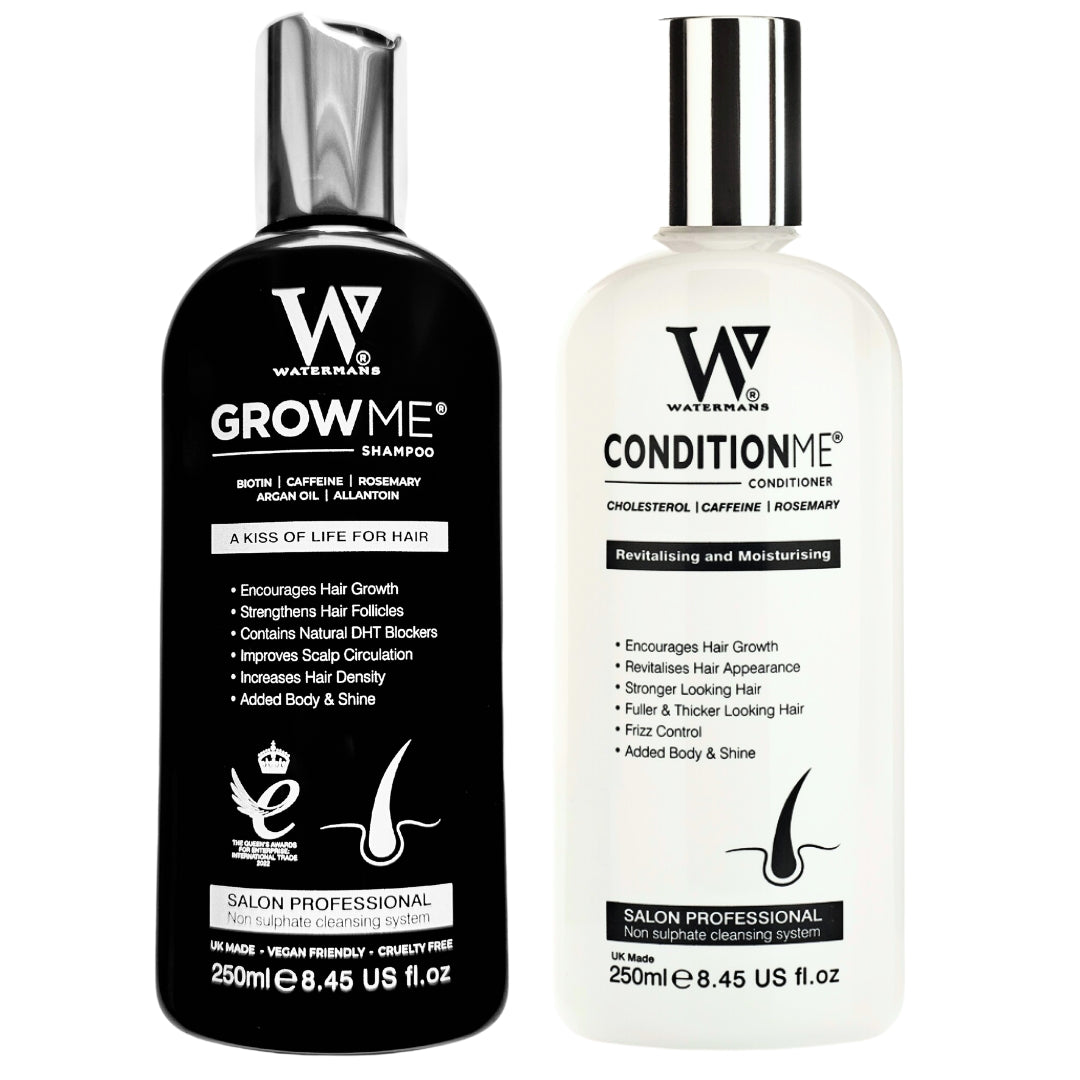
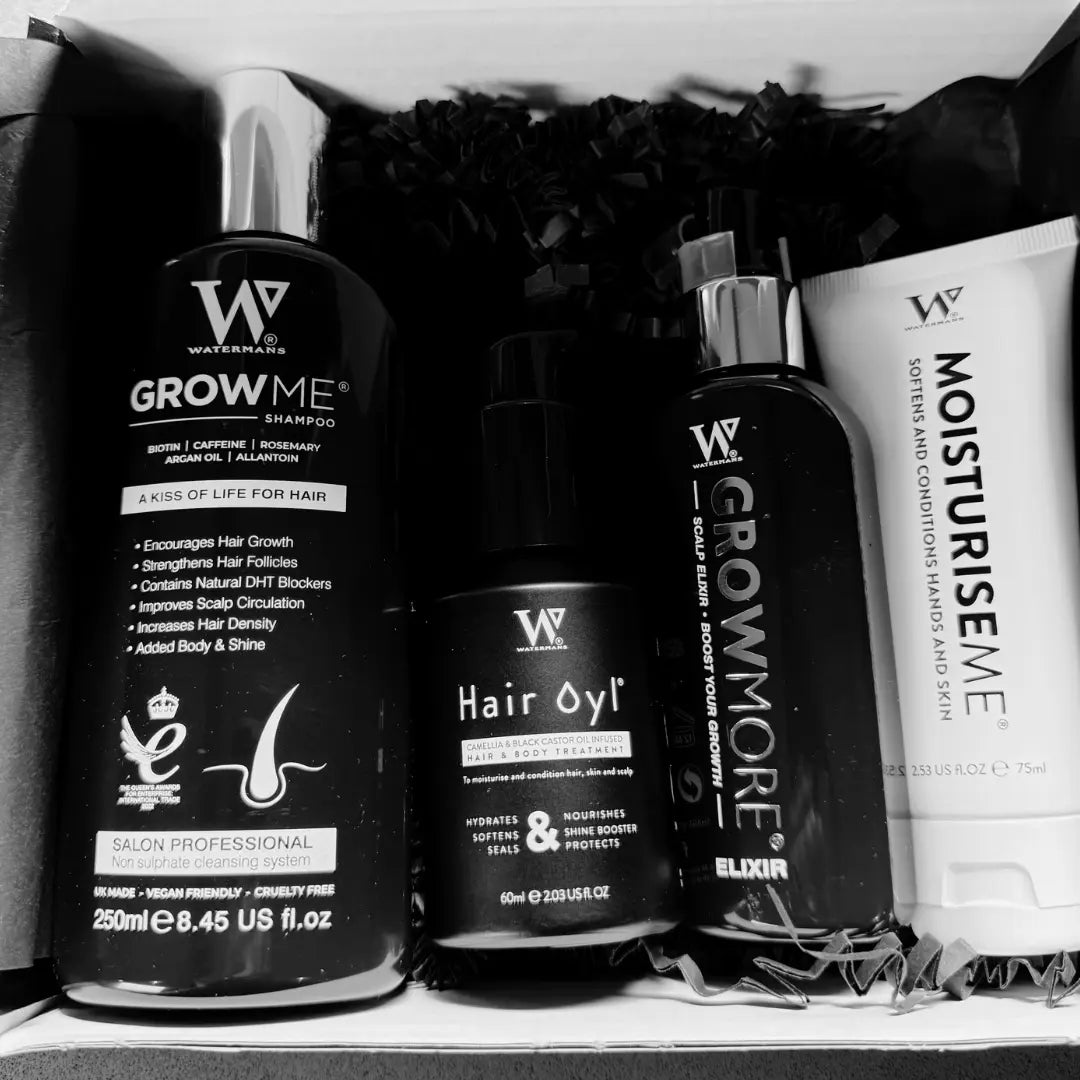
Before we look at each month, know this: hair regrows slowly on HRT. The growth starts with small, gradual changes. You may see more benefits when you care for your scalp with a trusted topical routine such as Watermans Grow Me Shampoo, a natural option made with Biotin, Rosemary, Caffeine, Niacinamide, Argan Oil, Allantoin, and Lupin Protein. These ingredients work to feed the scalp and boost hair from the roots.
Understanding the HRT Regrowth Timeline
Hair and hormones share a slow bond. The HRT regrowth timeline depends on several factors:
- The type of hormone imbalance you have (for example, low oestrogen, high androgens, menopause, PCOS, or gender-affirming HRT).
- Your genes and the pattern of hair loss.
- The time you have experienced hair thinning.
- Your age and health.
- The care your scalp receives and the products you use.
HRT and the Hair Growth Cycle
Hair does not grow without pause; it fits a cycle:
- Anagen – the active phase of growth (2–6+ years on the scalp).
- Catagen – the shift phase (a few weeks long).
- Telogen – the resting or shedding phase (2–3 months).
- Exogen – the phase when the old hair falls.
Hormones change this cycle. For instance, androgens like testosterone and DHT may shrink follicles in those who are sensitive. This change shortens the anagen phase and causes a pattern of thinning. Oestrogen can extend the active phase for many and support fuller hair. Fixing thyroid issues and other hormone problems may make shedding and growth more orderly.
When you start HRT, not every hair changes at once. Each hair follows its own cycle. That is why new growth appears only after several months even when HRT is working well.
How HRT Type Affects Hair Regrowth
Your HRT plan shapes your hair journey. The overall ideas remain the same, but the details shift.
1. Feminising HRT (Transfeminine / AMAB people)
This therapy uses oestrogen with blockers of androgens (like spironolactone, cyproterone acetate, or GnRH analogues).
Key hair changes include:
- The drop in androgen effects can slow down or partly reverse pattern baldness.
- Body and facial hair tend to become finer and grow slower over time.
- Scalp hair may stabilize and grow thicker at the crown, but a long receded hairline may not regrow much.
2. Masculinising HRT (Transmasculine / AFAB people)
This plan usually follows testosterone therapy.
Key hair changes include:
- Body and facial hair grow much faster with time.
- Scalp hair in those with a genetic risk may thin in a typical male pattern, especially at the temples and crown.
- Some people see a faster onset of pattern baldness. Early scalp care is key.
3. Menopausal HRT (Cis women)
This treatment mostly uses oestrogen, sometimes with added progesterone or a small dose of testosterone.
Key hair changes include:
- Oestrogen can lower the shedding seen in menopause or stop diffuse thinning.
- Many women notice a fuller ponytail, smoother hair texture, and less breakage.
- High or unbalanced androgens (from some progestins) may worsen thinning in those who are prone to it.
4. Other Hormone Therapies
- Thyroid hormone replacement can end heavy shedding and allow hair to grow once levels are normal.
- PCOS treatment (for example, with anti-androgens, metformin, or oestrogen-progestin contraceptives) may slow hair thinning caused by androgens.
No matter the type of HRT, mixing it with a trusted topical routine—like Watermans Grow Me Shampoo and the Watermans Hair Survival Kit—can boost the visible results. These products feed the scalp and support your follicles directly.
HRT Regrowth Timeline: Month‑by‑Month Expectations
Every person’s hair journey varies. Yet, most follow a predictable pattern broken into 3‑month blocks rather than changes week by week.
Month 0–1: Internal Shift, Minor External Change
In the first month:
- Your hormone levels start to shift, yet the hair still follows its old cycle.
- You may see a small change in shedding; you might lose a bit more or a bit less hair in the shower.
- Your scalp may feel different. It can feel drier, oilier, itchier, or calmer. This depends on the hormone shift.
- If you add a new routine such as Watermans Grow Me Shampoo, your hair may feel cleaner or more lively. But this change is cosmetic, not true regrowth yet.
What happens inside:
- Hair follicle receptors and oil glands start to react to the new hormone levels.
- Follicles that are sensitive to DHT may slow their shrinking process when androgens drop.
- For masculinising HRT, the body builds a base for more facial and body hair, while scalp follicles may get stronger signals.
Expect:
- Do not look for a burst of new hairs yet.
- Stay steady with your HRT and remain true to your scalp-care routine.
Tip: Gently massage Watermans Grow Me Shampoo into your scalp for a minute or two before rinsing. The caffeine, rosemary, and niacinamide work together on the root level while your hormones adjust.
Month 2–3: Shedding Levels Out and Early Small Changes
In months 2 to 3:
- Many people say, “I find less hair in the shower or on my brush.”
- There can be a short phase where more hair falls; this reset phase is part of the shifting cycle.
- The texture of your hair might change slightly:
- If you use oestrogen, your hair may turn softer and less oily.
- If you use testosterone, your hair might feel oilier.
Early signs include:
- For feminising or menopausal HRT: the crown may seem a bit fuller and less reflective in some lights. The fringe or crown might appear slightly denser.
- For thyroid or PCOS therapy: thinning might start to look less severe. A part line might not widen further.
The role of topical support:
- Products like Watermans Grow Me Shampoo help. Biotin and Lupin Protein work to keep the hair strong. At the same time, Allantoin and Argan Oil help keep the scalp healthy.
- Using caffeine-rich formulas may reduce the gap between the old hair shedding and the start of new growth.
Expect:
- Only small, early changes. Not everyone will see a strong difference yet.
- It is too early to judge the full hair potential. Keep following your routine.
Month 4–6: Early Regrowth Becomes Clearer
In these months, many notice the first signs of new, fine hairs.
Look for:
- Short, soft new hair along the line or temples.
- A reduced view of the scalp at the crown, especially in strong light.
- A slight thickening when hair is gathered in a ponytail.
For feminising and menopausal HRT:
- The crown often shows better density.
- Existing hairs may grow thicker as the follicles take on a more active phase.
- The thin hairs may gain width, creating a fuller look.
For masculinising HRT:
- You may notice more facial and body hair.
- If you are prone to pattern hair loss, early thinning at the temples or crown may also show. This makes gentle, stimulating shampoos like Watermans key.
Texture and quality:
- Oestrogen-based plans often make hair smoother and shinier.
- When thyroid levels become stable, the hair may feel less dry and brittle.
Expect:
- Changes that are moderate but welcome. When you compare photos from Month 0 to Month 6, the differences may be clear in the same light.
- HRT helps slow further loss. True changes need more time.
Consider this tip: Mix your HRT with the Watermans Hair Survival Kit for a rounded approach that supports both hair loss and growth.
Month 7–9: Growth Settles In and Thickness Improves
At this time, you see the direction your hair takes.
You might notice:
- The new hairs from earlier grow longer and blend with the older hair.
- Volume feels much better, especially at the crown and mid-scap.
- The hair styles more smoothly and you might use less product for volume.
For feminising HRT:
- Some people see more density in thinning areas, especially if they started treatment early.
- Long-established receded hairlines may show little regrowth. The aim here is to prevent more loss and improve the hair you have.
For menopausal HRT:
- Many women say their hair now looks more like it used to, with less shedding and fuller parts and temples. The hair also shows more shine.
For those recovering from heavy shedding (from thyroid issues, stress, or other causes):
- The flat or dull look starts to lift. The hair begins to show body and a natural movement.
Topical care remains key:
- Continued use of shampoos like Watermans Grow Me Shampoo helps. Caffeine and Rosemary feed blood flow in the scalp. Niacinamide supports the skin on the scalp. Argan Oil and Allantoin soothe the scalp and help reduce breakage.
Expect:
- Real and clear improvements in hair thickness and quality. If you take photos, the gains can be clearly seen.
- The hair still is not in its final state. Growth continues in cycles.
Month 10–12: One‑Year Mark – A New Norm
After one year on HRT, many see a lasting change.
At 12 months you will see:
- Balanced shedding: You no longer lose large clumps of hair. The fall becomes steady.
- Better density: In thinning areas, hair may grow thicker where follicles still work.
- Improved quality: The hair feels softer, stronger, and more hydrated as hormone balance settles.
For feminising HRT:
- A complete reversal of a receded hairline is rare. However, the crown and mid-scalp are usually much better than before HRT.
- Hair tends to be softer and appears more delicate.
For masculinising HRT:
- Those with a strong family history of male pattern hair loss might see thinning at the temples or crown.
- If there is no strong genetic risk, scalp hair may change little.
- Using supportive topical care remains key to keeping the hair dense.
For menopausal or thyroid HRT:
- A year is a good time to see if your thinning was mainly caused by hormones.
- Many notice a thicker ponytail, stronger hair that breaks less, and a scalp that is less visible.
Expect:
- Year 1 shows what your hair will do under HRT in the long run.
- Some changes may continue into the second year, though the biggest shifts are in the first 12–18 months.
A wise move now is to stick with a routine that suits you. This means continuing the HRT prescribed by your clinician along with regular use of Watermans Grow Me Shampoo and the Watermans Hair Survival Kit.
The 18–24 Month Window: Long-Term HRT Hair Outcomes
After the first year, hair changes on HRT tend to grow slowly. Still, these changes matter.
In the 18–24 month period you may see:
- New hair grows long enough to boost overall volume.
- The pattern of regrowth becomes clearer. Areas with working follicles grow thicker; spots with lost follicles remain sparse.
- You learn how your scalp responds to long-term care and products.
At this stage many people:
- Adjust their haircut to work with improved density.
- Change their dyeing or chemical treatments to protect the newfound hair.
- Stick to scalp care as part of ongoing maintenance.
Keep in mind, HRT works from the inside. A targeted shampoo and treatment routine help the hair look its best.

Why Your HRT Regrowth Timeline Might Be Slower or Faster
No two hair journeys are the same. Many factors affect your HRT regrowth timeline.
1. Age and How Long Hair Loss Lasted
- The longer a hair follicle stays small or inactive, the harder it is to wake up.
- Beginning HRT when thinning is just starting often gives better results than treating long-term loss.
2. Genetics
- If your family has a history of hair loss, HRT may have less impact on reversal.
- Even so, early hormonal support combined with gentle scalp care may help keep the hair you have.
3. Type and Dose of HRT
- Plans rich in oestrogen with strong androgen suppression are more likely to stop or slow pattern hair loss.
- Low-dose treatments often ease symptoms without fully fixing the hair cycle.
- Sudden changes in the HRT plan can shift the hair cycle temporarily.
4. Other Health Factors
- Anemia, low vitamin D, high stress, autoimmune issues, and scalp problems (like seborrheic dermatitis or psoriasis) all affect hair growth.
- Your diet, sleep, and smoking habits also impact blood flow and follicle health.
5. Hair and Scalp Care Routine
Even with balanced hormones, rough care can hurt your results:
- Washing too much with harsh shampoos or using hot styling tools often may cause breakage.
- Ignoring scalp care allows buildup and irritation that weakens follicles.
A product such as Watermans Grow Me Shampoo is made with scalps in mind. Its Biotin, Caffeine, Rosemary, Niacinamide, Lupin Protein, Allantoin, and Argan Oil work together to help the scalp stay active and ready for growth.
What Hair Changes HRT Can and Cannot Achieve
It is best to have clear ideas when using the HRT regrowth timeline.
HRT Can Often:
- Reduce heavy shedding caused by hormone imbalance.
- Slow ongoing pattern hair loss by cutting down on androgen effects.
- Boost the width and feel of the hairs you have.
- Help living follicles make the hair look fuller.
- Improve hair shine, softness, and ease of styling by keeping oil levels in check.
HRT Typically Cannot:
- Bring back hair where follicles are gone or replaced with scar tissue.
- Fully restore long-term, severe pattern baldness.
- Overcome strong genetic factors without extra care.
- Replace the need for well-made topical products and soft haircare habits.
That is why treating both your hormones and your hair in tandem usually works best.
Optimising Each Stage of Your HRT Regrowth Timeline
You cannot change your genes, but you can change your habits. At every phase of your journey, there are clear actions to help your hair grow.
Foundations: From Month 0 Onwards
- Take your HRT as directed. Do not miss doses.
- Ask your doctor to check your iron, thyroid, vitamin D, and B12 levels because they affect hair health.
- Begin a scalp routine early with a shampoo made for hair growth support, such as Watermans Grow Me Shampoo.
Months 1–6: Building Momentum
- Take monthly photos in similar light to see small shifts.
- Avoid tight hairstyles, vigorous towel-drying, and frequent high-heat styling.
- Add a leave-in conditioner or scalp support from the Watermans Hair Survival Kit to protect new hair and cut down on breakage.
Months 6–12: Reinforcement and Change
- Talk with your prescriber about progress. If hair does not improve, ask for a check.
- Review your sleep, diet, and stress levels. These affect hair growth.
- Keep or adjust topical products based on your scalp’s feel. Aim for light stimulation that does not irritate.
Beyond 12 Months: Maintenance and Fine-Tuning
- Accept that the strongest changes may be behind you. Maintain and improve what you have.
- Keep regular checkups for hormones and overall health.
- Stick with a steady scalp-care routine rather than switching products frequently.
Common Experiences Along the HRT Regrowth Timeline
Here is a look at what many people experience as their HRT regrowth timeline moves forward:
- Early "shedding panic": A short increase in hair loss as follicles shift may feel alarming, yet it often leads to healthier growth.
- Baby hairs on the hairline: Fine, short hairs that slowly get thicker and longer when the scalp is well cared for.
- Texture shifts: Hair may change from coarse to fine, or from dry to balanced, depending on the hormone mix.
- Changes in oil: The scalp may turn oilier with testosterone or drier with oestrogen/progestin plans.
- Plateaus: There can be times when progress seems to pause. The hair cycle still moves beneath the surface.
Understanding these points can help you feel at ease and keep your routine steady.
Integrating Natural Topical Support into Your HRT Hair Plan
Many find that the best results come from combining clinically guided HRT with regular scalp care made from natural, lab-inspired ingredients.
A product like Watermans Grow Me Shampoo is made with this blend in mind:
- Biotin – helps build strong hair strands.
- Rosemary – used to refresh the scalp and boost blood flow.
- Caffeine – gets into the follicle and can work against some androgen effects.
- Niacinamide – improves the scalp skin barrier and may support a healthy base.
- Argan Oil – adds slip and condition without weighing hair down.
- Allantoin – soothes the scalp and encourages healthy cell turnover.
- Lupin Protein – a plant protein that helps make hair stronger and fuller.
Using this shampoo along with your HRT turns your hair care into a two-part support system for your follicles.
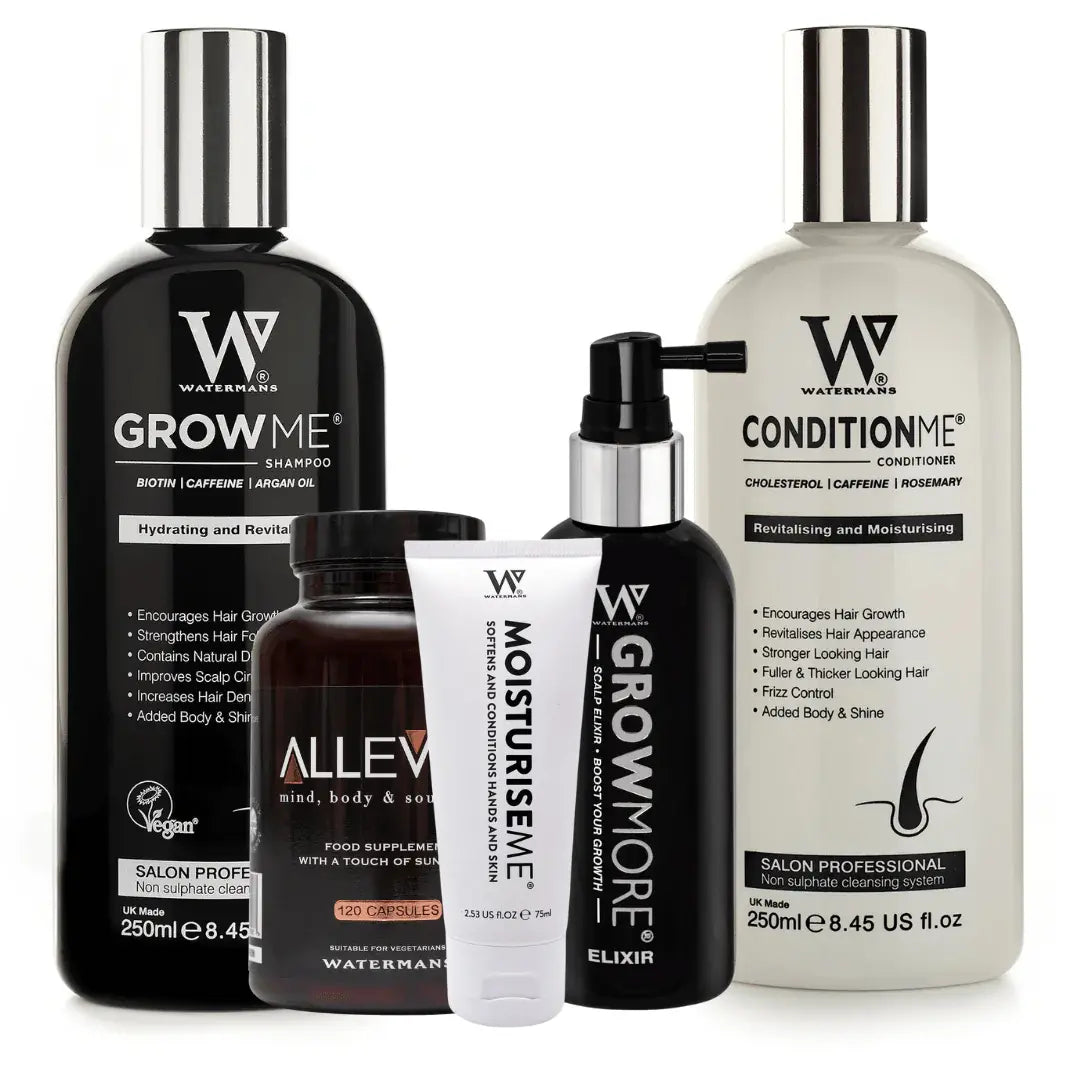
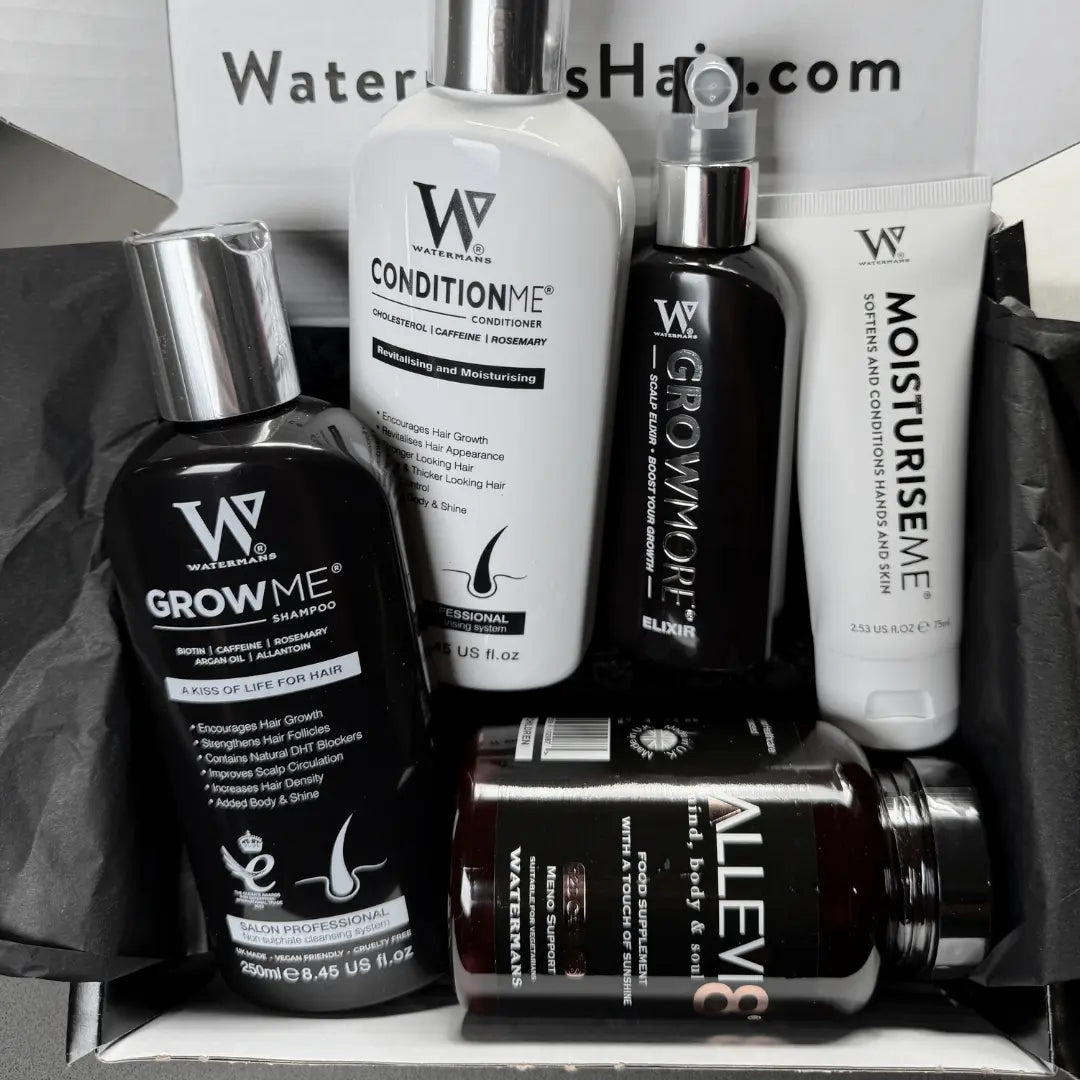
For a multi-step plan, the Watermans Hair Survival Kit combines products that work together to support faster, thicker hair during HRT.
Short FAQ on the HRT Regrowth Timeline
1. How long does HRT take to regrow hair?
Most people see early signs of change in 3–6 months, with denser and better-quality hair between 6–12 months. The entire HRT regrowth timeline often spans 12–24 months before your hair settles into a new steady state.
2. Will HRT regrowth fix my receding hairline completely?
HRT helps stop more loss and can thicken weak hairs, especially on the crown. A long receded hairline rarely recovers completely. Results depend on genes, age, and how soon you start. Pairing early HRT with scalp care like Watermans Grow Me Shampoo may give the best result for the follicles that remain.
3. Can I speed up my HRT hair regrowth timeline naturally?
You cannot completely change your biology, but you can help your hair grow better. Keep stress low, eat well, avoid harsh chemicals and heat, and use a dedicated growth shampoo and scalp routine. Products like Watermans Grow Me Shampoo and the Watermans Hair Survival Kit work with your HRT to feed the scalp and add volume at the roots.
Take Charge of Your Hair at Every Stage of the HRT Regrowth Timeline
Your HRT regrowth timeline is a long journey, not a quick fix. Hormones take time to change the hair cycle, and follicles need care, time, and good nutrients to recover. While you cannot change your past or your genes, you can decide how you care for your hair from now on.
If you want to give your follicles the best chance, combine your medically guided HRT with a regular, growth-focused haircare routine. Begin with a daily or regular wash with Watermans Grow Me Shampoo. Its blend of Biotin, Rosemary, Caffeine, Niacinamide, Argan Oil, Allantoin, and Lupin Protein works at the scalp level to support fuller hair. For step-by-step support through every phase—from early shedding shifts to clear thickening—upgrade to the Watermans Hair Survival Kit and give your hair the steady care it needs as your hormones work.