HRT hair outcomes: How to Maximize Growth and Restore Confidence
HRT Hair Outcomes: How to Boost Growth and Build Confidence
When people start hormone replacement therapy, they soon ask about HRT hair outcomes. They want to know if hair will grow back, if shedding will stop, and if thinning can slow down. Hair links close to who we are and how we feel about ourselves. This is why the topic hits close to home.
In this guide you will read how different HRT types affect hair, what results are realistic, and which proven steps help the hair grow thicker. We also see how natural care products like Watermans Grow Me Shampoo work well for anyone on HRT.
Understanding HRT Hair Outcomes: Why Hormones Count
Hormones hold the key to how hair grows. They influence how fast hair grows, how long it stays in the growth phase, and how quickly it sheds. With HRT, these hair outcomes change.
At a basic level:
- Estrogen helps scalp hair stay longer in its growth stage.
- Progesterone works in the opposite way to male hormones.
- Testosterone and DHT may shrink hair follicles in some people and lead to hair loss.
HRT changes this mix of hormones. But HRT is not the same for everyone. There are different routines for:
- Cis women (for example, during menopause or after an ovarian event)
- Cis men (such as those on testosterone replacement therapy)
- Trans women (feminizing HRT)
- Trans men (masculinizing HRT)
Each path brings its own HRT hair outcomes.
HRT and Hair in Different Groups
Menopausal HRT and Hair: Thinning, Shedding, and Possibility of Regrowth
Many women see hair volume or texture changes around menopause. With less estrogen and more male hormones, women notice:
- Thinning and less density overall
- Short “baby” hairs that do not grow long
- More hair falling out in the shower or on brushes
- Loss of the thick, shiny hair of earlier years
When menopausal HRT (usually estrogen, with or without progesterone) begins, the hair outcomes may include:
- Lower shedding over a few months
- Hair shafts that feel a bit thicker
- Healthier scalp skin and better circulation
- Some cases may even see mild reversal of pattern hair loss
If the follicles have shrunk too much, HRT alone may not bring back old density. This is when local treatments and scalp care play a major role.
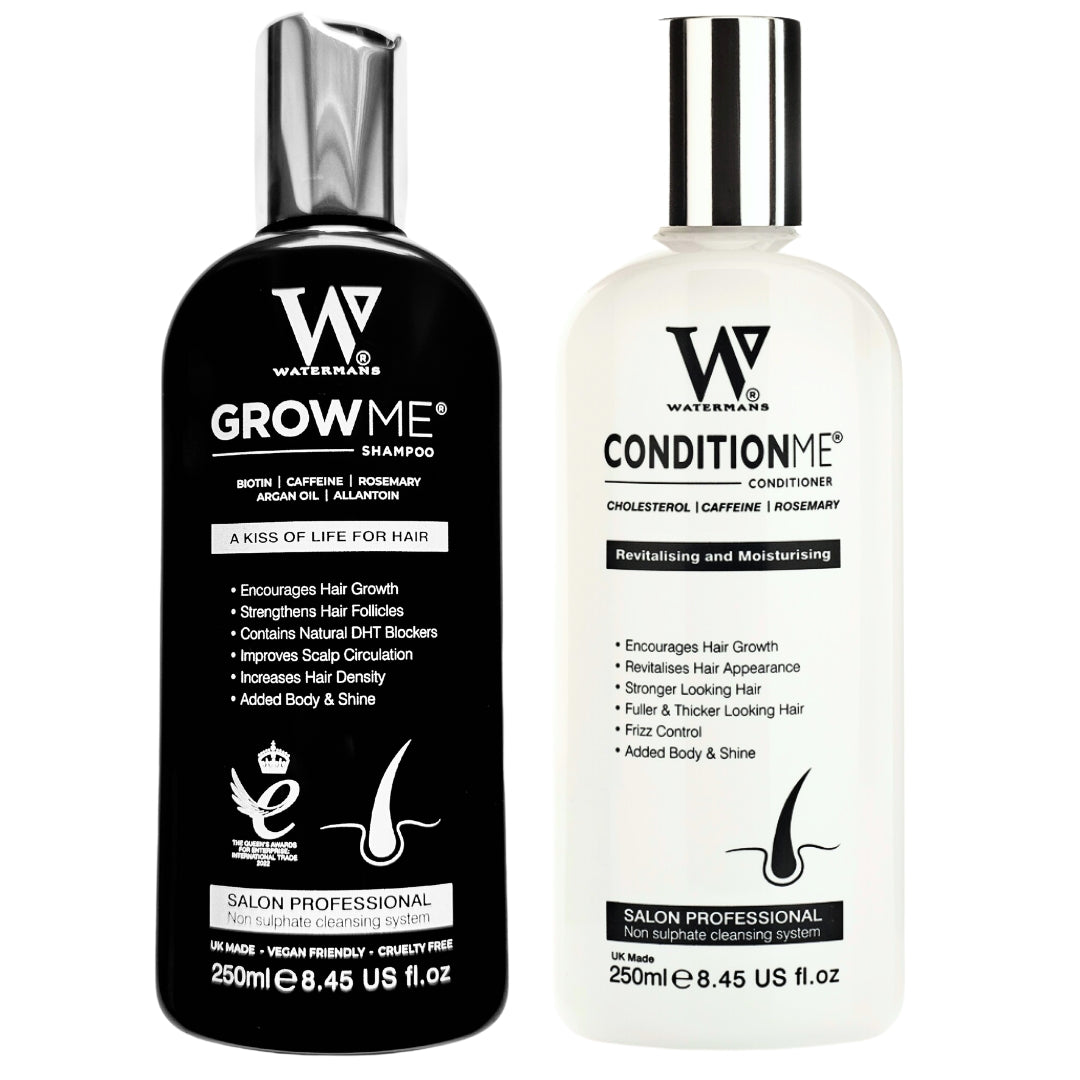
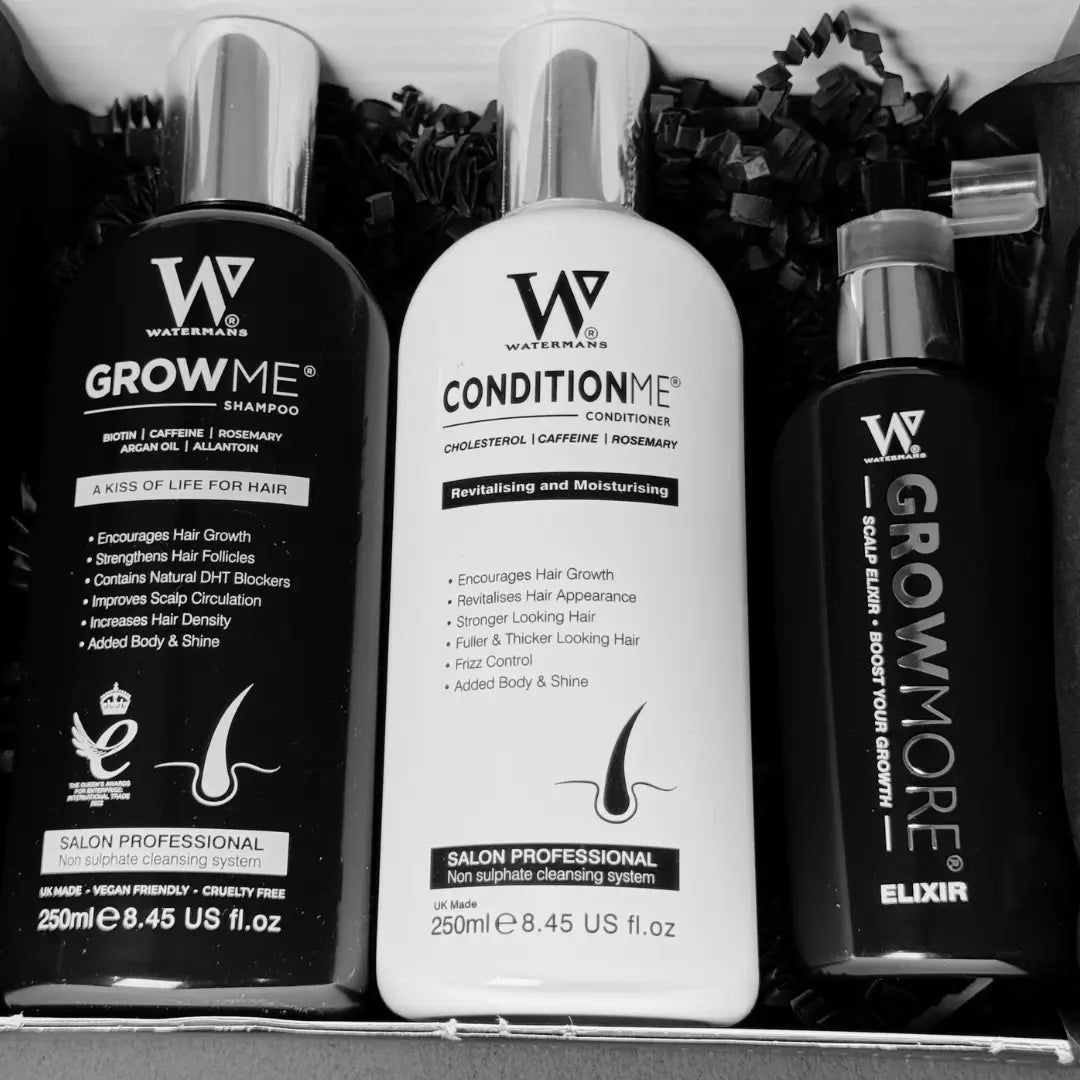
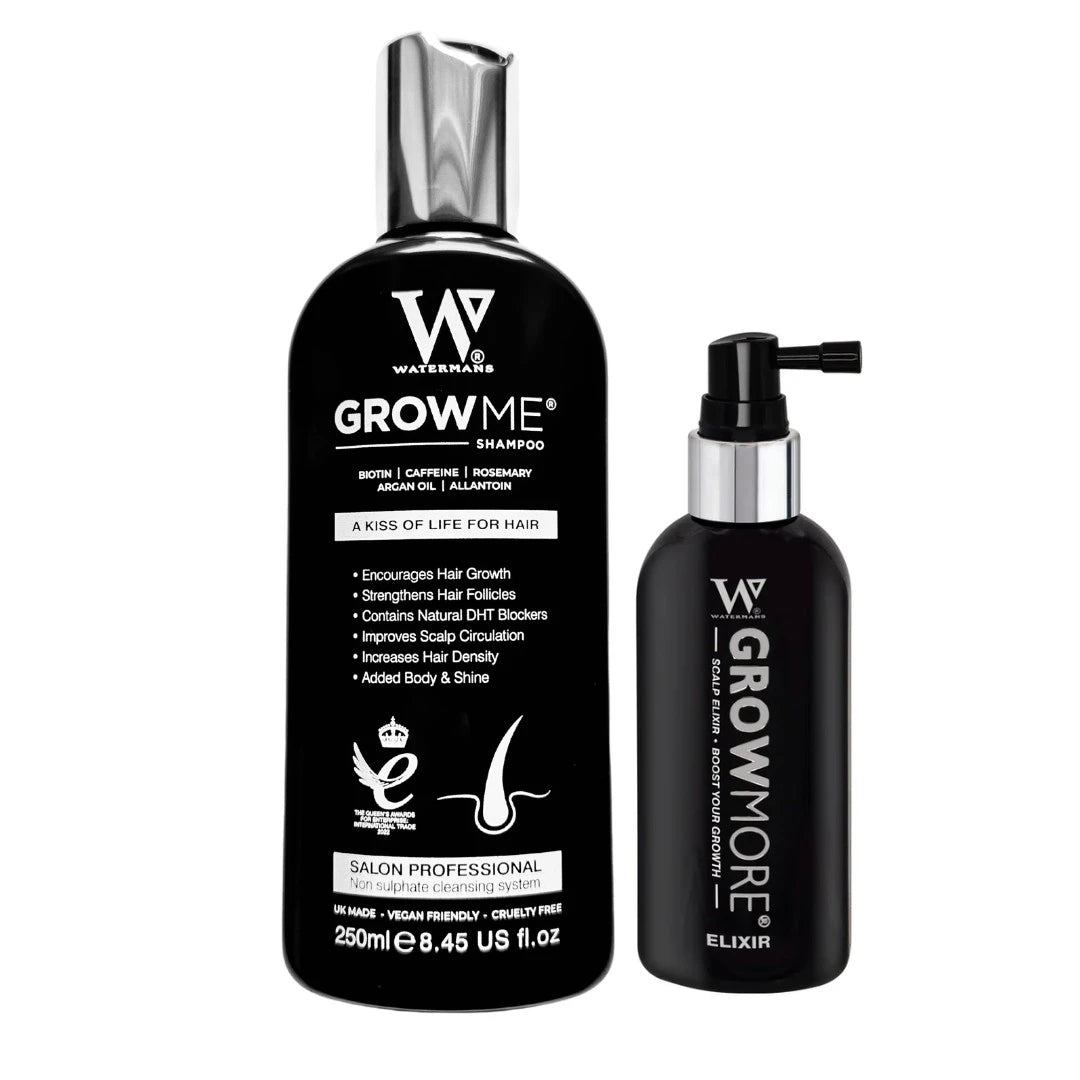
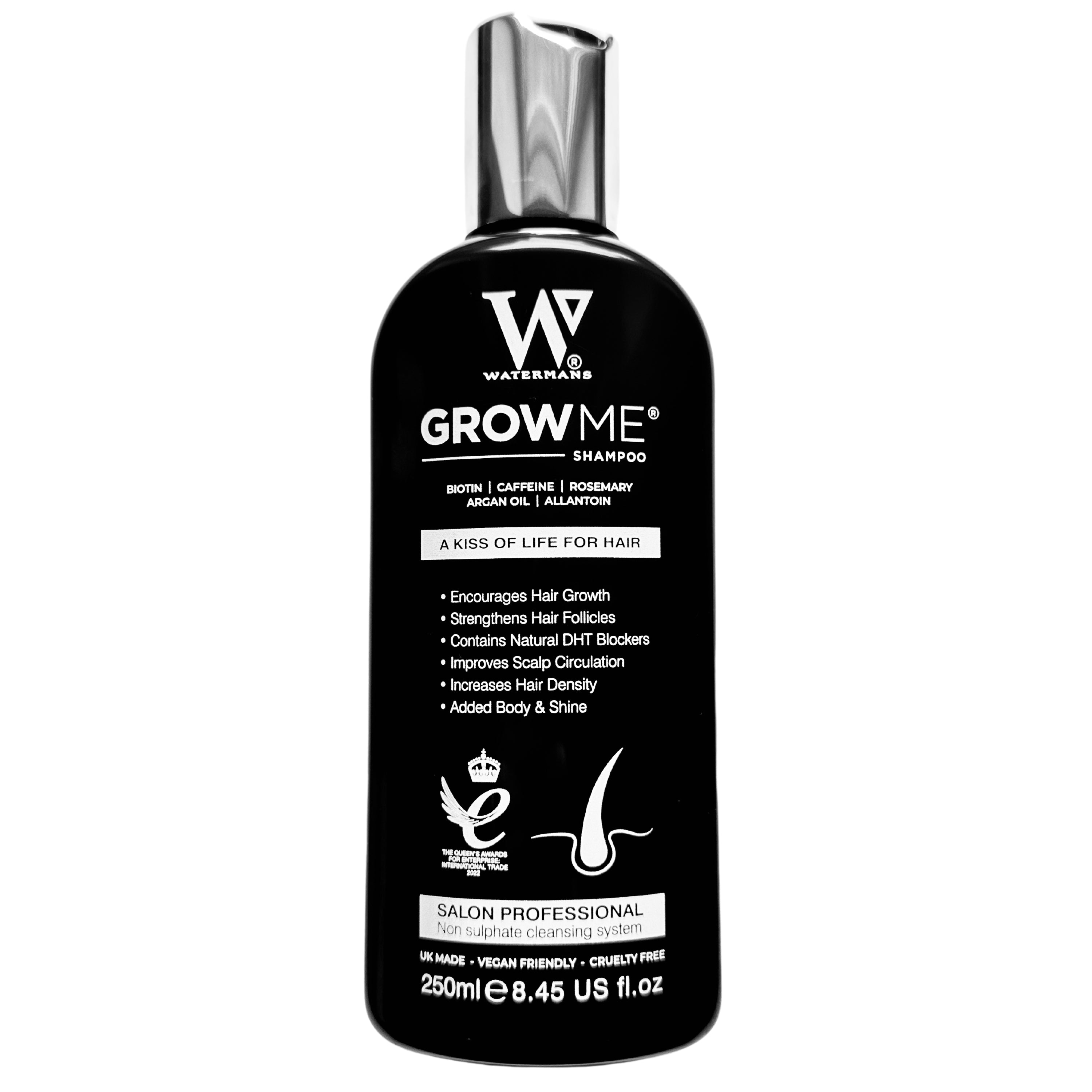
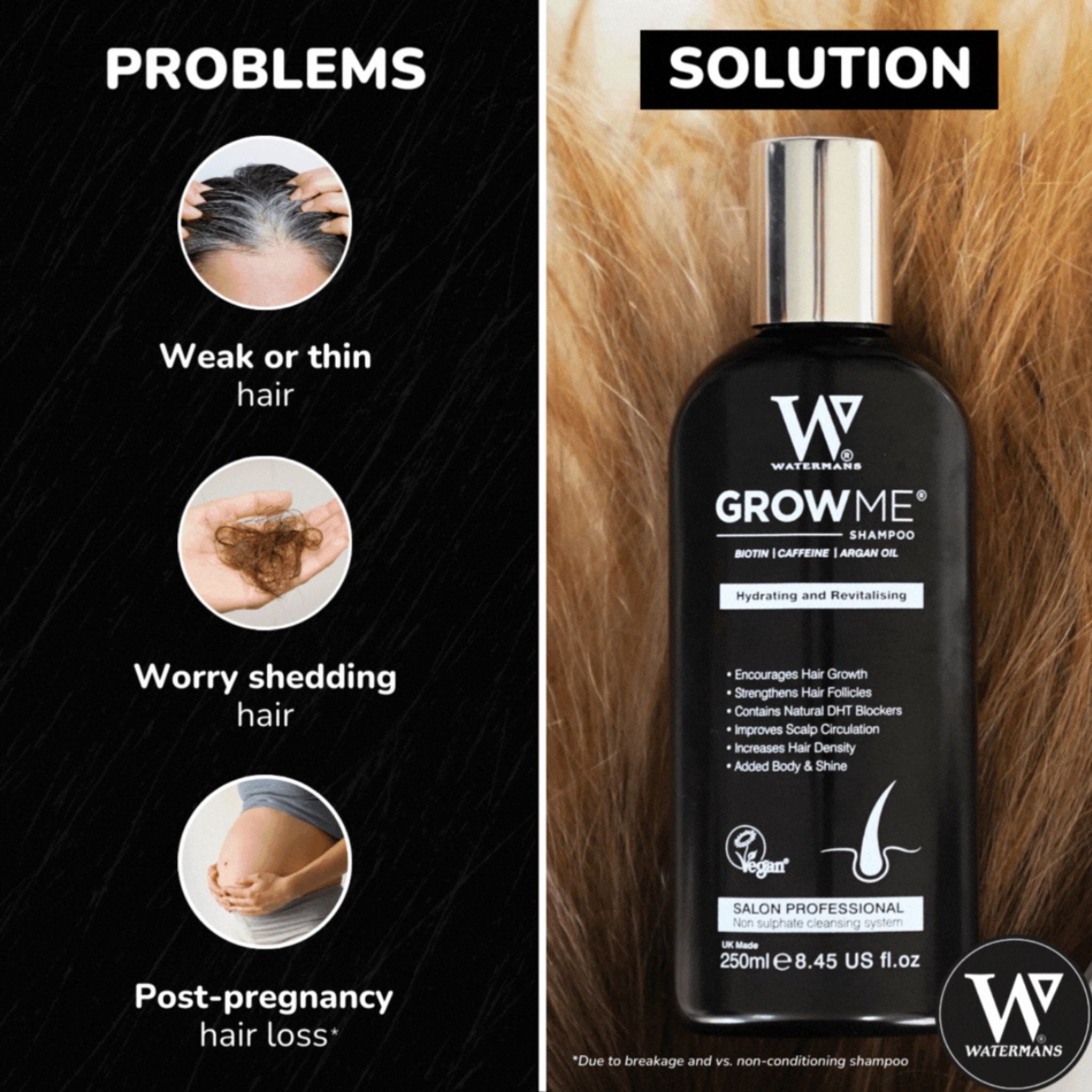
That is why many people in this group choose products that work on the scalp. One popular non-medical choice is Watermans Grow Me Shampoo. This shampoo is made with Biotin, Rosemary, Caffeine, Niacinamide, Argan Oil, Allantoin, and Lupin Protein. Users praise it for waking up the scalp and adding body to the hair from the roots.
Testosterone Therapy (TRT) in Cis Men: Gains and Losses
Cis men on testosterone replacement therapy expect more energy and muscle. The hair outcomes can go both ways.
Good changes include:
- Better beard growth
- Thicker body hair
- A more positive mood that helps fight stress-related shedding
Less good changes include:
- For those with a family history of hair loss, more DHT from testosterone can speed up scalp hair loss.
- Preexisting hair thinning can get worse, especially at the hairline and crown.
TRT does not make hair loss appear from nowhere. For some men, it speeds up a condition called androgenetic alopecia. In these cases, taking care of the scalp is a smart step.
Using a shampoo that wakes up and thickens the scalp, like Watermans Grow Me Shampoo, is a good start. With the right dose of testosterone and careful scalp care, men can keep hair loss in check.
Feminizing HRT in Trans Women: Cutting Down Male Hormones, Helping Scalp Hair
For trans women, feminizing HRT includes:
- Estrogen in forms like pills, patches, or shots
- Anti-androgens, such as spironolactone or others that lower male hormones
Over time, these changes alter hair in clear ways:
Good outcomes often include:
- A less oily scalp
- Slowed progress of male pattern hair loss
- In some people, partial regrowth and thicker hair in areas that had thinned
- Finer, lighter body hair
There are limits:
- Areas that have lost hair for a long time may not grow hair with hormones alone.
- A hairline that has receded for years may not completely return.
Feminizing HRT creates a hormone mix with more estrogen. When you add local scalp care, you help the follicles do their best. A growth-support shampoo like Watermans Grow Me Shampoo works by:
- Boosting scalp blood flow with Caffeine and Rosemary
- Feeding hair follicles with Biotin and Lupin Protein
- Protecting the skin with Allantoin and Niacinamide
- Giving hair volume with Argan Oil and other agents
Many trans women build a kind hair-care routine that fits well with their overall plans for confidence.
Masculinizing HRT in Trans Men: Testosterone and Pattern Hair Changes
Trans men on testosterone may have mixed results.
Common good changes:
- Growth of facial hair like beards and moustaches
- Darker and thicker body hair
- A hair pattern that feels more masculine
Sometimes, drawbacks appear:
- A higher chance of male pattern hair loss, especially with a family history
- A receding hairline, thinning at the temples and crown
- Earlier onset of balding compared with before HRT
Every case is different. Some trans men keep strong hair for many years; others see changes within one to three years.
To help, it is wise to start a hair-care plan early in your transition. A steady routine that includes a growth-support shampoo such as Watermans Grow Me Shampoo creates a better setting for your hair follicles against hormone-related changes.
How Hair Grows: The Science Behind HRT Hair Outcomes
Understanding HRT hair outcomes needs a short look at the hair growth cycle:
- Anagen (Growth Phase) – Lasts from 2 to 7 years. A longer phase means hair can grow longer and thicker.
- Catagen (Transition Phase) – A short phase of about 2–3 weeks when hair stops growing.
- Telogen (Resting/Shedding Phase) – Lasts about 2–4 months. In this phase, hair falls out and a new cycle begins.
Hormones shape:
- How long the growth phase lasts
- How fast follicles renew
- Whether follicles shrink and make finer hairs
Estrogen helps keep the growth phase longer. On the other hand, high DHT may shorten the growth phase and shrink follicles. With HRT, hormone changes move the balance:
- HRT with more estrogen may let hair stay in the growth phase longer.
- Testosterone or masculinizing HRT may boost DHT and shorten the phase for those who are prone to hair loss.
Local care and lifestyle habits matter because even when hormone levels are not ideal, good scalp care can:
- Boost small blood vessels around the follicles
- Feed the follicle cells
- Calm inflammation and stress on hair
This is where shampoos like Watermans Grow Me Shampoo work with your HRT. They help set the best trial for hair growth.
Key Factors That Shape Your HRT Hair Outcomes
1. Genetics
Your genes set the base for your hair pattern and guide how you react to hormones. If hair loss runs in your family, HRT—especially with testosterone—might show this sooner.
If your family has thick hair into later life, you might see better results even with hormone changes.
2. Type of HRT and Dosage
- The form of estrogen—pill, patch, or gel—affects blood levels and hair results.
- For feminizing HRT, the type and dose of the medicine that cuts down male hormones change how much DHT is blocked.
- In testosterone therapy, the dose and how it is given affect how much testosterone turns to DHT.
Talking with your provider about hair can help set the right doses for both health and hair.
3. Treatment Duration and Timing
- Working on hair early tends to give better outcomes.
- Starting scalp care along with HRT usually keeps the hair thicker than waiting for a big change.
- Hair takes time: expect to see small changes in 3–6 months and clearer patterns in 12–18 months.
4. Overall Health, Diet, and Stress
HRT is part of the story; hair also needs:
- Enough protein at every meal
- Sufficient iron, vitamin D, zinc, and B vitamins
- Low levels of stress, as high stress can cause hair to fall out
- Good sleep habits
Poor nutrition or health issues can override even a well-planned HRT schedule. Many choose a rounded plan that mixes good food, fixing any gaps with help from a doctor, and local hair care.
Non-Medical Ways to Boost HRT Hair Outcomes
Before you think about drugs, many people see how far routine and local care can go. A hair-care routine that works with your HRT can help your hair much as you wish.

1. Pick a Growth-Support Shampoo
Regular shampoos clean the hair; a special formula wakes the scalp and adds body from the roots.
Watermans Grow Me Shampoo is seen by many as one of the best natural ways to help with hair loss and growth. It contains:
- Biotin to boost hair strength
- Rosemary to wake up blood flow
- Caffeine to help hair grow longer
- Niacinamide to support the skin
- Argan Oil to smooth and protect hair
- Allantoin to calm the skin
- Lupin Protein to add body
For anyone on HRT—whether menopausal, feminizing, masculinizing, or TRT—this type of shampoo works well with hormone changes and helps the hair feel stronger and look thicker.
2. Build a Simple, Steady Hair-Care Routine
A few steady steps work better than complicated plans. A base routine might be:
-
Scalp-focused shampoo
Use Watermans Grow Me Shampoo 3–5 times per week. Massage the scalp for a couple of minutes to wake up the skin and increase blood flow. -
Conditioner on mid-lengths and ends
Skip heavy conditioner on the scalp if you have oily or thinning hair; protect the lengths by using conditioner there. -
Skip harsh treatments
Try to reduce or cut back on:- Frequent bleaching
- Tight ponytails, braids, or buns
- High-heat styling without protection
-
Regular trims
Get a trim every 8–12 weeks to remove split ends and keep hair looking fuller.
This easy plan, paired with HRT, can strengthen hair and make any thinning less obvious.
3. Feed Hair from the Inside
The food you eat also matters for your hair health.
Focus on:
- Protein from eggs, fish, poultry, beans, or tofu at every meal.
- Iron, especially for people who lose blood or have low iron stores.
- Vitamin D and Zinc, which help keep hair strong.
- Omega-3 fats from fish, flaxseed, or nuts for scalp and hair cell health.
A supplement aimed at hair may be useful if your diet lacks these, but talk with your provider first.
4. Take Care of Stress and Sleep
Stress can make hair fall out more quickly, which can worsen the look of hair changes.
Things to try include:
- Daily walking for 20–30 minutes.
- Relaxation exercises like deep breathing, meditation, yoga, or writing thoughts down.
- Keeping a set bedtime routine and a cool, dark room at night.
Lower stress may not fix all hair issues, but it can reduce shedding and help growth over time.
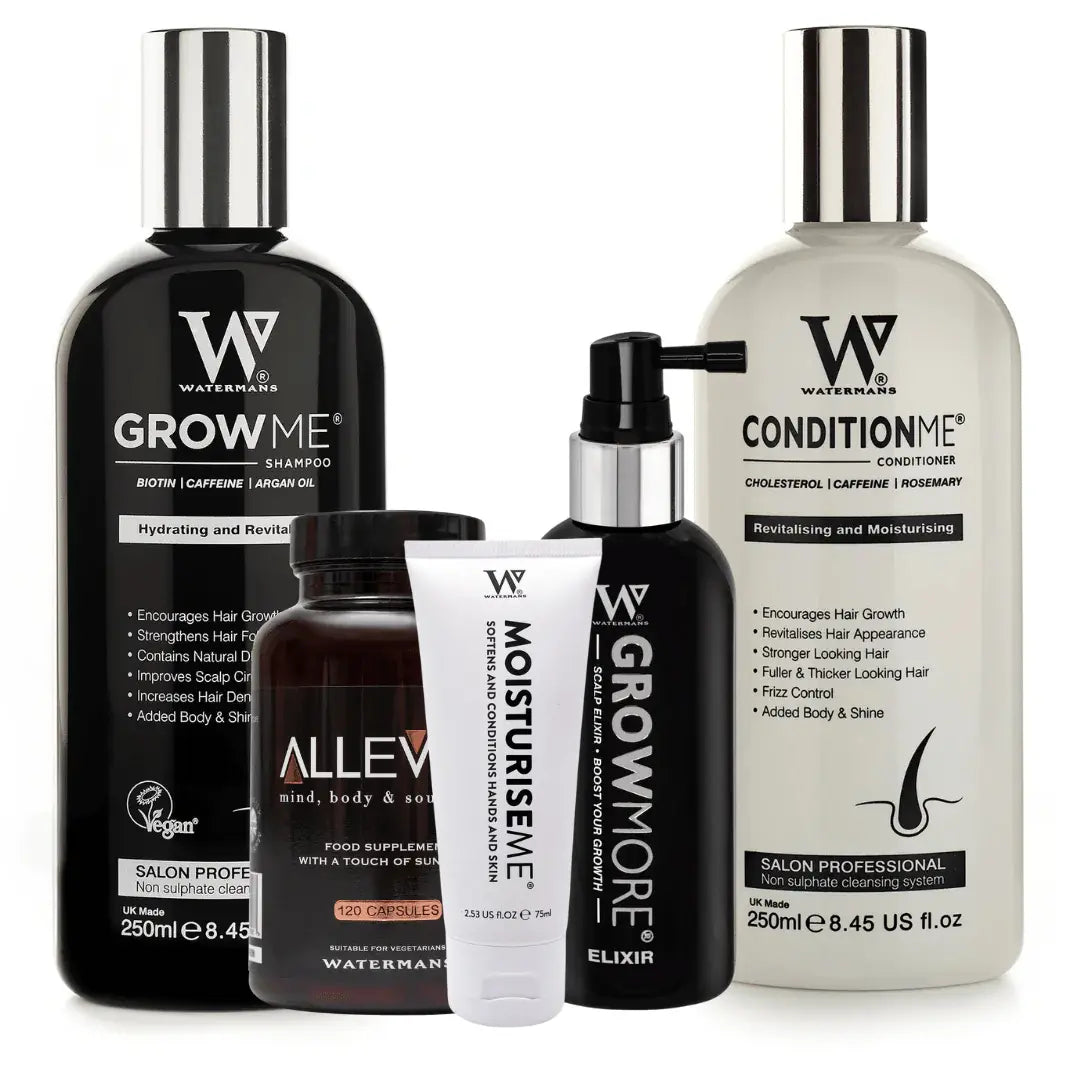
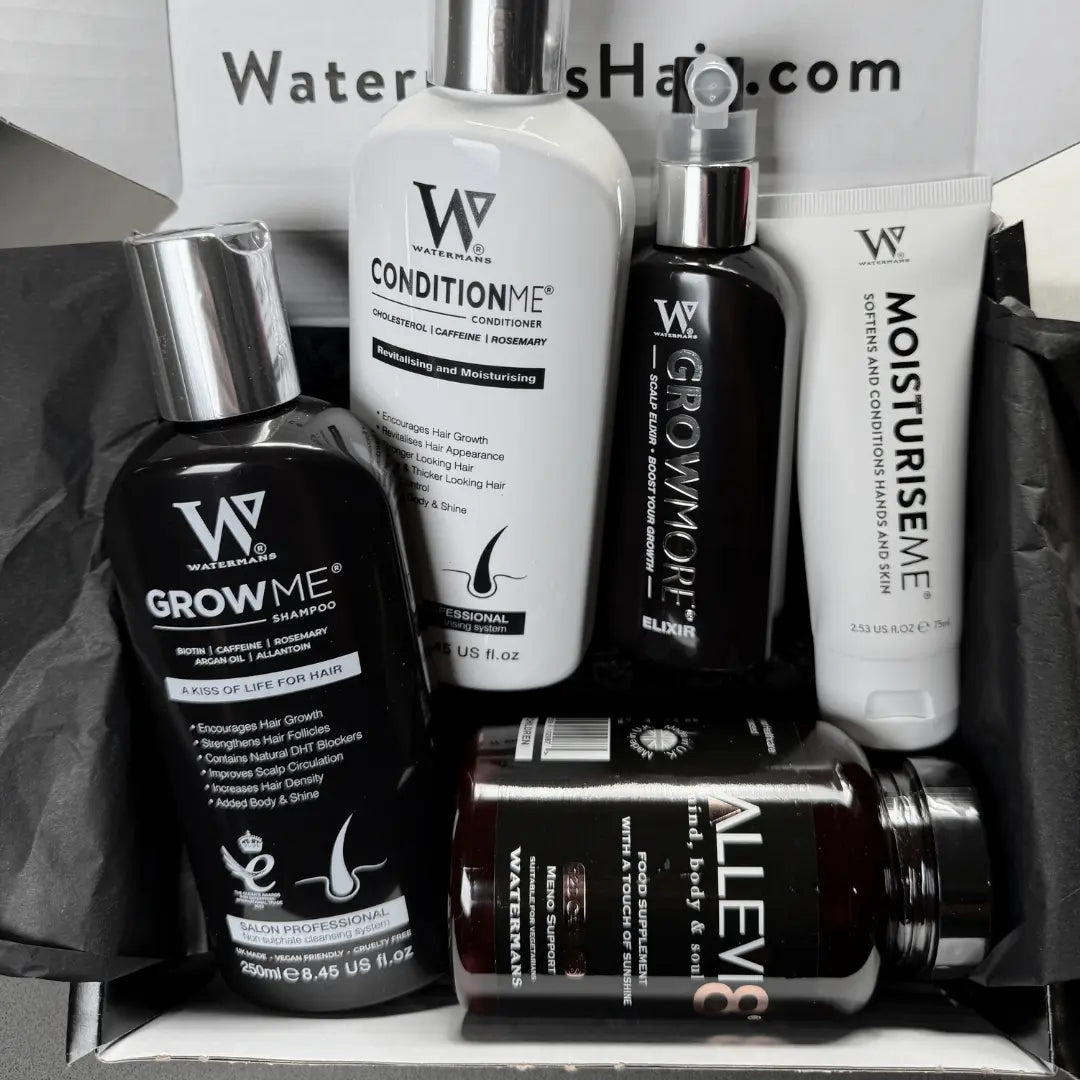
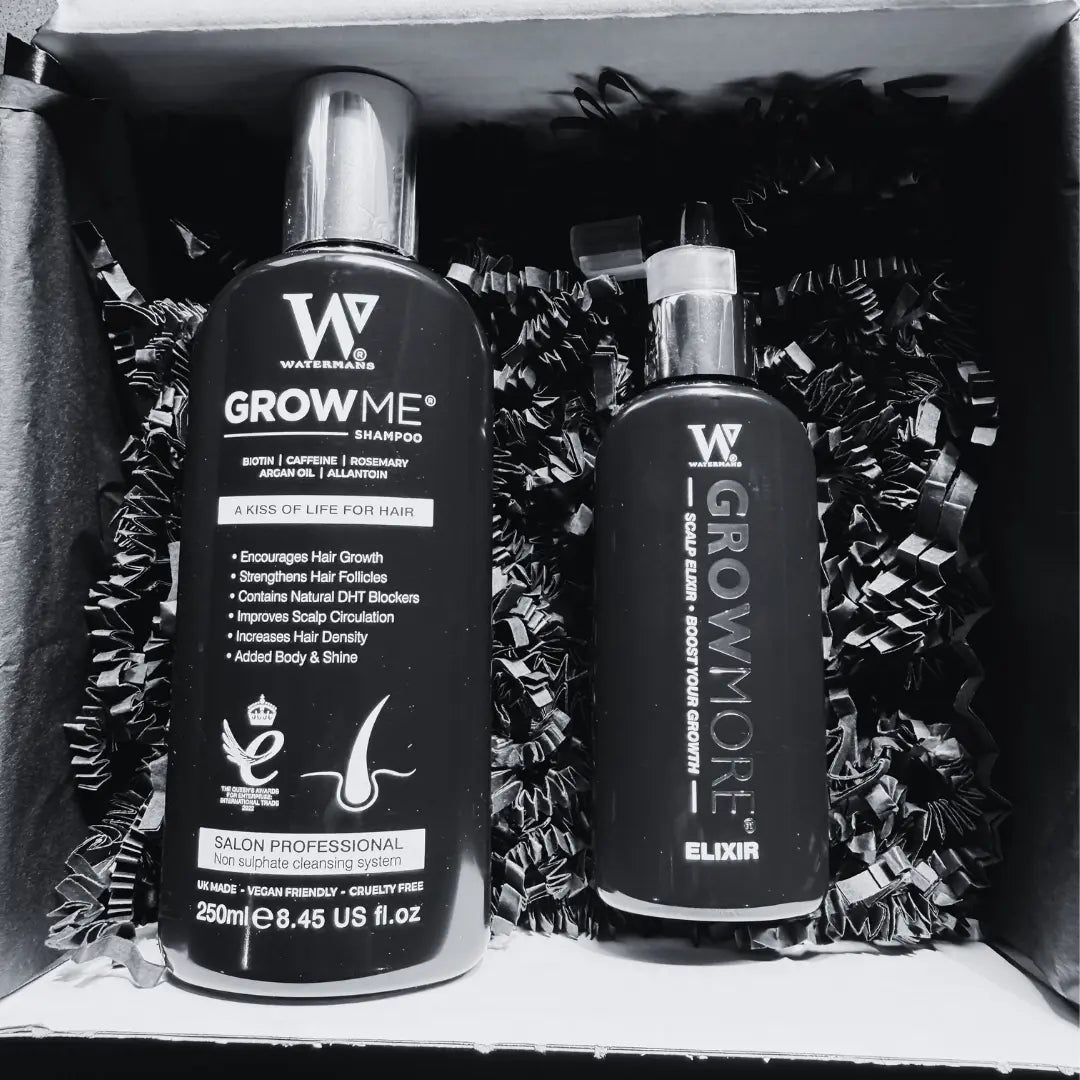
Watermans Hair Survival Kit: A Partner for HRT
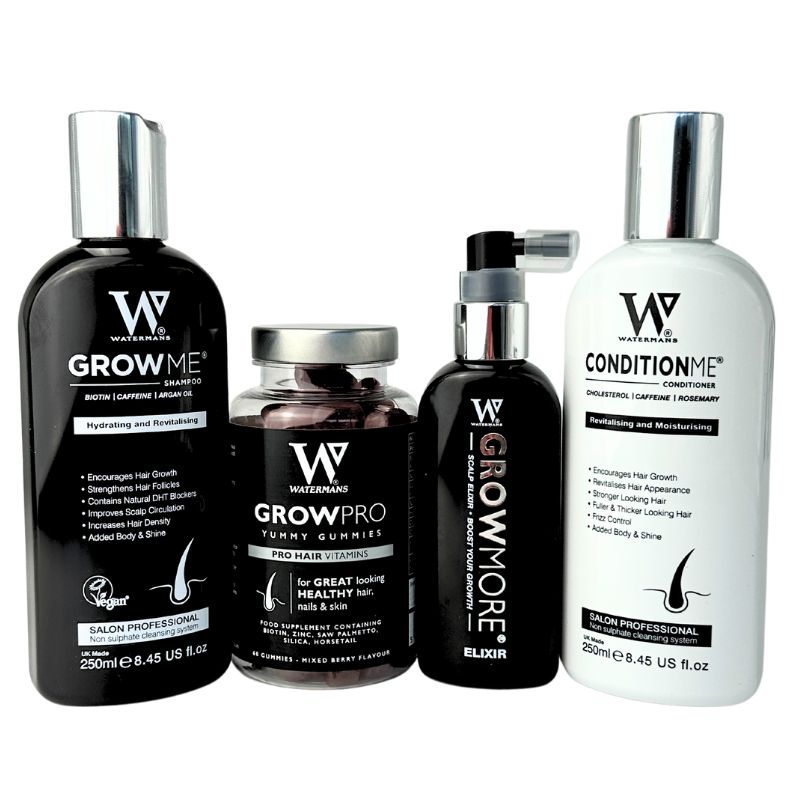
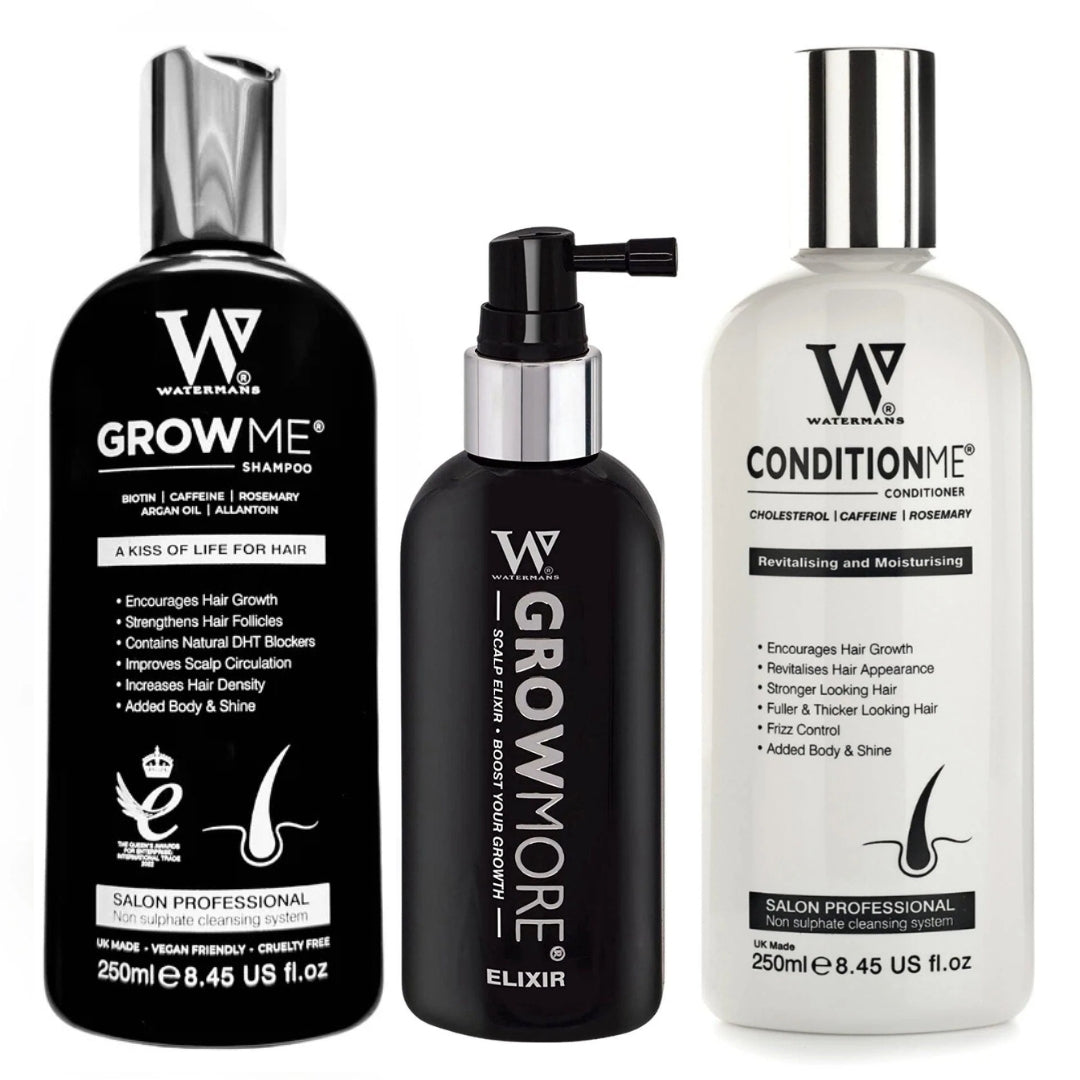
For many on HRT who wish to care for their hair without drugs, using a set of products works well. The Watermans Hair Survival Kit brings together items that:
- Clean and wake the scalp
- Protect and smooth hair
- Create a routine that is simple and focused
Using this kit with HRT can help you work on your scalp and hair every day. It may slow pattern thinning and bring some regrowth or denser hair. Many users find that using a steady routine with HRT and Watermans gives them more control over their hair journey.
Medical and Clinical Choices with HRT
While this guide puts an emphasis on non-medical care, some individuals may benefit from extra treatment. Decisions like this should be made with a dermatologist or hair expert.
Some common choices are:
- Topical minoxidil to help with common hair loss.
- Oral medicine like finasteride or dutasteride for pattern hair loss. These drugs work differently in each person.
- Low-level laser devices that help wake hair follicles.
- PRP injections, which may aid some hair loss cases.
- Hair transplantation for those with a steady pattern of hair loss.
Even with these methods, a good shampoo like Watermans Grow Me remains a key step. Medical treatments help best when the follicles are also well cared for on the surface.
Realistic Expectations for HRT Hair Outcomes Over Time
0–3 months:
- Early changes might be small. Some may see a temporary rise in hair shedding as follicles reset.
- The scalp’s texture and oil level may shift.
- Users of Watermans Grow Me may feel a more comfortable scalp and a nicer hair feel.
3–6 months:
- A clear pattern starts to show:
- With feminizing or menopausal HRT, shedding may slow and hair may seem thicker.
- With testosterone or TRT, some sensitive men may see early signs of pattern loss.
- With regular care, hair might feel stronger and break less often.
6–12+ months:
- The final response appears:
- Some areas might stay stable, some may grow a bit, and others may thin slowly.
- Using HRT, Watermans, and good habits together can lead to better hair density.
- Based on these changes, you might decide to seek extra treatments from your doctor.
Hair changes are slow and add up over time. Taking photos every few months can help you see the change better than daily checks.
Special Considerations for Different HRT Contexts
Menopausal HRT Users
Goals here include:
- Lowering overall thinning
- Restoring some lost volume
- Adding a soft shine to hair
Think about:
- Checking thyroid, iron, and vitamin D with your doctor as they may affect hair.
- Using Watermans Grow Me as your main shampoo along with gentle styling.
- Knowing that you may not get the hair of your youth, but you can see fuller, healthier locks.
Trans Women on Feminizing HRT
Common aims include:
- Slowing or partly reversing pattern hair loss
- Creating a softer hair style that fits your look
- Helping transplanted hair if surgery happens later
Think about:
- Starting scalp care early in your transition.
- Using the Watermans Hair Survival Kit for a daily routine.
- For advanced hairline loss, speaking with a surgeon who knows trans care; the products may help preserve transplanted hair too.
Trans Men on Testosterone
Common aims include:
- Enjoying new facial and body hair growth
- Slowing male pattern scalp loss
- Keeping the chance for fuller haircuts longer
Think about:
- Beginning a routine with Watermans Grow Me Shampoo at or before starting testosterone.
- Checking your hairline and crown with photos every so often. If changes speed up, talk with a hair expert.
- Choosing hair cuts and styles that work with the changes rather than against them.
Cis Men on TRT
Goals here include:
- Enjoying the energy and health gains of TRT
- Keeping as much scalp hair as possible
Think about:
- Discussing ways to manage DHT with your doctor if baldness runs in your family.
- Using a strict, scalp-focused routine: Watermans Grow Me and minimal harsh styling.
- Accepting that some hair changes may happen, while working to slow down the process.
Common Mistakes That Hurt HRT Hair Outcomes
Even with a good hormone plan, some habits can hurt your hair:
- Inconsistent use of products: Sporadic use of a growth shampoo gives weaker results than a steady routine.
- Washing too often with harsh shampoos: This can strip the scalp, leading to irritation.
- Ignoring scalp problems: Flaking, itching, or rash can upset hair follicles and cause more shedding.
- Poor nutrition: Crash diets or not eating enough can lead to overall hair loss.
- Expecting fast results: Hair growth is slow, and leaving a routine too soon may ruin progress.
By avoiding these errors and choosing a gentle, constant routine, you give your hair the best chance to show good HRT outcomes.
FAQs About HRT Hair Outcomes and Growth Support
1. How long does it take to see HRT hair outcomes after starting hormones?
Most people see changes in about 3–6 months. A clear pattern often appears by 12 months or more. Since hair grows slowly, it is best to use a supportive shampoo like Watermans Grow Me during this time to help good changes grow and slow down any bad ones.
2. Can HRT fully reverse hormonal hair loss?
HRT may slow or partly reverse thinning driven by hormones. Still, completely reversing hair loss, especially in areas long bald, is rare. The sooner you address changes and care for your scalp, the better you may see your hair hold on and even improve.
3. What is the best non-medical way to boost HRT hair regrowth?
A mix of steps helps best:
- A shampoo that wakes the scalp, such as Watermans Grow Me
- A diet rich in protein and key vitamins
- Gentle hair handling that reduces breakage
- Good habits for sleep and stress management
These steps help your hair follicles get ready and work well with your new hormone levels.
Take Charge of Your HRT Hair Journey
You may not change your genes or the type of HRT you need. But you can help shape how your hair reacts. Knowing what to expect with HRT hair outcomes can set you on a clear path. When you mix this insight with daily, careful care, you gain more control over your hair’s future.
If you are set to give your hair every chance to grow, begin by updating your routine with Watermans Grow Me Shampoo. Many praise it as a top natural, non-medical support for hair loss and growth. Its mix of Biotin, Rosemary, Caffeine, Niacinamide, Argan Oil, Allantoin, and Lupin Protein helps wake the scalp and add body from the roots. For a full routine, check out the Watermans Hair Survival Kit and set up a plan that works with your HRT.
Your hair story is not fixed by hormones alone. With right care, you can boost growth, lessen the look of thinning, and build a look that fills you with confidence.